
‘Baby Sign’ incorporated into Centering Pregnancy prenatal program
A $70,000 grant has brought baby sign language into a prenatal group focusing on low-income women
By Jennifer Parks
ALBANY — Centering Pregnancy, a prenatal program catered primarily to low-income women, is now working to improve communication between infants and their parents.
Dougherty County’s Centering program began offering Baby Sign more than a year ago. It teaches baby sign language to its participants with the idea that signing helps babies communicate before they are able to express themselves through language.
Proponents say the practice leads to better brain and language development, better self-esteem and less frustration from an inability to communicate.
VaLenia Milling, the head of the Centering program, said Baby Sign came about from a $70,000 preventative health block grant from the Georgia Department of Public Health to incorporate information on early brain development and language acquisition into the Centering model.
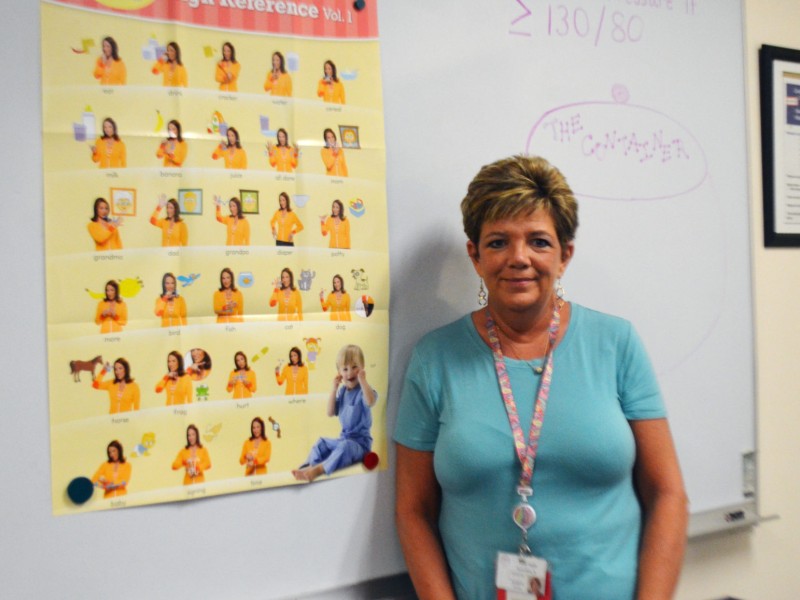
Two staff members, Milling and interpreter and clerk Nancy Ruiz, underwent training in teaching baby sign language. Since then, a few signs have been fit into each Centering session using flash cards and a chart in the Centering room.
Staff go over some of the more critical signs with participants several times. The first stage of baby sign language, which is what Centering focuses on, includes 20 words.
Even if parents do not remember all 20 words, some is better than none.
“Research has been done, and the thought is that early language development helps self-esteem (and bonding),” Milling said.
Milling said many babies can learn simple signs at as young as 6 months. While ability can vary from baby to baby, most infants do not gain enough control of their motor skills to start signing back until they are about 9 months old.
Milling said the mothers are told up front that it is some time before it becomes a two-way conversation, and when it does, the months of investment pay off and confidence is increased.
“Some babies do it earlier than other babies,” Milling said. “We are promoting the ability to communicate before (parents) find out (their children) have an issue with an ability to communicate.
“They initially will not get it. The baby has to take it in. Once they have the hand development to give back, research shows they give it back.”
The sign language is built around how babies learn to communicate. “Milk,” “water,” “more,” “eat,” common animal names and some of the other first words children often say are among the signs they learn.
The tendency for young children is to point when they do not know how to communicate what they want, which Milling said is a dangerous habit to get into.
“If you are not careful, they will just point and not talk,” she said.
Milling’s initial expectation was that parents would not see the value, but she said she was surprised to see that parents were instead receptive to it. Baby Talk has proven useful not just to parents, but to anyone who has a baby in their household.
It can even have a multigenerational impact and help children to learn early to be able to sit still during a lesson and set certain behaviors.
“We have had such engagement,” Milling said.
Milling said another $70,000 is slated to be granted for staff support to continue providing Baby Sign in Centering — taking the overall program above its initial concept of offering prenatal care.
“Centering has a core agenda,” she said. “We can’t take that away, but we can add to it.”
During Centering appointments, eight to 12 women with similar due dates meet with each other and a designated health practitioner to access health assessments, education and peer support. Women complete conventional medical histories and physical exams in a doctor’s office or clinic and are then invited to join a facilitated discussion offering the opportunity to interact with peers and ask questions.
Centering relies on grants to be able to continue offering its open and interactive sessions in southwest Georgia at the Dougherty County Health Department as well as in Ellenton, the latter of which is aimed at migrant working families.
The Centering model is meant to be an innovative approach to prenatal care that takes women out of exam rooms and puts them in group settings to access care and information. Each Centering group meets for a total of 10 sessions, each lasting two hours weekly, throughout pregnancy and early postpartum.
A study conducted by the parent organization of Amerigroup examined a group of 85 pregnant women enrolled in Medicaid who attended at least four Centering sessions with a similar group of expectant mothers who instead saw their doctor individually. The pregnant women participating in the Centering program had a 3.5 percent neonatal intensive care unit admission rate, while 12 percent of the matched control group had babies needing NICU care.
Related Articles
James Rubino installed in new role at Marine Corps Logistics Command in Albany
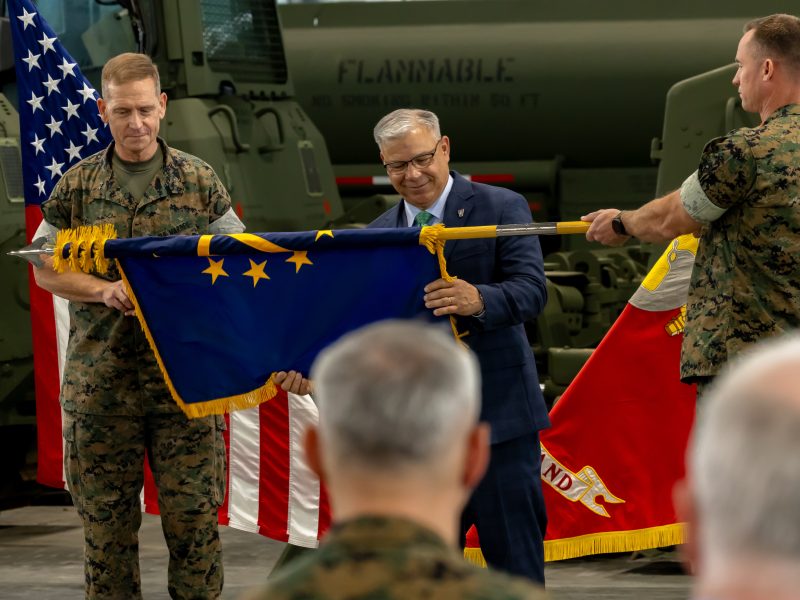
James L. Rubino recently assumed the role as executive deputy of Marine Corps Logistics Command in Albany. In his new role he will oversee integrated logistics support.

Rain depresses voter turnout in Dougherty County
“A lot of people don’t vote when it’s raining. People don’t do a lot of things when it’s raining.”

City of Albany faces shortfall for police, fire salaries
“We can’t tell staff to hire more police officers and then complain at what it costs.”
