
BARRY LEVINE: ‘Father of Rock N Roll’ also credited with rise of payola
THE OLD ROCKER: Alan Freed’s legacy marred by rise of payola
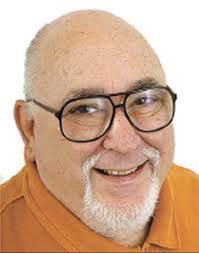
By Barry Levine
It was 52 years ago on Jan. 20 that Alan Freed, one of the most influential disk jockeys of the modern rock ‘n’ roll era, died from the effects of alcoholism. He was 43 years old.
Freed is credited with coining the phrase “rock ‘n’ roll” as it pertained to the musical genre.
Nicknamed the “Father of Rock ‘n’ Roll,” Freed, unfortunately, is as well known for his involvement in the payola scandal of the late 1950s and early 1960s that rocked the music world.
Payola, in the music industry, is defined as a bribe, primarily given to a disc jockey, to secure special treatment to promote records.
Payola rose to the forefront of the music scene because of multiple factors — the rise of rock ’n’ roll and R&B, the introduction of inexpensive 45 singles, radio’s shift to Top 40 formats and the emergence of teens as an economic force.
Records started to replace live performances as the venue to hear — and sell — music. Labels quickly recognized that popular disc jockeys could influence sales.
During the 1950s, the number of DJs ballooned 25 times to more than 5,000. On-air personalities had enormous clout among younger listeners.
A disc jockey was responsible for sorting through all releases, which were influenced by payola.
Aware of their rising status, jocks established flat rate deals with labels and record distributors. A typical deal for a mid-level DJ reportedly was $50 a week, per record, to ensure a minimum amount of exposure.
The more influential jocks even commanded percentages of grosses for local concerts, free records and, naturally, money.
As payola escalated, weekly entertainment magazines did lengthy features, calling for reform and government intervention.
Finger pointing escalated over payola, but it wasn’t until the TV quiz show scandals of 1958, when, most famously, the show “Twenty One” was found to be fixed, that the government got involved.
Hosted by Jack Barry and produced by Dan Enright and Barry, “Twenty One” gained notoriety because it was rigged.
Charles Van Doren, a Columbia University professor, was introduced as a contestant on “Twenty One” in November 1956, as a challenger to champion Herbert Stempel. Van Doren and Stempel ultimately played to a series of four games, with audience interest building with each week and each new game, until Van Doren finally “won.”
The turning point came on a question to Stempel: “What film won the Academy Award for Best Picture in 1955?” Stempel knew the answer to that question was “Marty,” one of his favorite films. The producers ordered him to answer “On the Waterfront,” 1954’s Best Picture. So long, Stempel.
Van Doren earned about $125,000 during his tenure on “Twenty One.”
The disclosure that the game was fixed only whetted Congress’ appetite for the music industry.
With the threat of losing their licenses, some radio stations took the precaution of firing disc jockeys who might put them at risk. In November 1959, in closed and open sessions before the U.S. House Oversight Committee, 335 disc jockeys from around the country admitted to having received more than $263,000 in “consulting fees.”
That figure was only the beginning of the payola scandal. As an example, before the Congressional hearings opened, Chicago DJ Phil Lind admitted that he had once taken $22,000 to play one record.
The trial intensified when the two most influential jocks in the country, Freed and American Bandstand’s Dick Clark, took the stand.
Freed and Clark, whose personas were diametrically opposed, played important roles in the rise of rock ’n’ roll.
Freed embodied the spirit of the music more than Clark, refusing to play white cover versions of black songs, such as Pat Boone’s version of Little Richard’s hit “Tutti Frutti.”
After working at small radio stations in Pennsylvania and Ohio, Freed moved to a station in Cleveland in 1951 and then to WINS, a round-the-clock Top 40 station in New York in 1954. Freed and WINS parted ways in 1957 over personal differences and he went crosstown to WABC. He eventually lost his position there because of the payola scandal.
He also did five rock ‘n’ roll themed movies from 1955 to 1958, giving many African-American performers exposure. That group included The Platters, Chuck Berry, Frankie Lymon & The Teenagers, The Flamingos, Jackie Wilson, Clyde McPhatter and The Cadillacs.
And though they both denied accepting payola, it’s impossible to imagine two popular jocks not succumbing to temptation. Guilty or not, it was Freed who ended up taking the fall for the DJs.
Why did the committee single him out? Freed was abrasive. He consorted with black R&B musicians. He jive talked, smoked constantly and looked like an insomniac.
Clark was squeaky clean, handsome and polite.
Once the grilling started, Freed’s friends and allies in broadcasting quickly deserted him. He refused “on principle” to sign an affidavit stating that he’d never accepted payola. WABC fired him, and he was charged with 26 counts of commercial bribery.
Clark signed the document.
Freed escaped with fines and a suspended jail sentence. He died five years later, penniless and virtually forgotten.
Previous to the trial, Clark had wisely divested himself of all incriminating connections. He had part ownership in seven indie labels, six publishers, three record distributors and two talent agencies.
Clark, who had previous experience in radio and TV, got his big break in 1956 when “Bandstand” host Bob Horn was arrested on a DUI charge, promptly dismissed and replaced by Clark.
Clark remained the host when the show went national in August 1957 and the name changed to “American Bandstand.” He stayed as the show’s host for another 30 years.
After Freed went down in 1960, Congress amended the Federal Communications Act to outlaw “under-the-table payments and require broadcasters to disclose if airplay for a song has been purchased.” Payola became a misdemeanor, with a penalty of up to $10,000 in fines and one year in prison.
This week in rock history: Buddy Holly was in the recording studio for the last time on Jan. 22, 1959. He laid down tracks for “Slippin’ and Slidin’”, “Wait ‘Til the Sun Shines Nellie,” “Love Is Strange”, “Dearest” and “Smokey Joe’s Café.” James Brown & The Famous Flames signed a recording contract with King Records on Jan. 23, 1956. As a signing bonus, they receive $200. Their first effort, “Please, Please, Please.” would become a million-seller later in the year. After receiving a $25,000 signing bonus, Aretha Franklin recorded her first tracks for Atlantic Records on Jan. 24, 1967. Throughout her career, she had 20 No. 1 singles and 10 No. 1 albums on the R&B charts.
The Beatles notched their first No. 1 best seller when “I Want To Hold Your Hand” reached the top of the charts on Jan. 25, 1964. Gary U.S. Bonds achieved his only No. 1 hit when “Quarter to Three” topped the charts on Jan. 26, 1961. Little Richard left rock ‘n’ roll on Jan. 27, 1958, to enroll in Bible School at Oakwood College in Huntsville, Ala. Chris Kenner, who reached No. 2 in 1961 with “I Like It Like That,” suffered a fatal heart attack at the age of 57 on Jan. 28, 1976.
Barry Levine is an entertainment writer for The Albany Herald. He can be reached at [email protected].
Related Articles
Dougherty Jail graduates first class of female GED recipients
“It was an escape. I can say this has been challenging. I want to express my gratitude for being able to attend this program.”
From cotton to cloud: In the data center debate, is rural Georgia once again being asked to carry the cost?
Across much of rural Georgia, the abandoned cotton warehouses and shrinking tax bases remain — enduring reminders that industries built to serve distant markets do not necessarily stay rooted in the communities that first sustained them.
Dawson Council approves $400,000 lifeline in emergency meeting as financial accountability remains elusive
Less than a week after city officials publicly acknowledged the City of Dawson cannot continue operating without additional financing, the Dawson City Council convened a hastily called emergency meeting Tuesday evening and unanimously approved authority to borrow up to $400,000 through a tax anticipation note.
