
Crime & Punishment: The criminal element
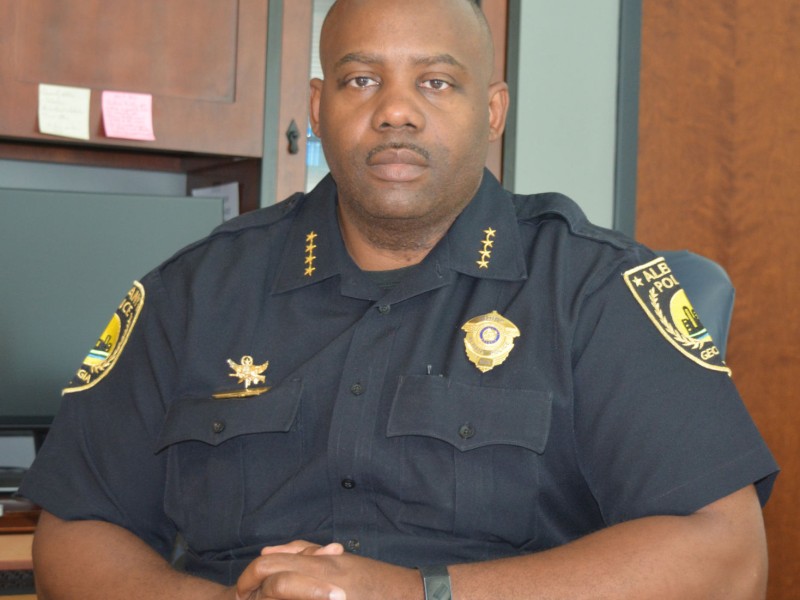
Albany Police Chief Michael Persley
File PhotoBy Carlton Fletcher
[email protected]
Editor’s Note: First in a series of articles dealing with all elements of crime, law enforcement and the judicial system in Albany.
ALBANY — From Albany Herald archives and information received through Open Records requests:
♦ On July 3, 2010, Jordan Harris and others entered P&P Garden Center on Slappey Drive in Albany. Harris, who was under house arrest and had been ordered to wear an ankle monitor at all times, shot P&P owner Walter Phelps in the back during a robbery of the store. The popular businessman later died of the wounds.
♦ Ticorey Emanual Frazier, later identified by law enforcement officials as a known gang member, is currently awaiting trial on three counts of murder. Frazier is charged with killing three people on June 27, 2017 and for obstruction of law enforcement officers, possession of a firearm by a convicted felon and theft by receiving stolen property on June 28, the day after the murders. Yet it wasn’t until he was arrested for a probation violation on July 7, 2017 that Frazier was returned to prison.
♦ After a criminal career that started with an aggravated assault arrest in 1995 and continued for more than a decade until he received a 10-year prison sentence for trafficking in cocaine in 2006 only to be arrested for a parole violation just three years after that sentence was handed down Trevis Lavell Price is now awaiting trial on murder charges for an incident that occurred in 2016 when he was free on parole.
♦ Jemale Devon Moore’s criminal record started in 2011 with simple battery, and three times after that initial conviction he was returned to jail for probation violations. Moore was arrested on firearms charges in March of 2013 but was released less than two months later. He later was picked up for probation violations but again was released. In April 2017, Moore was arrested on drug and weapons charges, but again spent little time incarcerated. His rap sheet had murder charges added on Aug. 7, 2017, and he currently is awaiting trial.
♦ Joshua Tremayne Johns had a penchant for burglary, his rap sheet showing he was first arrested on that charge in 2006. He was arrested on the same charges in 2009 and 2010, with an arson arrest thrown in in 2008, but his criminal career took a deadly upswing in 2011 when Johns, out again on probation, was charged with and convicted of murder.
♦ Known gang member Dontavious Wingfield spent five years in prison starting in 2012 after being arrested on crimes ranging from burglary to aggravated assault. But he returned to his old ways shortly after being released in 2017, and in 2018, he was arrested on home invasion and murder charges.
♦ Then, there are Eugene Bridges, who law enforcement officials say was heading a family-run open-air drug market on Ninth Avenue in Albany, despite a rap sheet that shows almost 30 charges, and Neravious Reese, who as a juvenile offender was featured on a “Scared Straight” episode filmed at the Dougherty County Jail, and now, as an adult, has wracked up almost 50 charges ranging from theft by taking to theft by receiving.
♦ And, most recently, there are the two defendants in the Alex Mixon murder case Iren and Mickee Carter who were sentenced to 10 years of probation for their part in the murder.
♦ There are others whose rap sheets clearly identify them as repeat offenders Earl Acree, Shaquille Hall, Raquaill Thomas, Byron Ford, Kaldolphine Spencer, Jaquan Oliver, Taiyon Winchester, Cervantes Smith, Quintavious Hayes individuals whose criminal activities have marked them among the primary chess pieces in a battle of crime and punishment that has law-abiding citizens feeling like pawns stuck in the middle of a good vs. evil showdown. And, right now, it’s not going so well for the good guys.
♦ ♦ ♦
It’s an anomaly of an election year in Albany. Twelve people are running for three seats on the seven-person Albany City Commission, seven of them seeking the mayor’s seat. As is typical of most election-time rhetoric, especially in communities where poverty is high and crime is always an issue, all of the candidates tell the public they’re law-and-order advocates.
Most offer some version of the same solution: Hire and retain more police officers.
And while it’s true that the Albany Police Department is several officers down from budgeted staff levels, current crime trends and statistics indicate APD is not in any way being overwhelmed by the criminal element, especially when major, Part I, crimes are considered. Any murder number that goes above 0 is unacceptable to a public that, in Albany, is being bombarded constantly with doomsday scenarios — and often misinformation — by social media alarmists and others who’ve seen a complete demographic shift from overwhelmingly white to overwhelmingly black in their lifetime. In general, it’s a public that is much more interested in perception than statistics.
But APD has a clearance rate that is the envy of many cities where criminal activity has evolved well past the nuisance level. Unfortunately, department Chief Michael Persley reluctantly admits, a lot of his force’s work is negated by an overloaded court system that heads off a great many trials with plea deals, by granting bond and probation rulings that have local law enforcers oftentimes capturing — and recapturing — the same criminals.
“It will never be my intention to throw anybody else in any other part of the criminal justice system under the bus,” Persley said. “But, yes, it is disheartening as a police officer to see criminals set free, especially when you know you did everything right and got the right person. I agree with the concept of alternative sentencing to a degree, but it’s a bad decision to allow people who are evil, wicked, who have no respect for the law, back on the street to do the same things they were arrested for.
“In this country, everyone is allowed certain rights, and they deserve their day in court. But there are people — career criminals — who deserve to be locked up, who should be incarcerated.”
Dougherty County District Attorney Greg Edwards laments what he calls a “significant backlog” of cases in the local judicial circuit, pointing out how that fact impacts decisions that allow some dangerous criminals to walk the streets while awaiting trial.
“Legally, if a person who is charged with a crime is not indicted in 90 days, he must be offered bond,” Edwards said. “So we make every effort to make sure that happens. But even with our best efforts, with such a high volume of cases there are individuals who fall through the cracks.”
Edwards notes that his “felony ADAs” — assistants who are assigned major criminal cases — have a caseload of around 300 each at any given time. And even while the population in the county has been declining for several years, the district attorney says Albany’s designation as a “hub” for many surrounding bedroom communities brings outside criminals into the city.
“A large percentage of the crime committed here is by people from out of town,” he said.
He points to a recent homicide in which both the victim and his alleged shooter came to Albany from Pelham and got into what became a deadly altercation.
“I think the statistics show that Dougherty County merits an additional judge to help handle the caseload,” Edwards said. “That’s a legislative decision, but even though it would take a lot of burden off our staff, we have to remember that adding a judge would require another courtroom, office space, chambers, legal assistants, a court reporter and another assistant district attorney.
“You add the additional facilities, the additional personnel and benefits, and you’re looking at a couple of million dollars.”
Money indeed is one of the socioeconomic factors that figures into any crime narrative, and Albany City Manager Sharon Subadan said that while she has advocated for — and the City Commission has approved — funding for the equipment needed in the modern fight against crime, public perception often takes a lot of the luster off local accomplishments.
“Maybe we’re not doing a good enough job of telling our story to the public,” the city manager said. “But it’s not a cliche to say public safety is our No. 1 priority. There are a lot of things going on behind the scenes that we can’t immediately share with the public, but trust me, we are doing everything in our power to attack the issues that lead to crime in our community.”
One such initiative resulted in a joint operation with federal and state law enforcement officials last week that targeted and removed several members of a major statewide drug operation from Albany, Sylvester and other cities across the state.
“Chief Persley and his department have developed a great working relationship with state and federal agencies — and one of the biggest positives we have going for us is having Charlie Peeler as our U.S. Attorney for the Middle District of the state,” Subadan said. “One of the biggest deterrents against crime is having the opportunity to bring federal charges. The criminal defense lawyers know — and the criminals know — that if they’re convicted in federal court, there is no parole.
“Our efforts in public safety are like a duck you see on a body of water. On the surface, everything is calm. But underneath the surface, that duck’s legs are working like crazy. We want the public to know that we are constantly working to improve our police force, that we are working on ways to keep our officers, and we are always looking to add the tools that help them do their job better.”

Related Articles
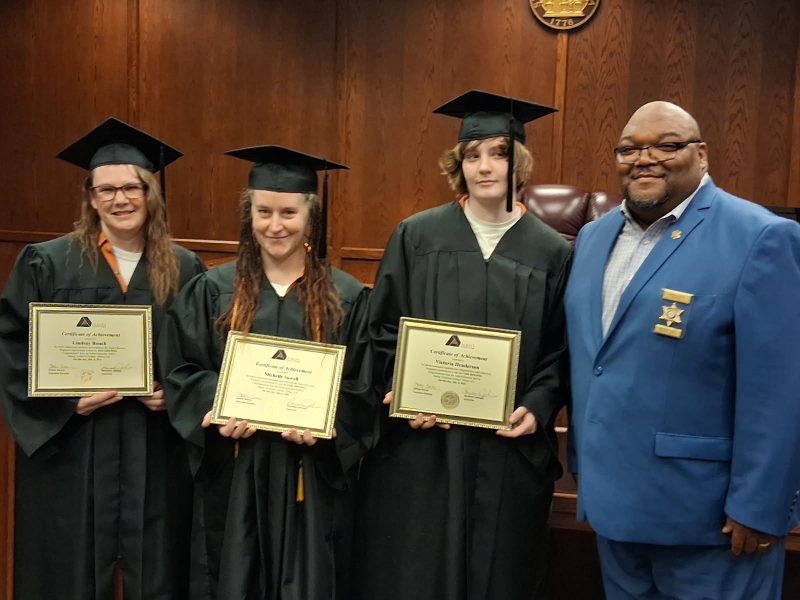
Dougherty Jail graduates first class of female GED recipients
“It was an escape. I can say this has been challenging. I want to express my gratitude for being able to attend this program.”

From cotton to cloud: In the data center debate, is rural Georgia once again being asked to carry the cost?
Across much of rural Georgia, the abandoned cotton warehouses and shrinking tax bases remain — enduring reminders that industries built to serve distant markets do not necessarily stay rooted in the communities that first sustained them.
Dawson Council approves $400,000 lifeline in emergency meeting as financial accountability remains elusive
Less than a week after city officials publicly acknowledged the City of Dawson cannot continue operating without additional financing, the Dawson City Council convened a hastily called emergency meeting Tuesday evening and unanimously approved authority to borrow up to $400,000 through a tax anticipation note.
