
DNR continues search for Rhesus macaque in Southwest Georgia
Small primate has been spotted from the Bainbridge area to Lee County
By Jim Hendricks
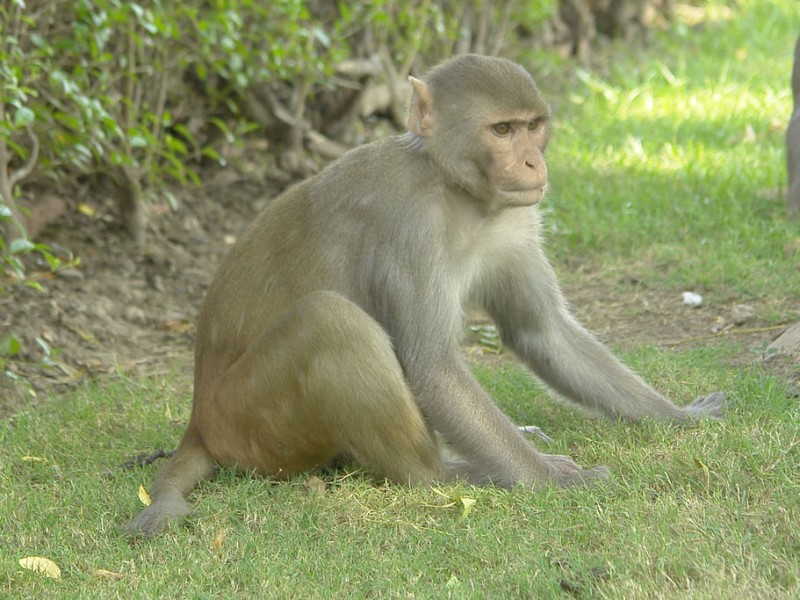
ALBANY — A Rhesus macaque has been doing quite a bit of traveling in Southwest Georgia, say officials with the Department of Natural Resources who are trying to track down the small primate.
“We’ve had sightings in the Bainbridge area, Baker County, Punks Landing, the Marine Corps ditch and up on the Kinchafoonee Creek,” Brent Howze with the DNR’s Wildlife Resources Division said Saturday. “He — I say he — seems to be covering a large area.”
DNR officials sent out an alert late Friday that the primate was loose in the Albany area. They are urging anyone who sees the animal to contact DNR officials. If spotted, an individual should remember that the Rhesus is a wild animal and not attempt to approach it or touch it, officials say.
“You should definitely keep your distance,” Howze advised of the animal, which is estimated to be 18-24 inches tall.
He also said this is not a case in which people have misidentified another animal for the primate.
“We’ve had confirmed sightings,” including some along the banks of the Flint River, Howze said. “We have pretty good evidence of that (the species).”
Officials think it is a single primate on the loose, but Howze said they were still in the “information-gathering” stage. “We’re not sure it’s one,” he said when asked whether there may be multiple primates being spotted.
With such a large territory, officials are facing the task of finding the proverbial needle in a haystack. But perhaps as big as the mystery of where the Rhesus macaque is is the mystery of how the animal, native to Asia, ended up in the woods in Southwest Georgia.
“Right now,” Howze said, “we have no idea. There’s no one in the area who’s permitted to possess these primates and none has been reported missing.”
Chehaw Park officials noted Friday that the Albany zoo does not have any Rhesus macaques among its inhabitants.
According to the National Primate Research Center at the University of Wisconsin, Rhesus macaques, also known as Rhesus monkeys, are found from Afghanistan to India and Thailand to southern China, and have lifespans of 25 years. Males can reach a height of 21 inches and a weight of 17 pounds, with females up to 18.5 inches and 11.8 pounds. The only primates with a broader geographical distribution, the center says, are humans.
Anyone who spots the primate is asked to contact DNR wildlife officials. During weekday business hours, call (229) 430-4254. After 4:30 p.m. and on weekends, contact 1 (800) 241-4113.
Related Articles

Federal agency to investigate Monday paragliding fatality
The death of a 63-year-old man who was killed in a paragliding accident on Monday is under investigation by the National Transportation Board, according to Dougherty County Coroner Michael Fowler.

Audit of police surveillance cameras results in arrests of five former APD officers
“The bottom line is when we find people who have misused resources that they have, we’re going to hold them accountable. These resources help fight crime, but we will not tolerate when they are misused.”

New commander takes helm as Marine Corps logistics adapts to evolving battlefield
Brig. Gen. Kevin G. Collins assumed command of Marine Corps Logistics Command during a change of command ceremony at Marine Corps Logistics Base Albany, succeeding Maj. Gen. Keith D. Reventlow after four years leading the organization responsible for sustaining Marine forces around the globe.
