
Dougherty Chairman Cohilas: Multiple lessons learned from deadly storms
Dougherty Commission chairman played pivotal role in recovery efforts
By Jon Gosa
EDITOR’S NOTE: This is the third in a series of articles about some of the men and women who were instrumental in efforts to help Albany, Dougherty County and Southwest Georgia recover from costly and deadly storms that hit the region Jan. 2 and Jan. 22.
ALBANY — Dougherty County Commission Chairman Chris Cohilas, like so many other community residents, suffered extensive storm damage to his home during the Jan. 2 storm that left a path of destruction in the community. And, like so many others who have gone above and beyond the call of duty during what turned into twin January disasters, Cohilas made sure his family was safe, secured his home as best he could, and went to work procuring resources to help Albany get back on its feet.
“The night of Jan. 2 was remarkable,” Cohilas said. “First, it was make sure my family was all right and my house was all right. Then we stepped outside and realized that it was not all right. I started communicating within my neighborhood, and social media was a godsend. Everybody was checking on each other through the Lake Park/Merry Acres watch group.
“When we got outside and saw all the trees down, I didn’t know if my house was stable or not, so I got my family to a neighbor’s home that was more safe. Water mains were broken. We were seeing neighbors that have lived there forever who lost everything. It was huge. The devastation was tremendous. Our street was one of the three worst-hit streets in Albany.”
Many homes along North Valencia Drive, where Cohilas lives, were heavily damaged.
“One of our neighbors was hit in the head and injured,” said Cohilas. “Their house was virtually destroyed.”
With massive power outages in the area and homes damaged, Cohilas admits that he was concerned about the safety of his family and his neighbors.
“I don’t think anybody slept much that night, but after the storm hit, what little sleeping I did, I remember sleeping with a pistol under the pillow,” Cohilas said. “We didn’t have the benefit of daylight to see what had happened, but it looked like Armageddon.”
In the weeks following the Jan. 2 storm, with homes abandoned and law enforcement agencies stretched thin, burglaries across the Albany area spiked, according to police reports, with more than 40 burglaries reported.
“You couldn’t even walk down the street,” said Cohilas. “But I had to get out. I knew I had duties to perform. So I told my wife and kids that I had to go. I talked to the mayor (Dorothy Hubbard) that morning. I couldn’t pull out of my driveway, but once I did get out, it took almost an hour to get downtown.”
According to Cohilas, that’s when the work really began.
“We immediately began assessments and began contacting support agencies,” the commission chairman said. “We reached out to the governor’s office to let them know we had some issues, and to FEMA representatives. At that point, we didn’t know how big it was. (Albany Fire Department) Chief (Ron) Rowe went on an aerial tour to really get a good idea of what kind of damage had occurred. It was pretty obvious pretty fast that it was devastating. That was clear to me within those first 24 hours.
“So, I went ahead and signed the state of emergency and communicated it to the governor’s office.”
Cohilas characterizes his role in the recovery process as a facility role that was directly responsible to the people.
“The Dougherty County Emergency Management Agency was in charge of operations,” he said. “The worst thing that you could do in a situation like that is to stick politicians into operations. Now, if there were political solutions that could be applied, I would be happy to do it. My focus was getting the resources to Albany that Albany needed to recover. My role was to figure out what the people needed.
“That’s why I wanted to get information about the initial damage assessment as fast as I could. I wanted to see what we were doing, to see if we were moving forward according to our emergency plan and to see if the people were getting the help that they needed.”
According to Cohilas, there were “multiple lessons” learned that should be applied in the future should a similar event strike Albany.
“I will limit my comments to policy, but there were multiple lessons that we learned from these two storms that we could learn from,” he said. “I have already requested that GEMA provide us with an after-operation report so we can see what we did right and what we did wrong. That way, the emergency folks can get the benefit from that self-analysis. That’s not geared toward finger-pointing or anything. From a policy perspective, I think delineating the chain of command better is something that we must do. I think that there are going to be many opportunities for us in the after-action review from GEMA to assess the policies where there could have been some communication breakdowns.
“Also, (we must) assess the overall helpfulness of our other partners that worked with us. I think communication is key. Deliberate, honest communication of your precise needs early on, and getting that information out, is very critical because in a time of emergency, if you are not able to communicate the dire nature of your situation very quickly you can lose relevance, especially with media, who generate awareness and concern with a much broader audience. So there are places where we could improve, but nobody can really prepare for a tornado.”
Related Articles
Congress weighs packaging bill with implications for Albany manufacturers
A congressional hearing this week on proposed national packaging-labeling standards could have implications for several of Southwest Georgia’s largest manufacturers, many of which produce or package products shipped across state lines.

Dougherty County Sheriff’s Office, GBI investigate inmate death
“The sheriff’s office will conduct an administrative investigation to determine if the staff response was appropriate. We have requested that the GBI conduct an investigation.”
Dougherty Jail graduates first class of female GED recipients
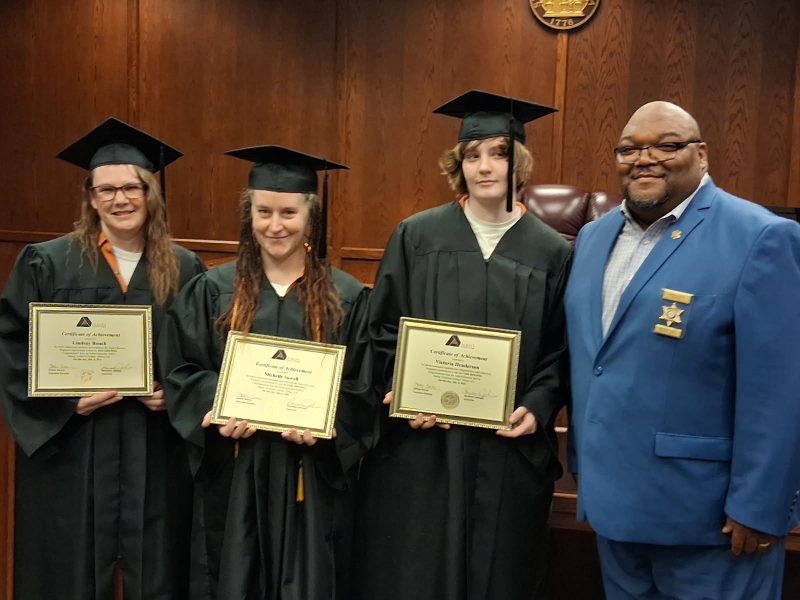
“It was an escape. I can say this has been challenging. I want to express my gratitude for being able to attend this program.”
