
Dougherty Commission hears land bank plan
Dougherty, Albany officials looking at joint project to return property to tax rolls
By Carlton Fletcher
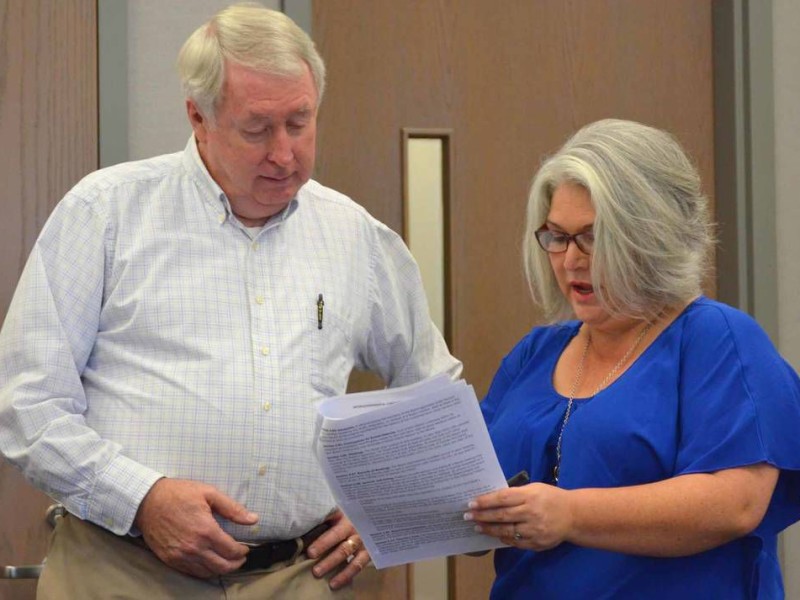
ALBANY — Albany-Dougherty Planning Services Director Paul Forgey and Planning and Code Program Specialist Angel Gray gave a detailed report to Dougherty County commissioners at that board’s work session Monday morning on the proposed creation of a joint city/county land bank.
Forgey said a land bank would allow for the acquisition of “underutilized, blighted or tax delinquent properties and return them to productivity.”
Gray, meanwhile, said the proposal would “create jobs, enhance property value (in the community), stabilize neighborhoods, reduce crime, save on government costs and return properties to the tax base.”
County Attorney Spencer Lee gave commissioners a quick “Land Bank 101” tutorial, noting that in the case of many properties eligible for acquisition by a land bank, “it’s the only way you’ll ever recoup taxes owed that keep rolling over year after year.”
County Administrator Richard Crowdis said that the county had allocated $30,000 in its FY 2017 budget for development of a land bank program, and Lee said the city had agreed to match that amount. But Forgey said a reasonable first-year budget would more likely take “between $80,000 and $100,000.”
Lee suggested that, if the city — which will discuss the joint land bank issue at its meeting Tuesday — and the county sign a memorandum of understanding creating the land bank, “I would recommend that each body allocate $50,000.”
Among the needs for the development of a land bank, which has long been a goal of District 3 Commissioner Clinton Johnson “as a way to eliminate blight,” are a city/county agreement, the appointment of a suggested seven-member board, research on the locations of eligible properties and development of a strategy for property acquisition.
Gray told the commission 13 land banks have been created in the state since the Georgia Legislature passed the Land Bank Act of 1991.
Also at Monday’s meeting, Dougherty County Police Chief Jackie Battle introduced her department’s top employees of the year before giving her annual report to the board.
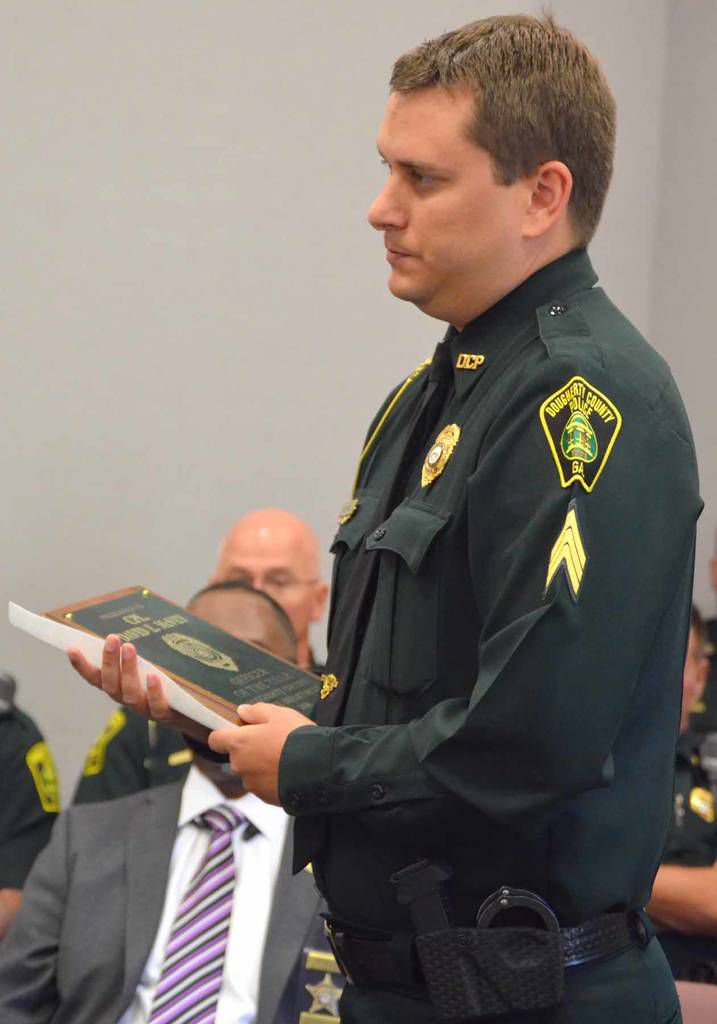
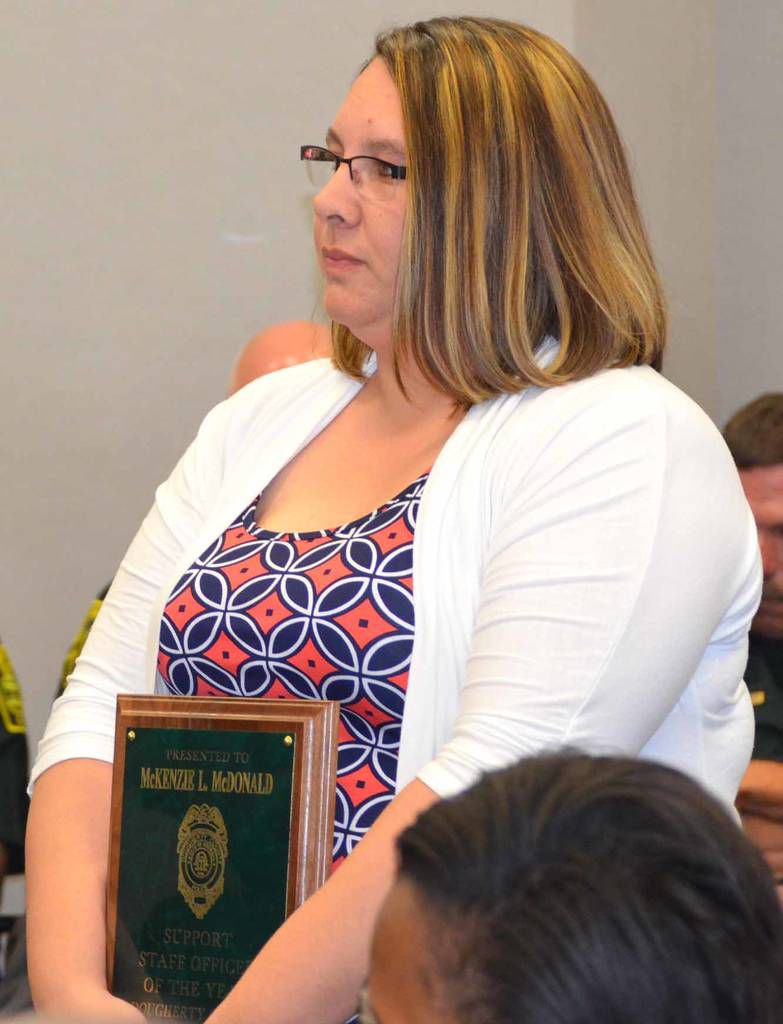
Sgt. David McVey was named Officer of the Year by both the DCP and the Dougherty County District Attorney’s Office; senior clerk/dispatcher McKenzie McDonald was named Support Staff (person) of the Year, while — for the fifth time — Patrol Officer Donald Eubanks was named High Shooter of the Year (often called “Top Gun”).
“I feel honored to work with such a supportive team,” McVey said. “Just like I always feel that my fellow officers have my back, I know I couldn’t (win this award) without their support.”
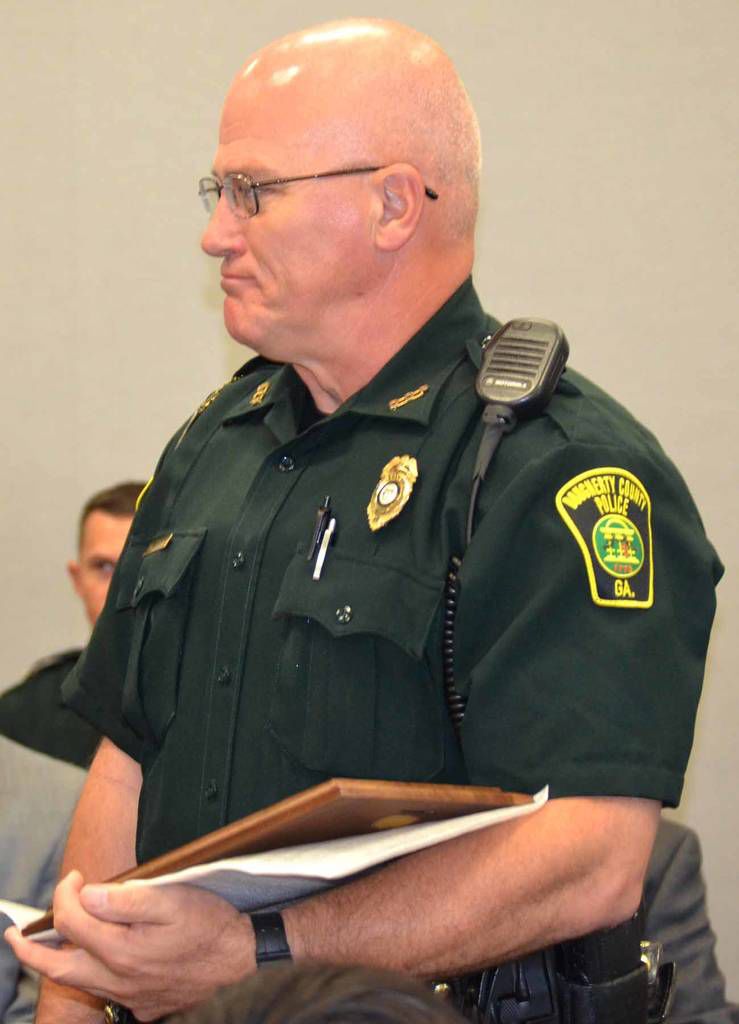
Battle, meanwhile, also was honored by the District Attorney’s Office as the Law Enforcement Executive of the Year.
“I was pleased and surprised to get the award,” she said.
In her annual report to the commission, Battle noted that major crimes in the unincorporated areas of the county had declined, most notably robberies and homicides. For the second year in a row, the county police reported no homicides. There was an increase, however, in burglaries and larcenies, the chief said.
Battle also said that dispatch calls have declined steadily since 2012, to a low of 5,564 in 2016. She said increased usage of 311 in the community was one of the reasons. The chief also noted that the one-person Animal Control officer had responded to 1,200 calls during the year.
Battle said one of the primary problems she fights each year is attrition, much of which can be attributed to lower pay than other area law enforcement agencies.
“We lost 15 people last year,” she said. “One person died; we had three who were terminated, and one person retired. The others were, generally, resignations, and the primary reason is the pay scale. We’re only a couple of positions down now, but it’s tough to fill those positions when we attract some quality candidates, but they decide not to come on board because the pay is too low.”
Also at the meeting, Juvenile Court Judge Herbie Solomon asked the commission to approve a $319,000 Criminal Justice Incentive Grant, for which the county has no financial obligation. Solomon said the county has been receiving the funding since 2013, and it has made a difference in the community.
“We average serving 64 children and their families each year,” the judge said. “That’s what’s so good about this program, it involves the entire family. And I truly believe the program is making a difference.
“The recidivism rate is far less for children who go through our program. The general rate is 63 percent for that population, but it’s 34 percent for children in our program.”
Author

Related Articles
Dougherty Jail graduates first class of female GED recipients
“It was an escape. I can say this has been challenging. I want to express my gratitude for being able to attend this program.”

From cotton to cloud: In the data center debate, is rural Georgia once again being asked to carry the cost?
Across much of rural Georgia, the abandoned cotton warehouses and shrinking tax bases remain — enduring reminders that industries built to serve distant markets do not necessarily stay rooted in the communities that first sustained them.
Dawson Council approves $400,000 lifeline in emergency meeting as financial accountability remains elusive
Less than a week after city officials publicly acknowledged the City of Dawson cannot continue operating without additional financing, the Dawson City Council convened a hastily called emergency meeting Tuesday evening and unanimously approved authority to borrow up to $400,000 through a tax anticipation note.
