
Dougherty County Commission discussing how to move code enforcement operations forward
From Hurricane Michael alone, 77 complaints in Dougherty County have been called in to Code Enforcement
File Photo
By Jennifer Parks
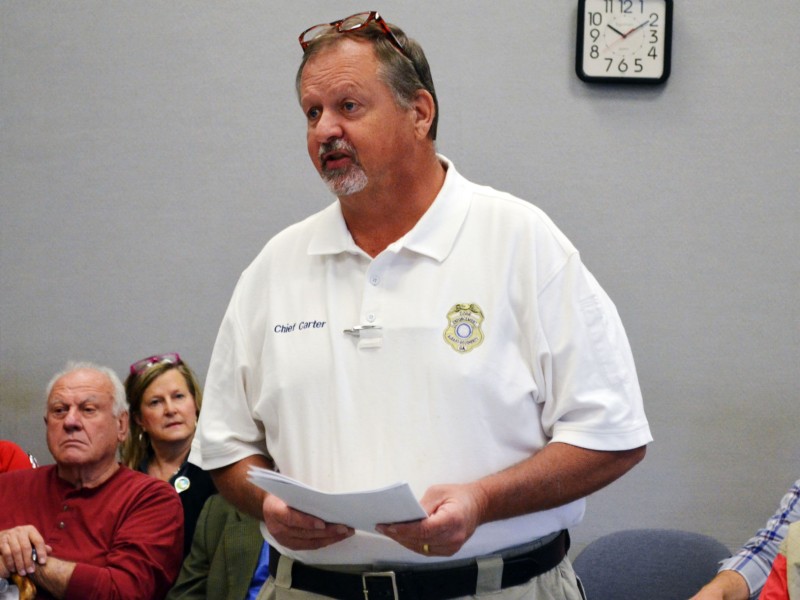
ALBANY — An update on his department before the Dougherty County Commission on Monday ultimately led to the beginning of a larger discussion on what Code Enforcement Chief Robert Carter and his team could be doing to address community concerns.
Carter said his department is complaint-driven, which means it usually responds to complaints it receives rather than acting on apparent violations — so the staff must be invited in to do an inspection. Through a non-emergency 311 call center, and its app, citizens in the county can log in those complaints.
From Hurricane Michael alone, 77 complaints were brought to Code Enforcement’s attention — and the number is climbing. Due to the process involved in dealing with insurance companies and the backlog contractors are facing, Carter said a six-month grace period was given concerning hurricane-related issues in order to grant individuals and businesses time to address them before enforcing compliance on some of the safety hazards and “eyesores” resulting from the storm.
He said the process with any code violation typically starts with a notice that allows for a 30-day window to comply. Failure to comply results in a step-by-step process that can eventually land the offender in Dougherty County Magistrate Court.
“The Magistrate Court responds to us great,” Carter said.
The commissioners asked questions about overgrown lots or multiple cars decaying in front of homes, leading District 2 Commissioner Victor Edwards to ask if the ordinance Code Enforcement works under has enough teeth.
Carter said that it does, but in order to be proactive in the unincorporated part of the county, his staff needs the commission to specify that it wants the department to act on.
“We need to let people know (that) this is how you address it,” Commission Chairman Chris Cohilas said. “People don’t just drive around looking for code violations.”
County Attorney Spencer Lee brought up an example involving Radium Springs to demonstrate that the system does work when people call things in.
“They will go out and take care of that case,” he said. “Whatever it is, they will do it.”
Carter said he has an officer committed to addressing concerns relating to storm damage, such as business signs that appear to be in unsafe condition due to Hurricane Michael. He also addressed a question from Cohilas concerning the homeless in downtown Albany, saying he has not been actively involved in those discussions.
There have been cases of people feeding the homeless in the Tift Park area. Cohilas said he recently had an issue with one of the windows in his law firm getting smashed, while also bringing up the ongoing concern of the hubs in Albany for the drug trade and prostitution.
The hubs the chairman was referring to were some of the hotels in Albany known to be havens for these activities.
“(The District Attorney) could condemn those,” Cohilas said, suggesting a collaboration with city of Albany, county officials and the Dougherty District Attorney’s Office.
Carter said such joint meetings have taken place. Cohilas, a former chief district attorney, said that the office has “a really big hammer” and that it would largely take demonstrating the number of arrests and indictments tying those activities to certain facilities to stir the office to action.
District 3 Commissioner Clinton Johnson and District 6 Commissioner Anthony Jones pointed out that shutting down hotels may bring about housing challenges for some families — to which Jones suggested a “sit-down” with Albany Housing Authority officials.
“We need to get to these small issues so we can (weed out) where the criminals are,” Jones said.
Lee said social problems do need to be identified, and connections ought to be made to the services that are needed.
Carter said that, in order to be more proactive, he would need one more officer in the county. He said the Albany City Commission is expected to consider getting two more officers for his department to address issues in the city.
Carter said the caseload for his department is 2,000-3,000 cases within the city, and 200 in the county.
Related Articles
James Rubino installed in new role at Marine Corps Logistics Command in Albany
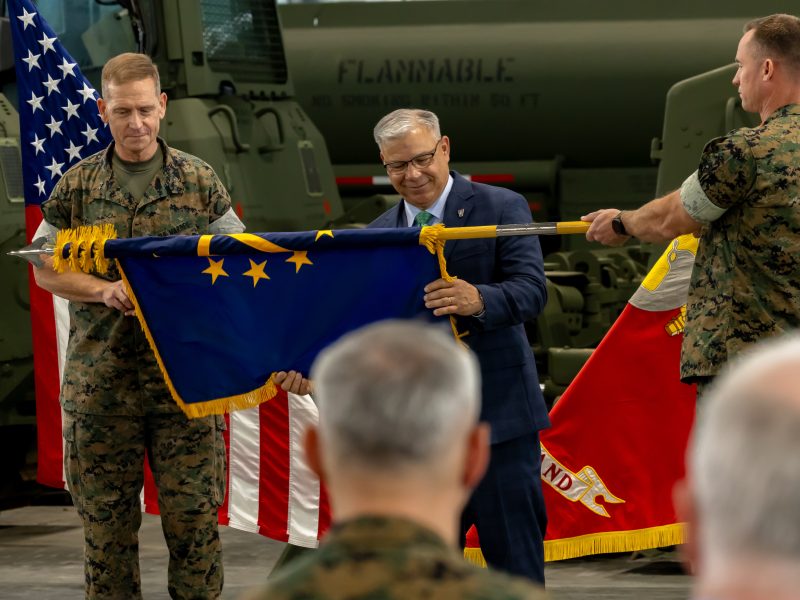
James L. Rubino recently assumed the role as executive deputy of Marine Corps Logistics Command in Albany. In his new role he will oversee integrated logistics support.

Rain depresses voter turnout in Dougherty County
“A lot of people don’t vote when it’s raining. People don’t do a lot of things when it’s raining.”
City of Albany faces shortfall for police, fire salaries
“We can’t tell staff to hire more police officers and then complain at what it costs.”
