
Poverty puts strain on Dougherty County School System
Officials say chronic poverty can slow a child’s brain development
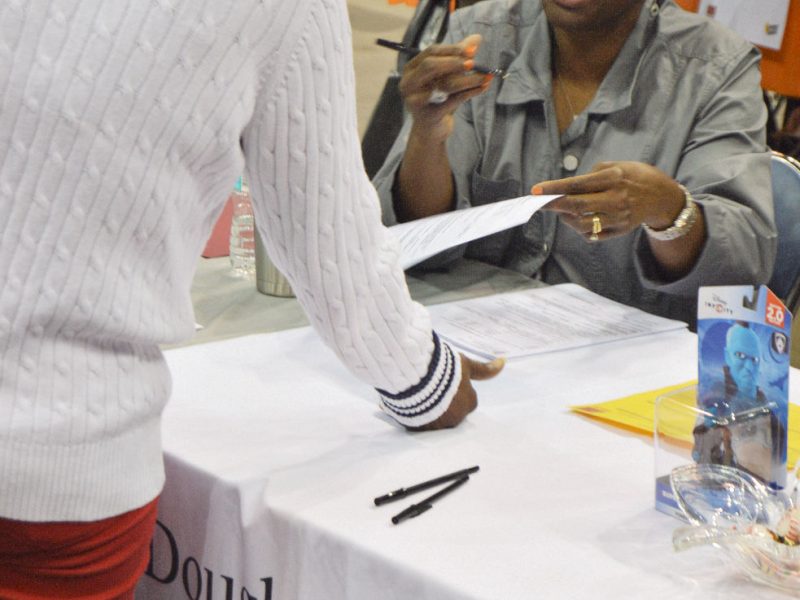
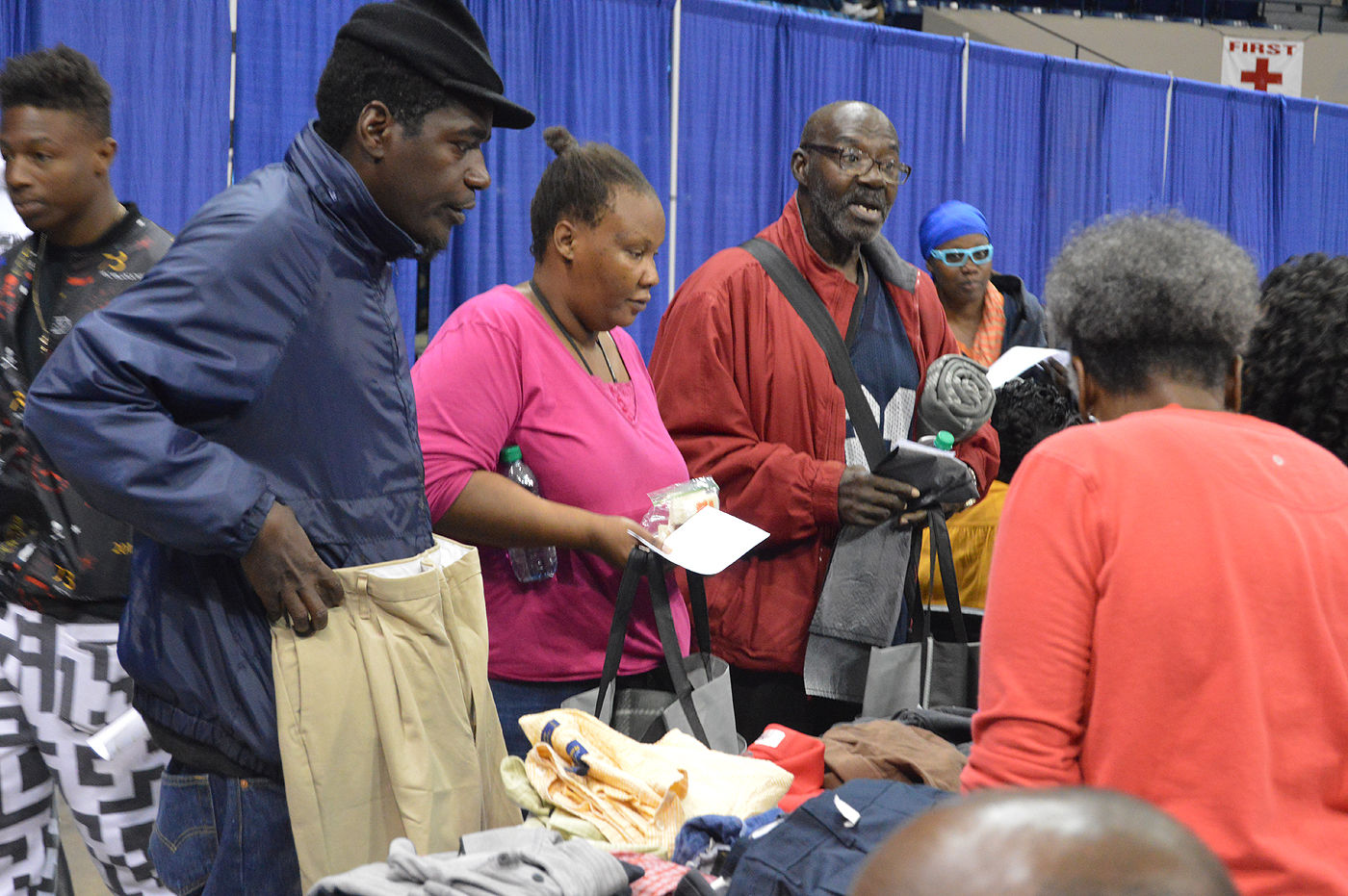
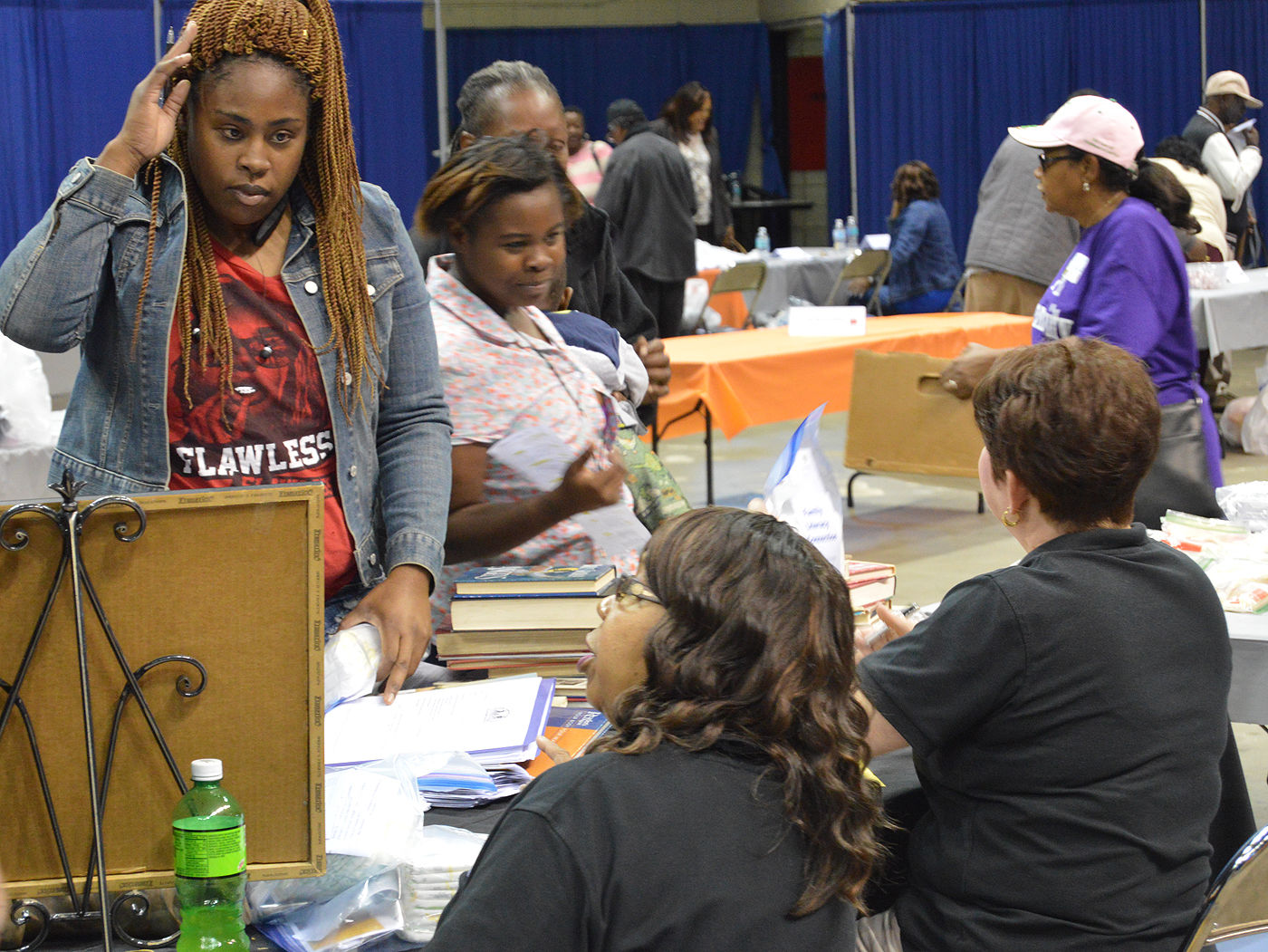
Dougherty County School System social worker Santrina Ball explains a mother’s options during a recent Albany-Dougherty Coalition to End Homelessness gathering at the Albany Civic Center. (Staff Photo: Terry Lewis)
By Terry Lewis
Editor’s Note: Fourth in a series on the impact poverty has on Albany and Dougherty County.
ALBANY — It’s no secret that poverty affects everything it touches, from crime rates to health care to housing to mortality rates. But it can be argued that the biggest bite poverty takes out of a community is in the area of secondary education. And Dougherty County just might be the canary in the mine shaft.
According to 2016 numbers from factfinder.census.gov, 25,847 of Dougherty County’s citizens (29.8 percent) reside below the federal poverty line, which for an average family of four is a $24,250 in annual income.
By comparison, Georgia’s poverty rate is 18.9 percent, and the U.S. rate is 13.5 percent. However, what is especially eye-popping is that Dougherty County’s school-age children between the ages of 5 and 17 have the county’s highest poverty rate at 41.7 percent. Additionally, more than 45 percent of the county’s population 25 and over has not graduated from high school.
More than 65 percent of the DCSS’s nearly 15,000 students live in families receiving some sort of government assistance.
“Research indicates poverty has an effect on brain development and school success,” Dougherty School System Superintendent Ken Dyer said. “For these children, poverty contributes to their lack of academic success. They are exposed to fewer words than kids who are not raised in poverty. As they grow up and their brain develops, (conditions of poverty) affect cognitive functions, and it puts them at a disadvantage.
“There is a direct connection between family income and attention, and chronic poverty is also associated with stress, which can be toxic to brain development. Those are the things that children of poverty have to deal with on a daily basis.”
Dyer said that memory problems are also common in the developing brains of young children, citing problems with short-term repetition span, working and long-term memory.
“Children of poverty can have problems with one or all three of those areas,” the superintendent said. “Studies have also shown that the 20 percent gap in test scores between poor and middle class children could be the result of poor brain development.”
In addition to cognitive issues, the Dougherty school system must also deal with attempts to locate and to educate homeless children.
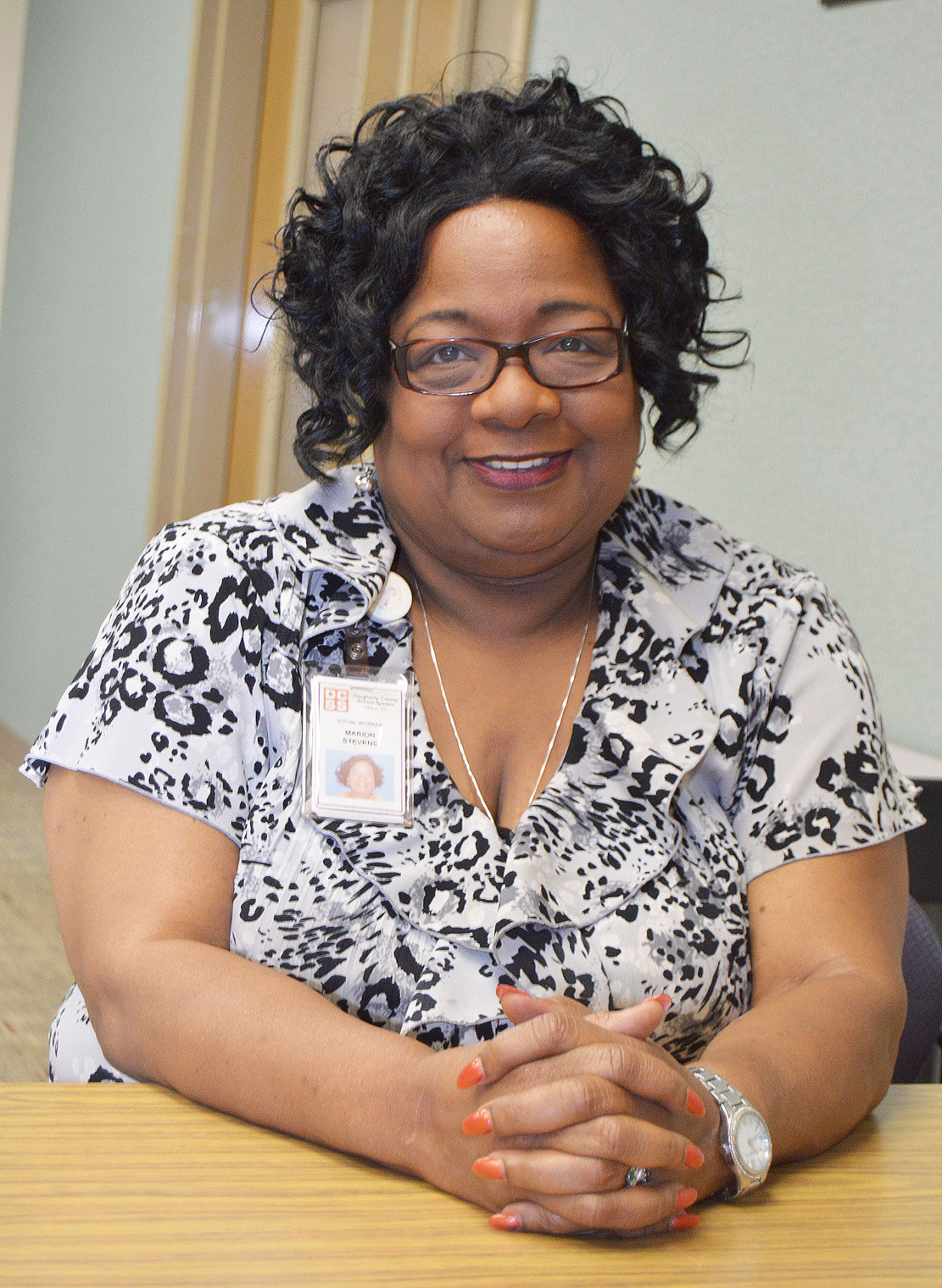
“It can be difficult to educate homeless children because we first have to find them,” DCSS Homeless Coordinator Marion Stevens said. “According to our latest numbers, we have 797 homeless children in the system. Also most of these kids are being cared for by a young, single mother. Every day, they are in survival mode, and education is not a priority. They are trying to figure out where they are going to spend the night and if they are going to have something to eat.
“Once we find them, most are already in the third grade, and that puts them at a huge disadvantage.”
According to Dyer, the school system defines homeless as individuals whose night-time residence is not fixed, stationary, permanent, and not subject to change; who are not accustomed to a predictable or consistent routine; whose physical and psychological needs are not adequately or sufficiently met in the home.
The homeless definition also includes children and youths who are:
• Sharing the housing of other persons due to loss of housing, economic hardship or similar reason;
• Living in motels, hotels, trailer parks or camping grounds due to the lack of alternative accommodations;
• Living in emergency or transitional shelters;
• Abandoned in hospitals;
• Living in a primary night-time residence that is a public or private place not designed for or ordinarily used as a regular sleeping accommodation for human beings;
• Living in cars, parks, public spaces, abandoned buildings, substandard housing, bus stations, train stations or similar settings;
• Migratory.
Cheryl Calhoun of Albany’s Family Literacy Connection has extensive experience with adults who lack high school diplomas, many of whom are heads of single-parent families. The center provides day care for small children while the parent is working to get his or her GED.
“Many of the people who come here are below the poverty line and homeless,” Calhoun said. “They don’t feel valued, and you can see it in their eyes as soon as you meet them. We help them by offering GED training, after-school programs and child care. When you treat them with respect, it gives them hope.”
According to the DCSS, 20 of the county’s 21 schools, save Lake Park Elementary, are Title I eligible, and the entire system is on the USDA free breakfast and lunch program.
However, the news is not all bad for the system. In September, the DCSS’s 2017 adjusted four-year cohort graduation rate bested the state average for the second straight year, increasing to 83.3 percent from 81.4 percent last year, according to numbers from the Georgia Department of Education.
The state average is 80.6 percent.
Mary Braswell’s research provided information and statistics that are used in the articles in this series.
Related Articles

Albany teen, 16, makes bodybuilding debut at Atlanta OCB Pro/Am
Crockett, an Albany resident and student at Albany Technical College Academy, placed second in the teen bikini division this weekend at the OCB Immortal Muscle Pro/Am Bodybuilding Competition in Atlanta, becoming the youngest competitor across all categories at the event.
Retired Albany educator makes an impact as jail school instructor
Shortly after taking office in January 2025, Dougherty County Sheriff Terron Hayes initiated the “Jail to Jobs” program that helps students prepare for the GED exams, and Benjamin Johnson was tapped as the inaugural instructor.
Skills Challenge attracts more than 250 high school construction students
For hundreds of area students, the 2025 AGC South + Southwest Georgia Skills Challenge was a chance to display their talents in construction skills and get a look at what a career in one of those fields could mean.

