
Emergency personnel take part in simulated air crash
Emergency services work together during disaster drill
By Jon Gosa
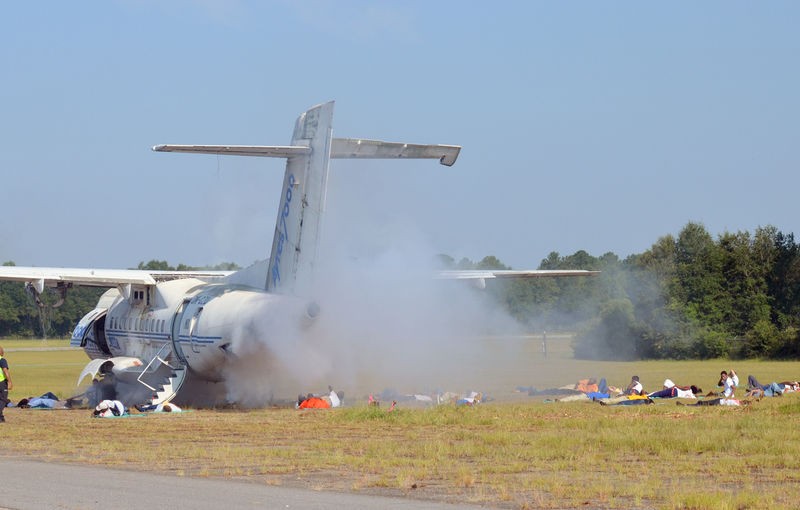
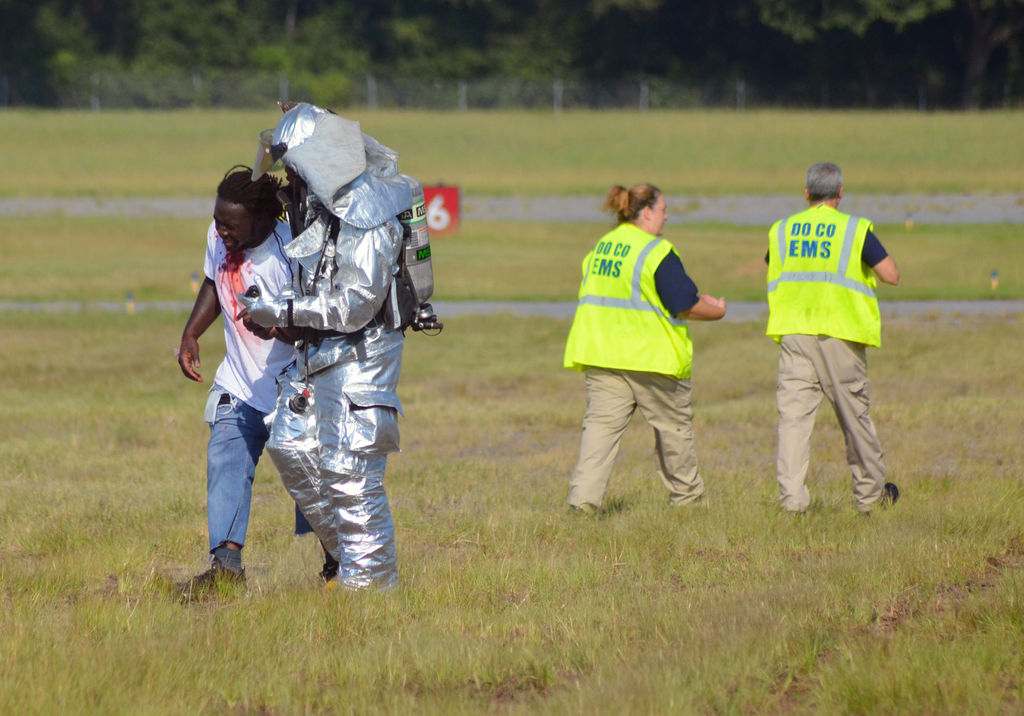
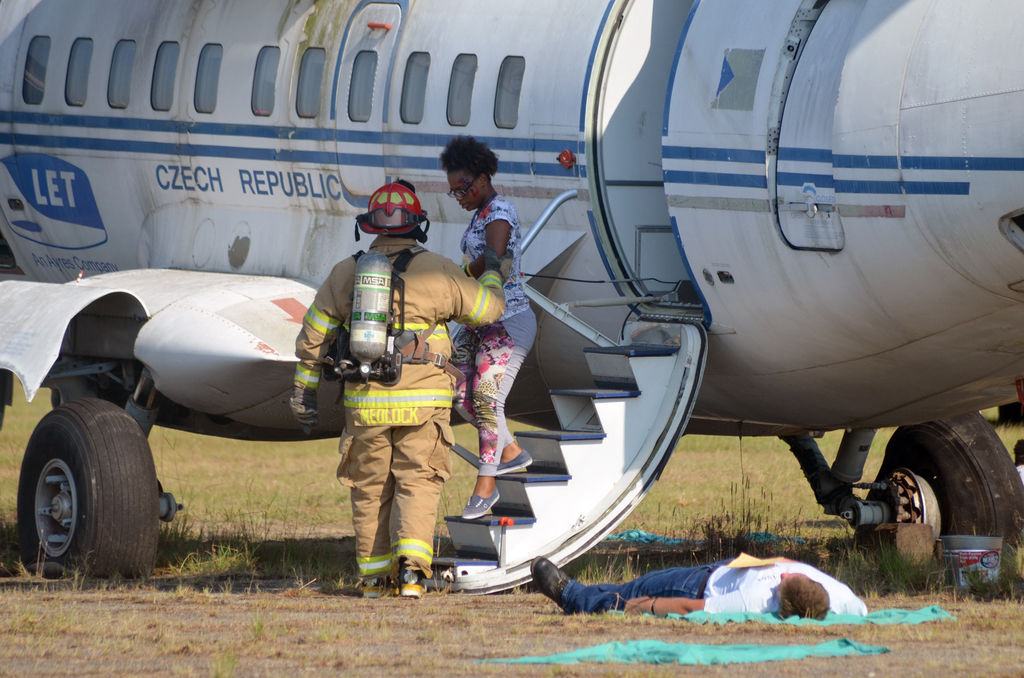
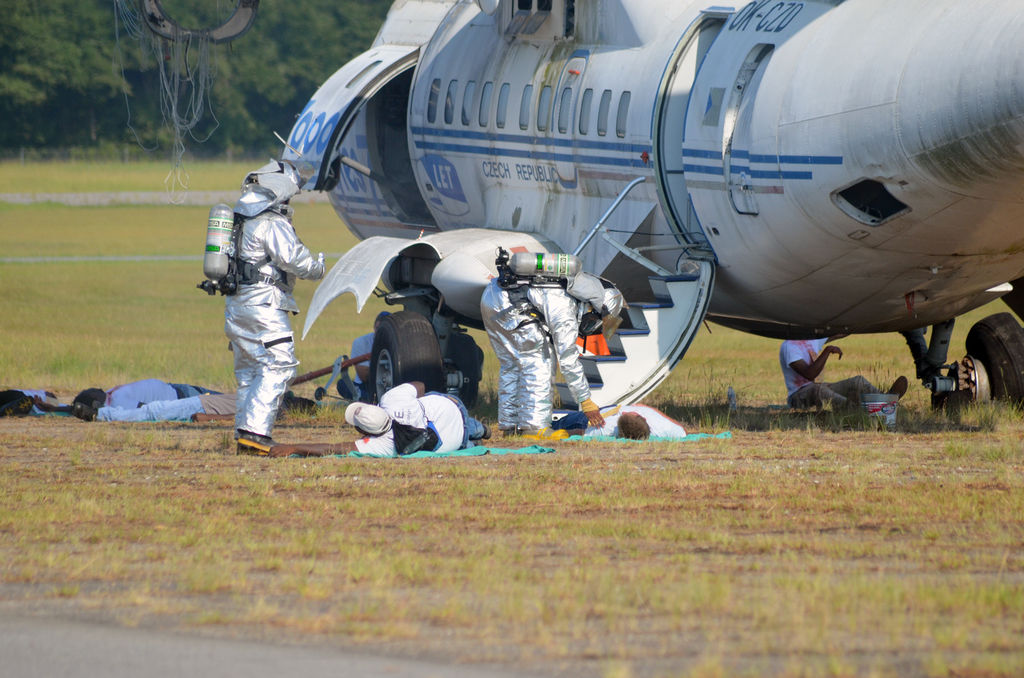
ALBANY — First responders from the Southwest Georgia Regional Airport, the Albany Fire Department, the Albany Police Department, Dougherty County EMS and the Red Cross rushed onto the scene of a smoking aircraft surrounded by at least 60 wounded or dead victims Thursday during a Federal Aviation Administration simulated disaster drill.
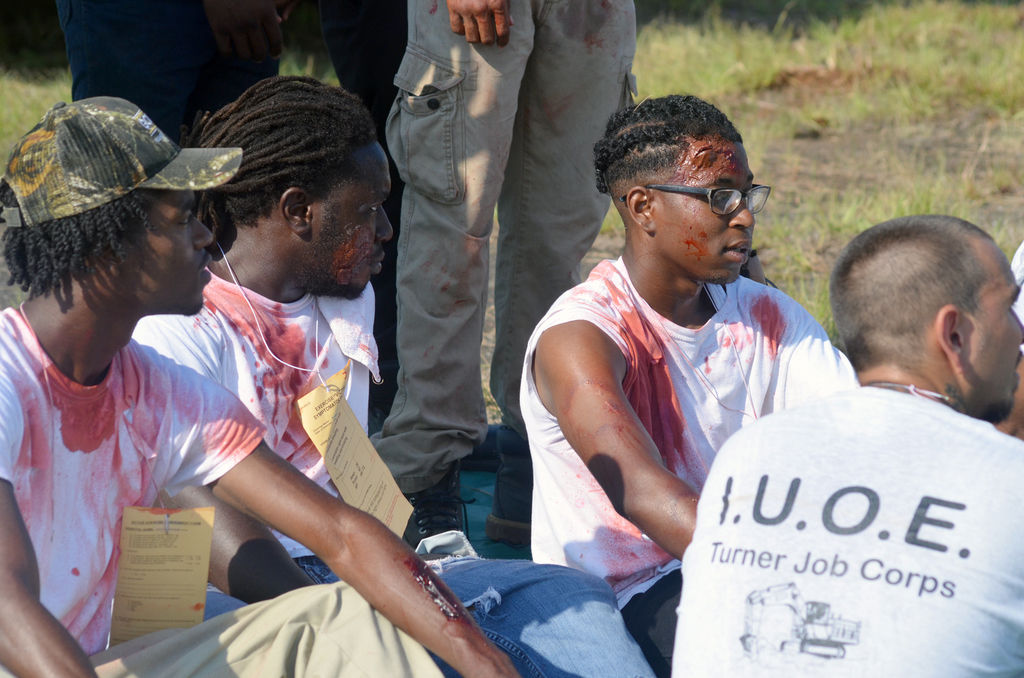
The “victims” were neither wounded nor dead, but volunteers from Turner Job Corps who added an element of realism to the event, covered in fake blood, lacerations and burns, as well as acting out other major trauma-related injuries.
The emergency drill was a simulated air crash designed to exercise the airport’s emergency plan, disaster response, mutual aid support, communications, triage, transport and family assistance center.
“The exercise is important to assure the public of the city’s readiness plan for a potential disaster,” said airport Public Safety Chief Bernard Ford. “It also gives confidence to the traveling public that Albany’s Southwest Georgia Regional Airport is a safe place for arrivals and departures. I thought the drill went extremely well. All of the departments involved cooperated effectively and worked as a team.”
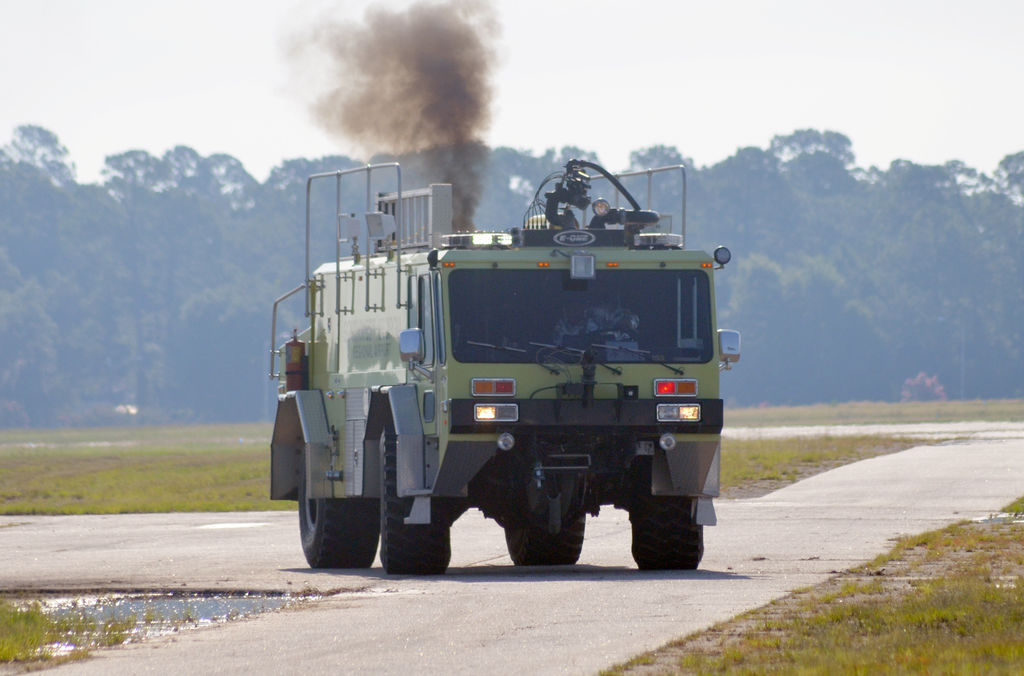
Volunteer victims were dispersed in and around the stripped-down Ayres 7000 aircraft located just beyond the airport’s control tower, smoke bombs were ignited and emergency personnel were sent in. First on the scene were the E-One Aircraft Rescue firefighting trucks capable of delivering both fire suppressing foam and more than 1,500 gallons of water per minute. Once the all-clear was given, Emergency Management Services personnel began attending to the wounded.
“This is one of the few times that we actually get to interact with the airport and their public safety crews. It brings us all together so we know what role we play,” said Dougherty County EMS Chief Greg Rowe. “We’ve done this before, but every time we do it we learn a few new things that we weren’t aware of. It helps us understand how we’re going to function and let’s us know what our resources are. One thing that is unique about this year that we have never had in an airport drill before is that we have two helicopter services that are close by. If this was real, we would have at least four choppers on the way.”
Airport and FAA officials stress the importance of disaster drills, especially in light of the fatal January crash at the Albany Airport that killed local businessman David Britt Knight, 40, Lake Park Elementary School teacher Brittany Kerfoot, 30, and retired Georgia State trooper Kevin Coalson, 49.
“Another major concern that we want to be prepared for is that we have major cargo aircraft coming in and out of here with FedEx and UPS,” said Rowe. “We don’t even know what they are carrying, such as hazardous materials. These drills have helped us to realize that it is not just the passenger airplanes that we need to worry about, it’s also when that call comes in and it’s a FedEx, UPS or another cargo-type airplane carrying materials that could change the whole scale from being a victim situation to a huge-scale contamination situation.”
According to officials, the training must also take into account the proximity of residential neighborhoods to the airport. If a crash did occur, more than just passengers could be affected.
“When we get on the scene of something like this, we begin triaging victims as minor, major, grossly traumatic and death,” said Rowe. “As soon as we get the cal, we notify the hospital as to the severity of the situation so they can start clearing some room. There is a trauma protocol that they will follow as they begin notifying the trauma teams.
“We have been planning this drill for about six or seven weeks, and after it’s all over we will go back to the table and determine what worked and what needs improvement.”
The FAA requires that a readiness and coordination drill be held every three years. Its aim is to create a realistic situation of emergency conditions.
Related Articles
New commander takes helm as Marine Corps logistics adapts to evolving battlefield
Brig. Gen. Kevin G. Collins assumed command of Marine Corps Logistics Command during a change of command ceremony at Marine Corps Logistics Base Albany, succeeding Maj. Gen. Keith D. Reventlow after four years leading the organization responsible for sustaining Marine forces around the globe.
DOT says delay in Oglethorpe Bridge opening should be brief
“We know it’s not going to be July 22. We don’t think it’s going to be much later than that.”

City of Albany has big July 4 celebration planned for Saturday
“It’s going to be a lot of moving and shooting them off in a short time. It’s going to be a big show.”
