
Experts: Water a precious commodity that must be protected
Region’s underground aquifers supply most area water systems
By Carlton Fletcher
ALBANY — Jon Bergozza found his calling when he was given a position in a local, small-town water utilities department and told he’d get an additional dollar an hour in pay for every certification he achieved.
Bergozza has since obtained the state’s highest (Class 1) certification in water and wastewater operations and now serves as an independent supervisor of water systems in Baconton, Sasser, Dawson and other area locations.
An affable, high-energy sort who has an obvious passion for all things water, Bergozza patiently answers questions about a topic that’s in the news lately because of the tainted water supply in Flint, Mich. Between mini-lessons on things like radiological contaminants, groundwater vs. surface water and his take on the overuse of natural aquifers, Bergozza makes a point that more and more people are coming to grips with.
“Water is one of the most precious commodities on Earth,” he says. “It’s time that people started treating it like that.”
The growing tragedy in Flint, which, it turns out, is by no means an isolated incident, suddenly has Americans, who’ve basically taken the resource for granted, anxious to know whether their own water is safe. That’s a good thing for people like Flint Riverkeeper Gordon Rogers, who is executive director of an organization in a network of conservationists and environmentalists who are battling to keep Georgia’s waterways clean.
“What the officials in Flint did was go in the cheap direction,” Rogers said. “When the people in charge start cutting corners, yes, that’s a concern. I’ve always said humans make mistakes, and sometimes they make big ones. That’s why we’re opposed to such plans as aquifer storage and recovery in our state, which has been proposed. For such a proposal to work, there can be no mistakes. We’ve seen that that’s not likely.”
Like Albany, most water systems in Southwest Georgia utilize groundwater, a system that officials say is much less likely to have contamination issues than systems that use surface water, as was the case in Flint. Environmental Protection Division District Manager Lisa Myler said groundwater systems are inherently safer.
“Groundwater systems are much cleaner, they’re filtered naturally by the Earth,” Myler said. “Even so, all water systems in the state are monitored regularly to guard against contaminants through regular sampling. If there is any abnormality in samples submitted for testing, the water system is shut down.
“Obviously, because systems rely on samples collected by individuals, proper sampling can be an issue. But everything possible is done to keep each of the state’s systems in compliance.”
Bergozza said the science of water systems in the region, both rural and in larger municipalities, makes contamination like that in Michagan highly unlikely.
“Our water systems, because most are groundwater systems, are already much less likely to be contaminated,” he said. “Plus, our water is very, very, very protected by outside sources. Of course, contamination can and does happen, but you won’t see the kind of lead contamination like they have in Flint. That is actually a corrosivity problem; lead and copper leach into the water system after building up on supply pipes.
“There are no lead pipes in our water systems here. But, even in a case like Flint, if they’d added proper chemicals — a polyphosphate — in their water, they wouldn’t have had the problems they had. About the only way you’d have a lead or copper problem around here is in a rural home that was built 80 years or more ago.”
Rogers said that while efforts to keep the state’s waterways clean is not a large drinking water problem in Georgia, the two cannot be separated completely.
“It seems our present administration (of Gov. Nathan Deal) is strongly biased toward government ownership of water vs. water as a public resource coupled with private property use rights,” he said. “That’s why Senate Bill 36 (sponsored by Sen. William Ligon, R-Brunswick) is so important. It passed the Senate with only three dissenting votes, but is currently stuck in the House Natural Resources and Environmental Committee, where Rep. Lynn Smith, R-Newnan, has blocked it under direction from Georgia EPD.
“Our work for clean surface water is directly connected to our wells. Our main concern right now, though, is not what your article is about. We have low flows in times of drought, and that’s when such proposals as aquifer storage and recovery surface. The state of Georgia currently doesn’t want to admit that’s a problem.”
SB 36 says: “The General Assembly finds that certain areas of this state are dependent on the productivity, integrity, and quality of aquifers underlying those areas for the purpose of providing a clean and reliable water supply. This water supply supports local economies and is superior to alternatives in terms of both cost and reliability.
“… The process of storing surface water in these aquifers for later recovery for water supply or other uses and the process of moving water among aquifers for water supply or other uses, together known as aquifer storage and recovery, potentially pose significant threats to the reliability and physical integrity of these natural water supplies unless protective regulations are in place. On or before July 1, 2016, the Board of Natural Resources shall adopt regulations that provide for the protection and preservation of the Floridan aquifer. Such regulations shall include restrictions or prohibitions on aquifer storage and recovery where necessary to preserve the physical and chemical integrity of the Floridan aquifer.”
Bergozza, too, warns against misuse of the region’s aquifers.
“This is just one man’s opinion,” he said, “but I believe there is a point X where once we break past it in getting water, the water supply will deplete and go down. We can’t continue to increase demand beyond capacity. If we do, we may find ourselves in a serious situation. What we can do, though, is use our aquifers more intelligently.”
Author

Related Articles
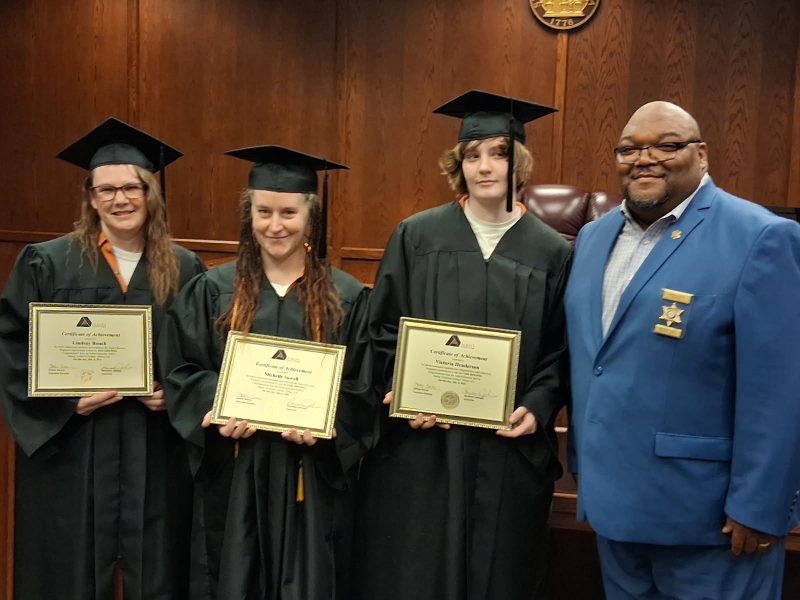
Dougherty Jail graduates first class of female GED recipients
“It was an escape. I can say this has been challenging. I want to express my gratitude for being able to attend this program.”

From cotton to cloud: In the data center debate, is rural Georgia once again being asked to carry the cost?
Across much of rural Georgia, the abandoned cotton warehouses and shrinking tax bases remain — enduring reminders that industries built to serve distant markets do not necessarily stay rooted in the communities that first sustained them.
Dawson Council approves $400,000 lifeline in emergency meeting as financial accountability remains elusive
Less than a week after city officials publicly acknowledged the City of Dawson cannot continue operating without additional financing, the Dawson City Council convened a hastily called emergency meeting Tuesday evening and unanimously approved authority to borrow up to $400,000 through a tax anticipation note.
