
GAE hosts annual legislative banquet in Albany
Georgia Association of Educators press 2018 legislative agenda
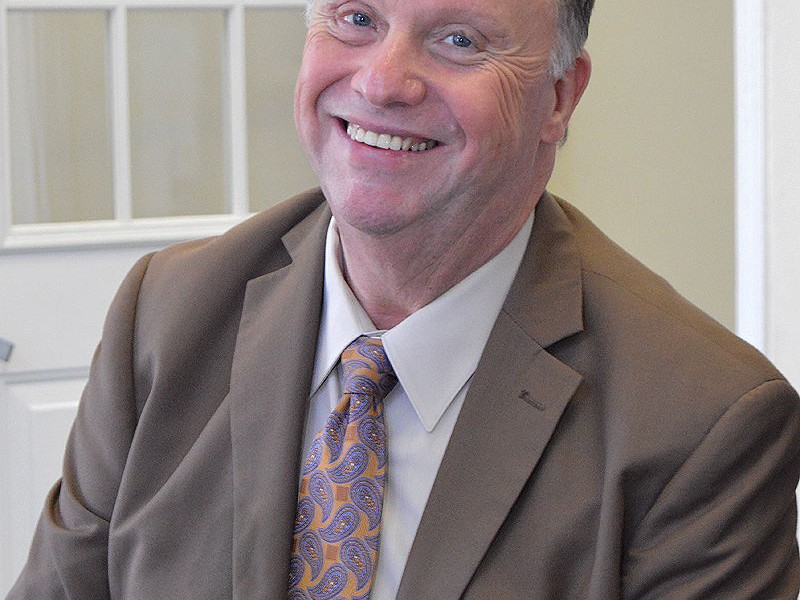
By Terry Lewis
ALBANY – Georgia Association of Educators President Sid Chapman made his annual swing through Georgia last week, lamenting “toxic testing,” inadequate education funding from the state, and teacher retention and salaries.
“We are not in favor of the changes requested by Gov. Deal that remove certain aspects of Georgia’s current ESSA (Every Student Succeeds Act) plan,” Chapman said. “GAE has been fighting what we call ‘toxic testing’ for many years. What Gov. Deal is asking could take us back to the days of overuse and overemphasis of high-stakes standardized testing that had become ‘toxic’ to our students. The open input period from which Georgia citizens, including thousands of teachers, commented and participated in feedback sessions and online surveys clearly indicated they wanted to move on from that requirement.”
Chapman points to actions such as removing key indicators for student attendance; the inclusion of a well-rounded education that includes the arts and physical education; career, technical and agricultural education and world languages; and AP (Advanced Placement) and IB (International Baccalaureate) as steps backwards in how children should be educated.
“Georgia is beginning to make positive strides as shown by our recent ACT scores. We neither want to slow, stop nor reverse this momentum at this point,” he said.
A Democrat who has announced a bid to unseat current Republican State School Superintendent Republican Richard Woods, Chapman zeroed in during comments on the ever-contentious issue of public school funding.
“With too many of our public schools still suffering the effects of the imposed austerity cuts from the past 14 years, GAE will again be calling for the full funding of our public schools in next year’s legislative session,” Chapman said. “I hear often from our members on the lack of resources available. This challenge needs to be addressed from both the legislative and economic development fronts. The affected communities also need assistance in helping to build their commercial base so monies are also available from their end.”
Chapman added that ensuring teachers receive their full raises aids in this effort because they cannot spend locally with money they do not have.
“Many of our rural school districts are especially impacted by funding, which is why the legislature must update the state funding formula,” said Chapman. “We simply must address the impact of high poverty in our schools wherever that may be. We know this has a direct impact on schools’ learning environments and, consequently, those children’s ability to concentrate and grasp their lessons. However, we must begin associating the funding with the specific and different needs between rural and urban schools.”
Chapman noted the plight of many of the state’s teachers in regard to recruiting, retention and salaries.
“GAE has been waging the battle for salaries and benefits since its inception,” he said. “It goes hand in hand with attracting and retaining quality teachers for our schools. This is a persistent problem that has now caught up with us in that Georgia and the nation are facing teaching shortages. Teaching is difficult. It is not easy. It requires professionally trained personnel. The market should reflect that reality.
“Teachers are the ones who prepare our children to become the tech workers, doctors and engineers of each generation. Our educators should not have to constantly battle to earn wages and benefits commensurate with their importance.”
Chapman said the GAE will again make teacher pay a priority during next year’s legislative session.
“This is an issue that we, unfortunately, must advance every session,” he noted. “While we applaud Gov. Deal’s efforts over the last two sessions to help the situation with 3 and 2 percent salary increases, respectively, there is still the reality that before 2016, it had been seven years since Georgia educators received a pay increase. And, unfortunately, many teachers still have not received their raises due to many local school districts opting out of paying them by exercising harmful waivers.
“This will only continue to cause Georgia to fall significantly behind the national average. It is a hole we simply must climb out of if we are to both retain and attract the best and brightest for our children. We simply do not have a choice.”
Related Articles

Albany Commission will revisit downtown park project at October retreat
“Right now it’s a sea of asphalt there. It doesn’t encourage gathering. Parks and green spaces encourage gathering.”
Judge denies residency challenge; Edward Brown to claim Senate District 12 seat
An email ruling issue this week paves the way for Albany businessman Edward Brown to enter the Georgia Senate next year. A Superior Court judge denied candidate Corey B. Morgan’s challenge to Brown’s residency in the District 12 race.
Albany animal trainer seeking to fulfill dream of establishing a pet food pantry
“(If) you lose a job, you have a healthcare crisis, what do you do with the cat? What do you do with the dog? Now you will at least have someone who can help you with the food.”
