
Georgia agency hears opposition to proposed Lee County hospital
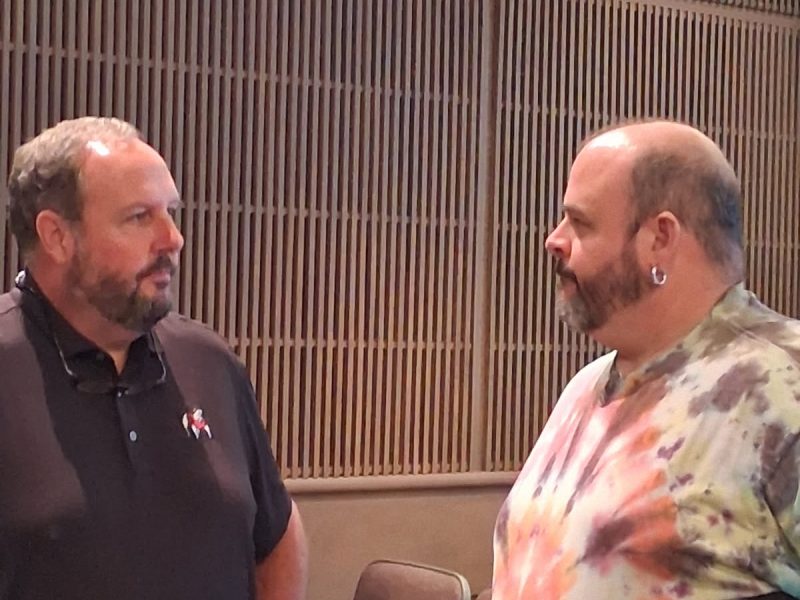
William Hancock joins attorneys in speaking out against Lee Medical Center

By Carlton Fletcher
ATLANTA — Officials with the proposed Lee County Medical Center have until Nov. 5 to respond to comments opposing the project that were made Tuesday at a hearing conducted by officials with the state Department of Community Health.
Representatives of Dougherty County, Crisp Regional Medical Center and the Georgia Alliance of Community Hospitals, and Lee County real estate broker William Hancock offered comments against the proposed 60-bed Lee County hospital during the roughly hour-long meeting.
Hearing the comments were certificate-of-need reviewers Karesha Berkeley and Bruce Henderson, and attorneys Rachel King and Roxanne Tatnum, who represent the Department of Community Health.
Robert Rozier, an attorney with the BakerHostetler law firm, represented Dougherty County at the hearing. He said the county’s one-hospital system needs to be protected to ensure that the health care needs of the community are met.
“(Dougherty County) may have to re-implement a millage rate increase to help pay for indigent and charity care if (area) hospitals are financially impacted by the proposed hospital,” Rozier said. “Dougherty and surrounding counties — except Lee County — face economic challenges, including high poverty rates, low household income, high numbers of uninsured residents, and a high Medicaid enrollment.
“Because of the socio-economic factors of the service area population, all of the existing hospitals that serve the area are safety-net hospitals, which means they provide a disproportionate share of their care for the financially needy populations. In light of these factors, the proposed hospital will be detrimental to these existing safety-net hospitals.”
Attorney Kathy Butler Polvino spoke on behalf of the Georgia Alliance of Community Hospitals, whose president, Monty Veazey, sparked cries of outrage from Lee hospital supporters when he told the Dougherty County Commission that the board had a “fiduciary duty” to oppose the Lee Medical Center.
Polvino quickly told DCH officials that Phoebe Putney Memorial Hospital in Albany was not involved in the decision to oppose the Lee hospital.
“The Alliance views this application as an attack on existing Georgia hospitals and how they operate,” Polvino said. “The application is filed under the guise of needing patient choice and competition by ‘free market advocates.’ Health care is not a free market.
“When you go to Starbucks, you have to pay for your coffee. If you go to a hospital, you don’t have to pay for your care. It is a highly regulated industry.”
Polvino said that involvement by the Federal Trade Commission in the process is a “thinly veiled attempt to challenge the entire CON process.”
“The (CON) application is asking DCH to ignore adverse impact and need, which is bad health planning,” she said.
Polvino concluded her presentation with a list of reasons why the Lee CON application should not be approved, saying it jeopardized the ability to continue to provide high levels of community benefit, it would create a critical staffing shortage, it would dilute (medical) talent, it would drive up costs of care, it would empty operating rooms and beds, and that physician support for the project is likely tied to investment opportunities.
Attorney Jason Bring, who represented Crisp Regional Hospital at the hearing, offered evidence that he said proved that “this service area does not need a new hospital.”
Bring described Crisp Regional as a 73-bed hospital in rural Georgia, offering a Level IV trauma center, pediatrics and obstetrical care. He said Crisp Regional is a teaching hospital in that Morehouse School of Medicine provides pediatric residents to the hospital, and Grady provides general residents. He also stated that the Medical College of Georgia at Augusta University also provides residents.
“Crisp Regional provided 20 percent of its adjusted gross revenues to indigent and charity care and 18 percent of its patients were Medicaid enrollees,” Bring said. “As such, Crisp Regional serves a very poor population. Crisp Regional is one of four hospitals in a government program to help stabilize rural hospitals in Georgia. There is a crisis in rural hospital settings, and the state government program highlights the struggles of hospitals in south Georgia.
“Lee County Medical Center’s proposed project will have an adverse impact on Crisp Regional because the proposed hospital will be for-profit and designed to serve the wealthy population, not the poor and uninsured. The hospital will take paying patients away from other area hospitals. Approval of this application would be harmful to the health care delivery system as a whole. There is no need for new hospital beds in the region under the department’s own numeric calculations; in fact, there is a surplus of 356 beds in the region.”
Hancock, who told DCH officials he pays $10,000 in taxes yearly in both Lee and Dougherty counties, said a number of issues about the proposed hospital troubled him.
“Having another hospital come to save everyone money sounds too good to be true, things just don’t add up,” Hancock said. “How can another hospital be in the best interest of our region? This project poses a risk to the whole community and will be a huge tax burden on both Lee and Dougherty counties.”
Hancock noted the escalating price tag of the proposed facility.
“When the project was first brought up two years ago, the hospital was projected to cost $50 million,” he said. “Later, that figure grew to $122 million, and now is estimated at $123 million in the application. Based on the 60 beds projected, the cost per room is in excess of $2 million. How can a hospital possibly offer affordable care at that cost? How can a $2 million-per-room hospital save us money when other rural hospitals are closing their doors?”
Attending the meeting in support of the Lee hospital — but not allowed to speak at the opposition hearing — were Lee County Commissioner Billy Mathis, LCMC OPCO CEO Eddie Alexander, attorney John Ray and health planning consultant Kathy Platt.
Author

Related Articles

Adult leadership group spreads concept to high school students
“The purpose of Albany Junior Leaders is to pull together leaders from all over the community. We wanted to give these youth the same experience and the same exposure we’re getting in Leadership Albany.”
Albany/Dougherty County among local governments looking at data centers
“Our understanding is that data center developments look like an easy fix for the problems that face rural America, but this is a Faustian deal at best. You can see the effects in communities across the state and country.

Dawson approves $68K excavator purchase after months of contradictory public statements
The decision concludes one portion of a controversy that has generated months of public scrutiny but leaves several unanswered questions regarding how the city’s original machine was damaged, whether employees were held accountable and what documentation supports the decision to replace rather than repair it.
