
Georgia attorney general announces settlement with for-profit education company
Career Education Corp. agrees to reform recruiting and enrollment practices
From Staff Reports
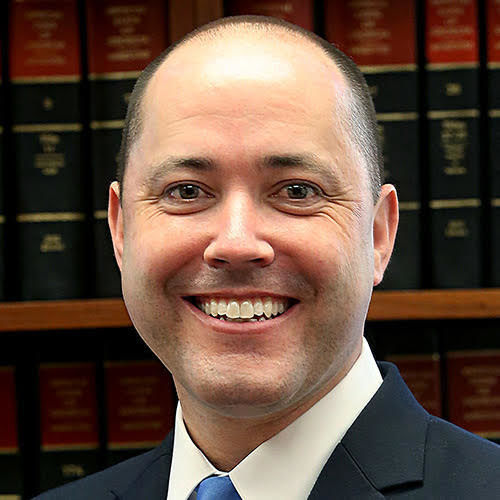
ATLANTA – Georgia Attorney General Chris Carr and 48 other attorneys general announced on Friday that Career Education Corp., or CEC, a for-profit education company, has agreed to reform its recruiting and enrollment practices and forego collecting approximately $493.7 million in debts owed by 179,529 students nationwide.
In Georgia, 16,654 students are expected to get relief totaling more than $48 million as a result of the settlement.
“We’re proud of the role that our office’s Consumer Protection Division played in reaching this settlement,” Carr said. “Now, more than 16,000 Georgia students who fell victim to this company’s unfair and deceptive enrollment practices will get the justice they deserve.”
The assurance of voluntary compliance filed Wednesday caps a five-year investigation. As part of the settlement, officials said CEC has agreed to forego any and all efforts to collect amounts owed by former students living in the states participating in the agreement.
Nationally, the average individual debt relief will be about $2,750. The company has also agreed to pay $5 million to the states. Carr said Georgia’s share will be $50,000.
CEC is based in Schaumburg, Ill., and currently offers primarily online courses through American InterContinental University and Colorado Technical University. Its brands also have included Briarcliffe College, Brooks Institute, Brown College, Harrington College of Design, International Academy of Design and Technology, Le Cordon Bleu, Missouri College and Sanford-Brown.
Carr said a group of attorneys general launched an investigation into CEC in January 2014 after receiving several complaints from students and a report on for-profit education by the U.S. Senate’s Health, Education, Labor and Pensions Committee.
Officials said the investigation revealed evidence demonstrating that:
— CEC used emotionally charged language to pressure students into enrolling in CEC’s schools;
— CEC deceived students about the total costs of enrollment by instructing its admissions representatives to inform prospective students only about the cost per credit hour without disclosing the total number of required credit hours;
— CEC misled students about the transferability of credits into CEC from other institutions and out of CEC to other institutions by promising on some occasions that credits would transfer;
— CEC misrepresented the potential for students to obtain employment in the field by failing to adequately disclose the fact that certain programs lacked the necessary programmatic accreditation;
— CEC deceived prospective students about the rate that graduates of CEC programs got a job in their field of study, thereby giving prospective students a distorted and inaccurate impression of CEC graduates’ employment outcomes.
Officials said students enrolled in CEC who would not have otherwise enrolled could not obtain professional licensure and they were saddled with debts they could not repay nor discharge. CEC denied the allegations of the attorneys general but agreed to resolve the claims through the multistate settlement.
Robert McKenna, former Washington state attorney general and current partner at the San Francisco-based Orrick, Herrington and Sutcliffe law firm, will independently monitor the company’s settlement compliance for three years and issue annual reports.
Under the agreement, CEC must:
— Make no misrepresentations concerning accreditation, selectivity, graduation rates, placement rates, transferability of credit, financial aid, veterans’ benefits or licensure requirements;
— Not enroll students in programs that do not lead to state licensure when required for employment, or that due to their lack of accreditation, will not prepare graduates for jobs in their field. For certain programs that will prepare graduates for some but not all jobs, CEC will be required to disclose such to incoming students;
— Provide a single-page disclosure to each student that includes anticipated total direct cost, median debt for completers, programmatic cohort default rate, program completion rate, notice concerning transferability of credits, median earnings for completers and the job placement rate;
— Require students before enrolling to complete an electronic financial impact platform disclosure, which provides specific information about debt burden and expected post-graduation income. CEC is working with the states to develop this platform;
— Not engage in deceptive or abusive recruiting practices and record online chats and phone calls with prospective students. CEC shall analyze these recordings to ensure compliance, and shall not contact students who indicate that they no longer wish to be contacted;
— Require incoming undergraduate students with fewer than 24 credits to complete an orientation program before their first class that covers study skills, organization, literacy, financial skills and computer competency. During the orientation period, students may withdraw at no cost;
— Establish a risk-free trial period. All undergraduates who enter an online CEC program with fewer than 24 online credits shall be permitted to withdraw within 21 days of the beginning of the term without incurring any cost. All undergraduates who enter an on-ground CEC program shall be permitted to withdraw within seven days of the first day of class without incurring any cost.
Officials said the company has agreed to forego collection of debts owed to it by students who either attended a CEC institution that closed before Tuesday or whose final day of attendance at AIU or CTU occurred on or before Dec. 31, 2013. Former students with debt relief eligibility questions can contact CEC.
The CEC investigation was led by Iowa, Connecticut, Illinois, Kentucky, Maryland, Oregon and Pennsylvania. In addition to Georgia, the agreement also covers the District of Columbia and Alabama, Alaska, Arizona, Arkansas, Colorado, Delaware, Florida, Hawaii, Idaho, Indiana, Kansas, Louisiana, Maine, Massachusetts, Michigan, Minnesota, Mississippi, Missouri, Montana, Nebraska, Nevada, New Hampshire, New Jersey, New Mexico, North Carolina, North Dakota, Ohio, Oklahoma, Rhode Island, South Carolina, South Dakota, Tennessee, Texas, Utah, Vermont, Virginia, Washington, West Virginia, Wisconsin and Wyoming.
Related Articles

Dougherty Jail graduates first class of female GED recipients
“It was an escape. I can say this has been challenging. I want to express my gratitude for being able to attend this program.”

From cotton to cloud: In the data center debate, is rural Georgia once again being asked to carry the cost?
Across much of rural Georgia, the abandoned cotton warehouses and shrinking tax bases remain — enduring reminders that industries built to serve distant markets do not necessarily stay rooted in the communities that first sustained them.

Dawson Council approves $400,000 lifeline in emergency meeting as financial accountability remains elusive
Less than a week after city officials publicly acknowledged the City of Dawson cannot continue operating without additional financing, the Dawson City Council convened a hastily called emergency meeting Tuesday evening and unanimously approved authority to borrow up to $400,000 through a tax anticipation note.
