
Georgia Chamber of Commerce hosts event in Albany
State Chamber President Chris Clark shares data on state, area’s future
By Brad McEwen
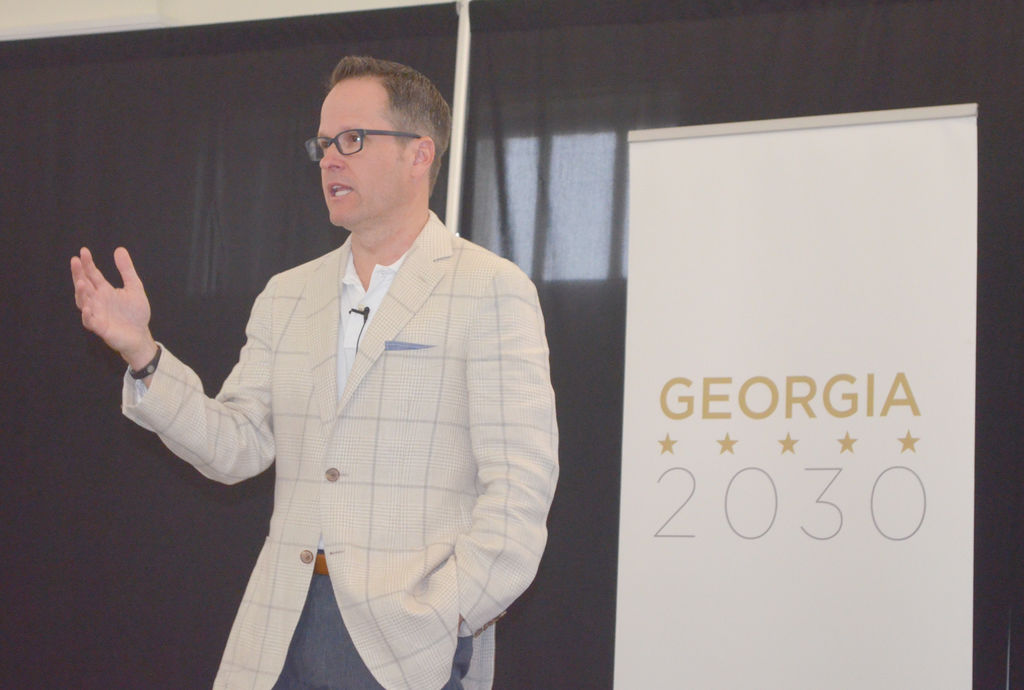
ALBANY — Albany area business and civic leaders were challenged by Georgia Chamber of Commerce President/CEO Chris Clark Friday to provide valuable feedback the state chamber can use to create a strategy for dealing with a population decrease and work force shortfall predicted for Southwest Georgia in the coming years.
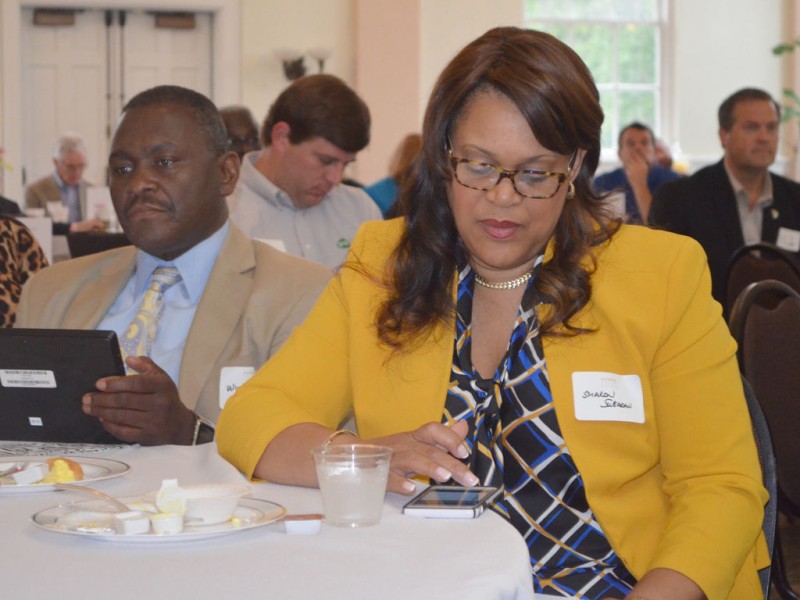
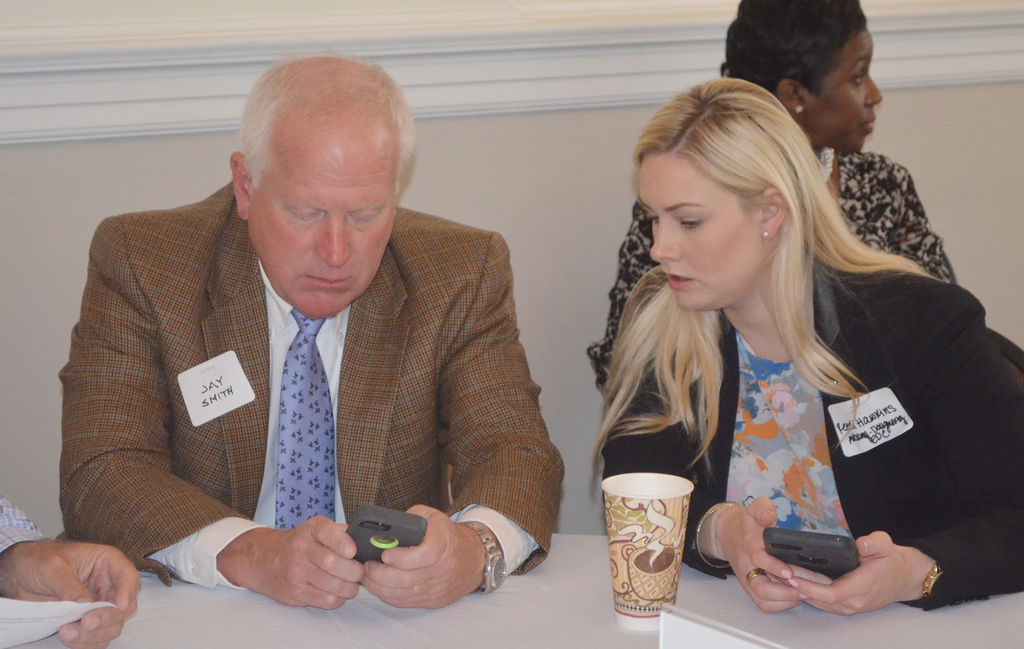
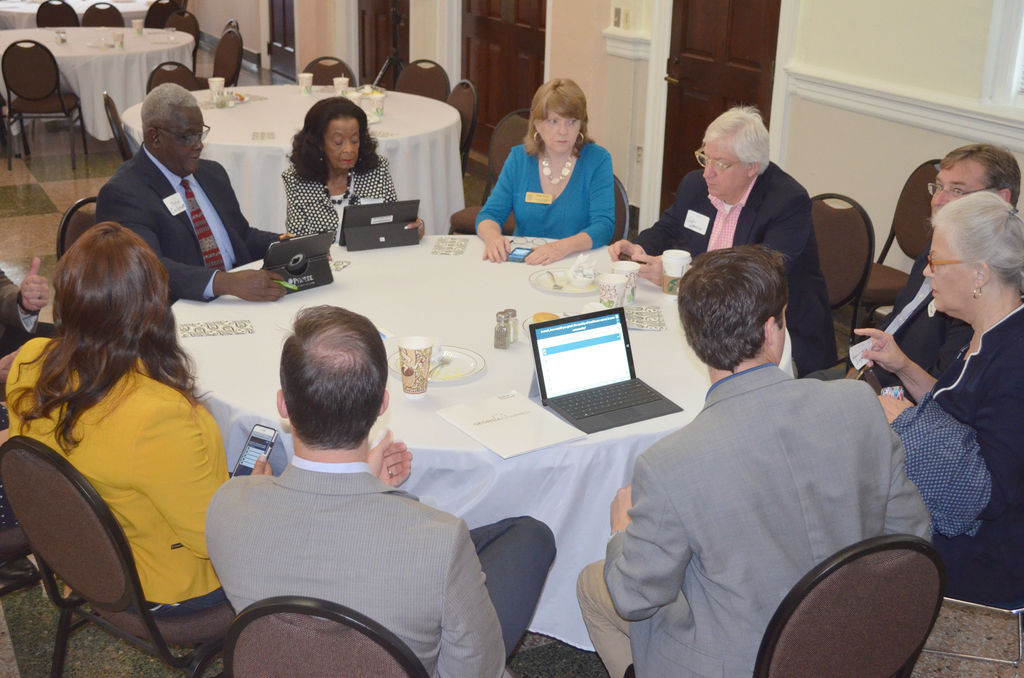
Clark engaged area leadership during the Georgia 2030 Morning Mixer, co-hosted by the Albany Area Chamber of Commerce, at Albany State University’s L. Orene Hall, where he shared some sobering information about the future of Georgia and Southwest Georgia, in particular.
According to Georgia Chamber information, the state is projected to see some significant, and seemingly positive, changes in the next 10-15 years, including an overall population increase of roughly 1.9 million people, and the creation of more than 1 million jobs.
Additionally, traffic at Atlanta’s Hartsfield Jackson International Airport is expected to increase, as is traffic on Georgia’s roadways, and activity in the state’s ports, all of which inform Clark’s excitement about the state’s future.
Southwest Georgia, it seems, is not expected to follow most of those trends, as the majority of counties in the area are facing major challenges, including an overall population decline which could put strains on the region’s work force.
“The counties in blue are going to see a modest growth,” said Clark as he pointed to a screen depicting a map of the area. “The counties in brown that you see are going to decrease in population if you don’t change things right now. Unfortunately, while 2 million people are moving to Georgia, most of them are going to the 10 most populous counties in Georgia. Over 50 counties will lose population over the next 14 years.”
Several of those counties are located in Southwest Georgia, including, Mitchell, Terrell, Worth, Calhoun, Early, Miller, Baker, Decatur and Dougherty, which is expected to lose up to 8 percent of its population.
Mitchell County is predicted to lose 8 percent of its population, or 1,908 people, by 2030, while Terrell County is facing a decline of 12 percent, or 1,059 people. Worth County is expected to lose 2,006 people, or 10 percent of its population, and Calhoun County’s population is predicted to decrease by 689 people, or 11 percent.
Early County is facing a decline of 12 percent, or 1,262 people, and Miller County is expected to lose 254 people, or 4 percent of its population. Also, in the next 14 years, Baker County’s population is expected to drop by 25 percent, as 796 people exit the county, and Decatur County’s population is predicted to decrease by 917 people, or 3 percent.
Seminole, Grady, Thomas, Colquitt and Lee counties are all expected to see increases, but overall the area’s population is expected to decrease from 352,861 to 347,311 by 2030.
The impact these figures could have, when combined with other factors impacting the area, creates a significant challenge for Southwest Georgia and Dougherty County, in particular, Clark explained.
“This region has the largest concentration of those counties that are supposed to lose population,” he said. “So, what does that mean? There are two things I really want you to take away, and this is one of them because this is challenging how we think about economic growth and economic mobility.
“Look at the population change here in the next 14 years. You’re going to have 38 percent more senior citizens living down here in 14 years than you have today.”
In addition to the added strain that increase will put on the health care system and social services, the growing senior population also means a large number will be leaving the work force, thus requiring new employees to fill those vacated jobs.
“You’ve got to have a work force pipeline behind that,” said Clark. “And that’s where we’ve got big problems. You’re losing generation X-ers at the highest rate in the state at 14 percent. We’ve seen a few areas where the millennials are up almost 10 to 15 percent. Here, you’re losing that. And that means you’re also losing those very young workers that will be coming online when they hit 21 years old.”
Because of that, Clark said, a major challenge for the region then becomes job retention, in addition to any job creation.
“If then, ‘Vince’ has got a bunch of people retiring, and he doesn’t have the work force to fill them in, what’s he going to do? He’s got to move where the work force is,” said Clark. “For a long time, what we talked about in economic development was ‘Let’s go recruit a company, and we’ll bring them here and then people will move here to work at that plant.’ It doesn’t work that way anymore.
“Now companies will go where they think they can get the talent and have a high quality of life. And so the battle today is how do we get the millennials to stay in the community and keep young people here so that they can take the jobs as the baby boomers age out and leave the work force?”
Clark said the the region, which today has a work force of around 147,000, is predicted to have about 32,000 current jobs that will need to be filled in the very near future.
“Guys, the numbers show that this is one of only two or three regions in the state that will have a work force decline,” said Clark. “Here’s the thing: It’s not so much that you need to go out and you have to create new jobs, but here’s the kicker. See that number — 32,000 replacement jobs — that’s 32,000 baby boomers that will retire in the next nine years, not 14 years, nine years. Who’s going to take those jobs? Who’s prepared to take those jobs? That’s the number that can keep you up at night.”
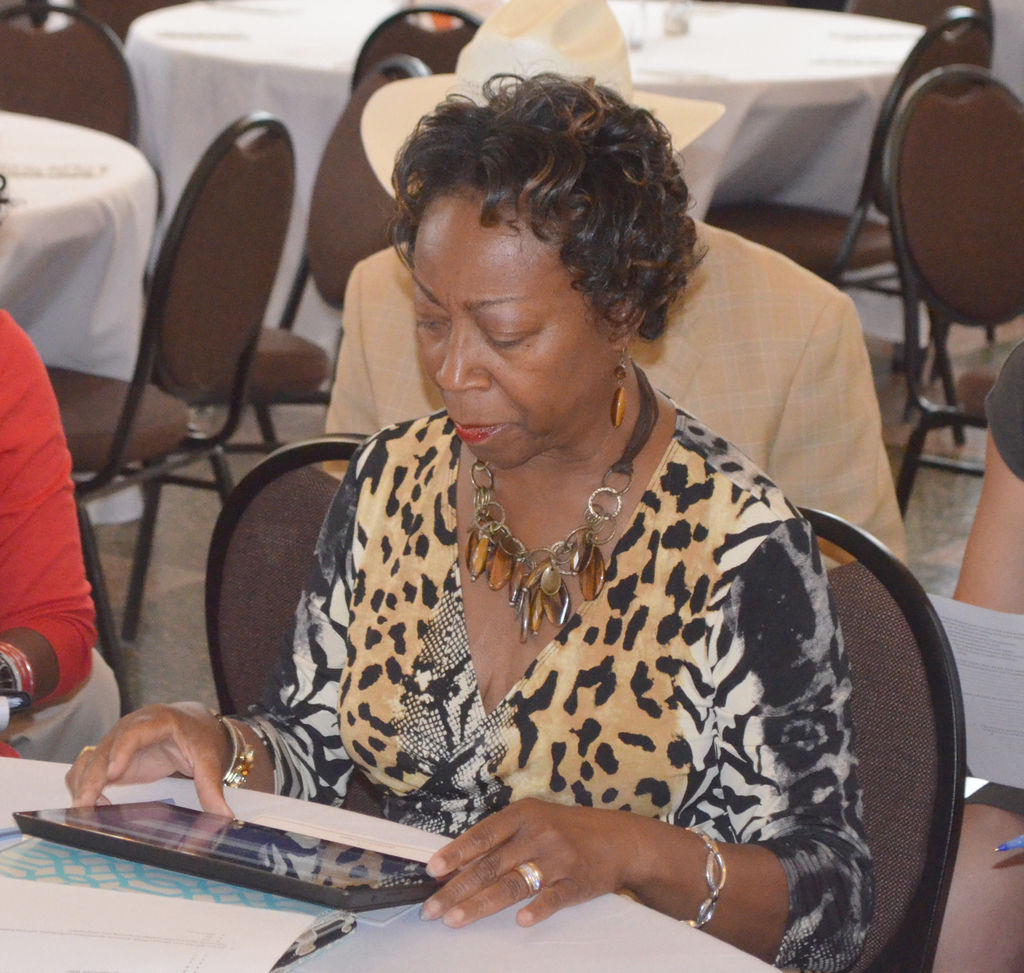
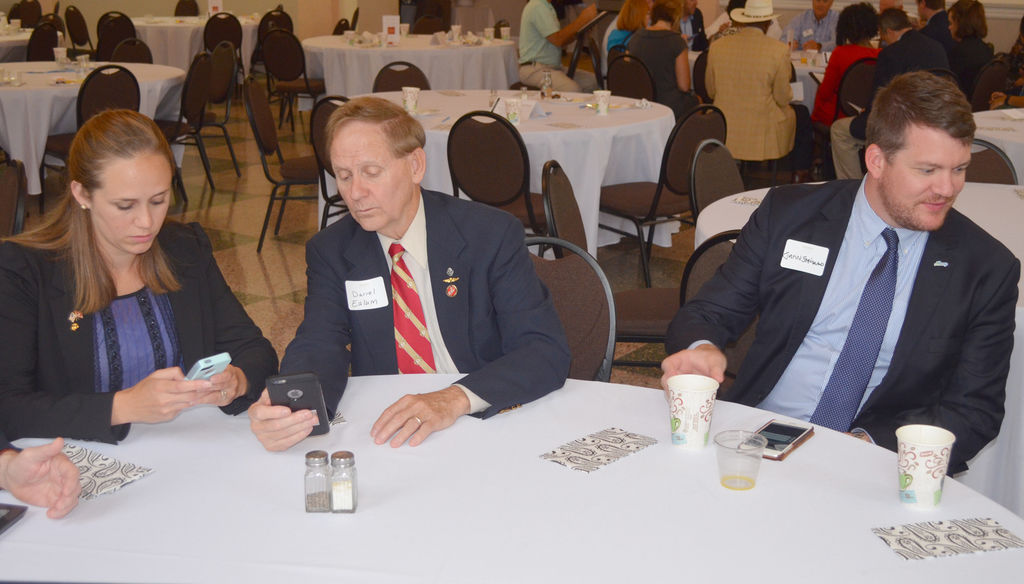
So that the state chamber can devise its Georgia 2030 plan to navigate through those predictions, Clark asked attendees to log onto their smart phones or tablets provided at the breakfast and take part in an interactive survey.
“Your participation this morning is critical for our ability to have good representation, diverse representation, to make sure that we’re doing what we need to do,” Clark said.
Friday’s meeting also featured breakout sessions during which participants engaged in more in-depth discussion, which, along with additional surveys the Georgia chamber is conducting statewide throughout the summer, will help the organization develop a plan of action.
Ultimately, the state is hosting 24 Georgia 2030 Tour stops, conducting surveys with CEOs, site consultants and college students, so that it can gather data and create a comprehensive plan that can be shared with local chambers, as well as with state, regional and local leaders.
“At the end, we’ll aggregate all this data, and we’ll use that to change what we do, how we do it, and we’ll share all that back with our local chambers and our other partners so that we can see how we can coordinate our efforts to improve Georgia’s economy and improve our quality of life,” said Clark. “We’re going to call this effort Georgia 2030 because what we’ve seen is that in the next 14 to 15 years, we’re going to have dramatic, huge change in this state.
“There’s going to be population change, demographics change, political change, (and) economic change. And as a business community, and as local leaders and elected leaders, we have a choice. We either react to that change, and oftentimes get left behind, or we can lead through that change. So, our board said, ‘No, no, we’re going to lead through this, get on the front end and let’s figure it out.’”
Related Articles

New commander takes helm as Marine Corps logistics adapts to evolving battlefield
Brig. Gen. Kevin G. Collins assumed command of Marine Corps Logistics Command during a change of command ceremony at Marine Corps Logistics Base Albany, succeeding Maj. Gen. Keith D. Reventlow after four years leading the organization responsible for sustaining Marine forces around the globe.
DOT says delay in Oglethorpe Bridge opening should be brief
“We know it’s not going to be July 22. We don’t think it’s going to be much later than that.”

City of Albany has big July 4 celebration planned for Saturday
“It’s going to be a lot of moving and shooting them off in a short time. It’s going to be a big show.”
