
Georgia Department of Transportation celebrates its centennial
The department started as the State Highway Department in August 1916
By Jon Gosa
ALBANY — The Georgia Department of Transportation is celebrating its centennial this month.
On Aug. 16, 1916, the State Highway Department of Georgia was formally created by the Georgia Legislature as a result of the Federal Aid Road Act of 1916, which mandated the formation of a state highway department in order to receive federal funds. In 1972, the State Highway Department of Georgia became the Georgia Department of Transportation.
GDOT plans, constructs, maintains and improves the state’s roads and bridges, and provides planning and financial support for other modes of transportation, such as rail transit, airports and air safety planning. It is responsible for waterways, including the Savannah and Brunswick ports and inter-coastal waterway. The department also provides administrative support to the State Road and Tollway Authority and the Georgia Rail Passenger Authority.
“To reach this 100-year milestone took the tireless efforts of many people, those with vision, those with passion and those who took a stand,” State Transportation Board Chairman Emily Dunn said. “The Georgia DOT thrives today and is set to do great things in the future.”
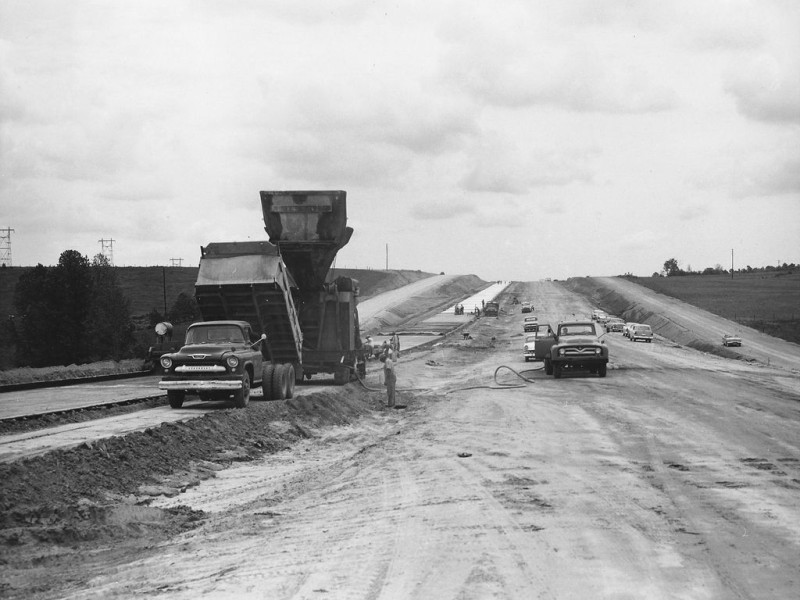
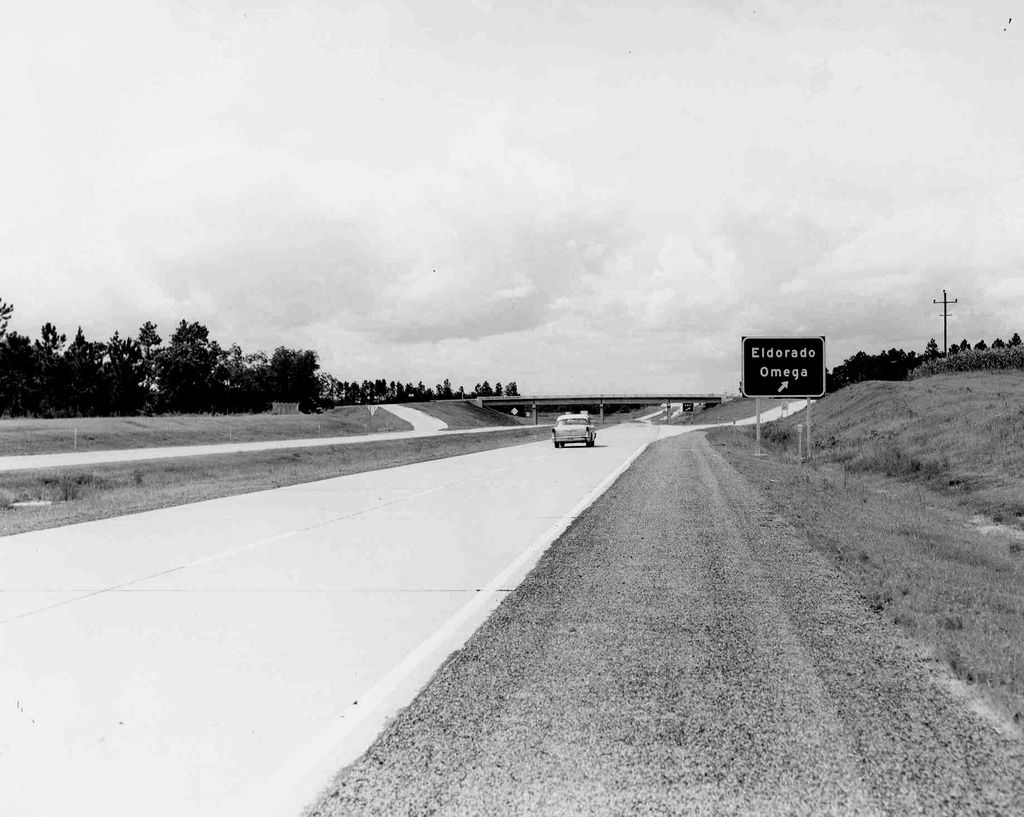
In 1916, the newly formed department began its long arduous task of transforming the rutted dirt roads of Georgia, which were more suited for horses than for automobiles, into the paved infrastructure that is now the 10th largest in the nation, with 1,244 miles of Interstate highways.
A majority of GDOT’s resources are directed toward maintaining and improving this infrastructure. Proceeds from the state’s motor fuel taxes are constitutionally earmarked for use on Georgia’s roads and bridges. Non-road and bridge construction projects are supported by a combination of state general funds and locals funds.
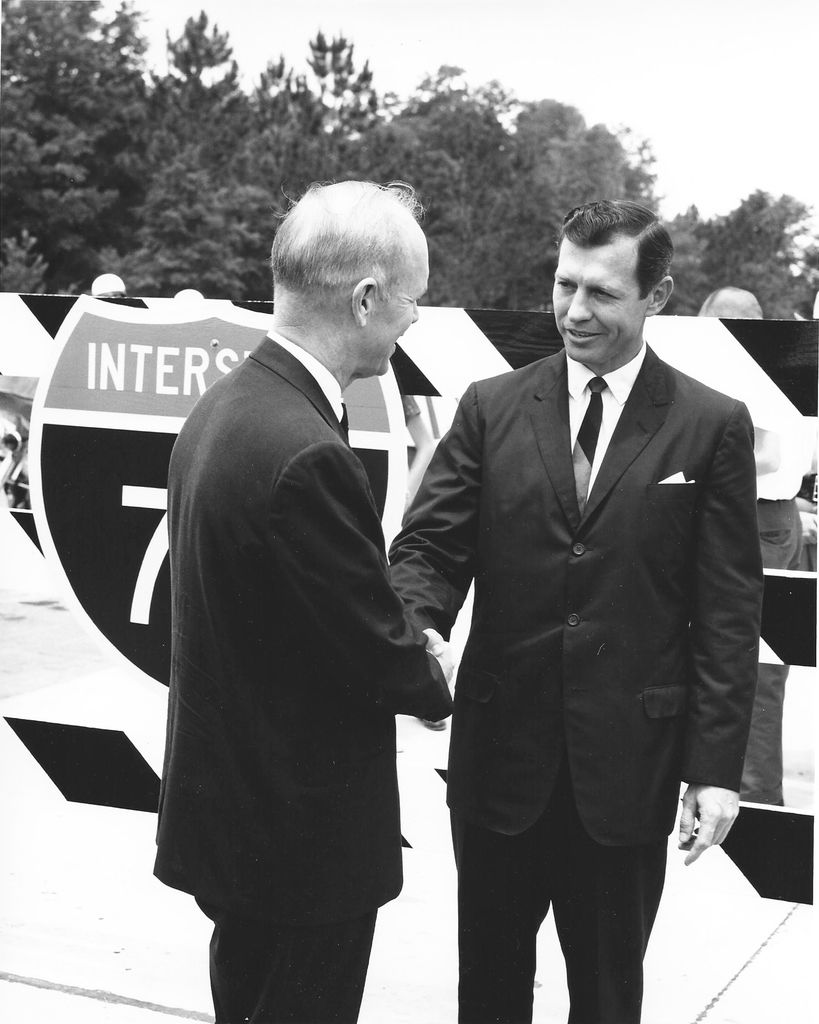
One of the historical moments of note from the GDOT occurred in 1950 when the Tifton division began a survey for a four-lane highway beginning at the Florida state line and extending north. This survey through the swampy backwoods and farmlands of Southwest Georgia would become Interstate Highway 75.
Albany lore has long held that that local opposition prevented Albany from being a part of the I-75 route. One long-time resident says that wasn’t the case.
“It is my recollection that shortly after George Busbee became governor an announcement came out that they were going to build an interstate spur from Cordele to Albany,” said Robert Drake, a retired attorney and an amateur historian. “Several days later, either George Busbee or the DOT — I am not quite sure which — came out with an alternative to either do that interstate link or to relocate Highway 19, which used to go down Radium Springs road right in front of the old casino. The selection was made to do the improvements on Highway 19.
“Now over the years, a lot of people around here have said that there was opposition by the city or the county commission or people in general to the interstate coming here because they thought it would bring criminal elements and all that sort of thing. However, that is not correct.”
That was more a case of not enough effort, he said.
“They are getting that confused with the controversy of relocating U.S. 19 to where it is now from where it was running down Radium Springs Road,” Drake said. “Mr. Caldwell, who operated Radium Springs casino at the time, was understandably upset about it, because he depended a great deal on tourist traffic that went right past his front door. However, there was no actual opposition to it (I-75), but almost as bad was that there was no concerted effort to get the interstate system to come here.
“At that time, people in general — myself included — just didn’t understand the importance of it. They didn’t understand the concept of it. Ironically, before the interstate, the people of Albany really fought to get the railroads to come through here. They understood the importance of the railroad, but, generally speaking, most people just didn’t understand the concept of the interstate system when it was proposed by the Eisenhower administration.”
According to DOT records, during the planning and routing phase of I-75, Tifton had already begun construction of its bypass to near-interstate standards, which was a deciding factor for engineers in determining the route.
“It is my understanding that Tifton lobbied really hard to get the Interstate to come through,” said Nita Birmingham, GDOT District communications officer for the Southwest District Office. “Some of the folks who recently retired were a part of that project.
“It was really something to talk them about it, because that highway has become such an important part of travel in Georgia. Looking at it now, it seems like it has always been there.”
I-75 was just one of many improvement projects by the GDOT that have helped Georgia grow and prosper.
Earlier this year, Gov. Nathan Deal signed a proclamation declaring 2016 as Georgia Department of Transportation’s Centennial Year. It recognized GDOT for constructing, maintaining and operating a transportation system that has increased mobility and enhanced quality of life while providing economic growth that continues to make Georgia the number one state for business.
“While a centennial is a time to reflect on the past, it is also a time to look ahead to new challenges,” Commissioner Russell R. McMurry said. “Drones, connected vehicles, self-driving cars — these are just a few of the evolving technologies that will have a tremendous impact on transportation in the not-too-distant future.
“In the next century, Georgia DOT will continue to embrace change and rise to meet new challenges, break new barriers and positively affect more lives.”
GDOT projects over the last 100 years have enhanced mobility and significantly contributed to the economic development of Georgia. Innovations such as intelligent transportation systems, the Highway Emergency Response Operator (HERO) program, express lanes, diverging diamond interchanges, fiber optic incident management and a host of other achievements have contributed to Georgia’s recognition as a leader in transportation.
To learn more about the GDOT centennial, including a statewide events calendar, decade-by-decade timeline, historical items, videos, and award winning student art, visit www.dot.ga.gov/centennial.
Related Articles

Federal agency to investigate Monday paragliding fatality
The death of a 63-year-old man who was killed in a paragliding accident on Monday is under investigation by the National Transportation Board, according to Dougherty County Coroner Michael Fowler.

Audit of police surveillance cameras results in arrests of five former APD officers
“The bottom line is when we find people who have misused resources that they have, we’re going to hold them accountable. These resources help fight crime, but we will not tolerate when they are misused.”

New commander takes helm as Marine Corps logistics adapts to evolving battlefield
Brig. Gen. Kevin G. Collins assumed command of Marine Corps Logistics Command during a change of command ceremony at Marine Corps Logistics Base Albany, succeeding Maj. Gen. Keith D. Reventlow after four years leading the organization responsible for sustaining Marine forces around the globe.
