
Georgia Farm Bureau donation to help Georgia Food Bank Association address food insecurity
Donation of $25,000 from GFB to help to cover meal, distribution costs to Georgians facing food insecurity
From Staff Reports
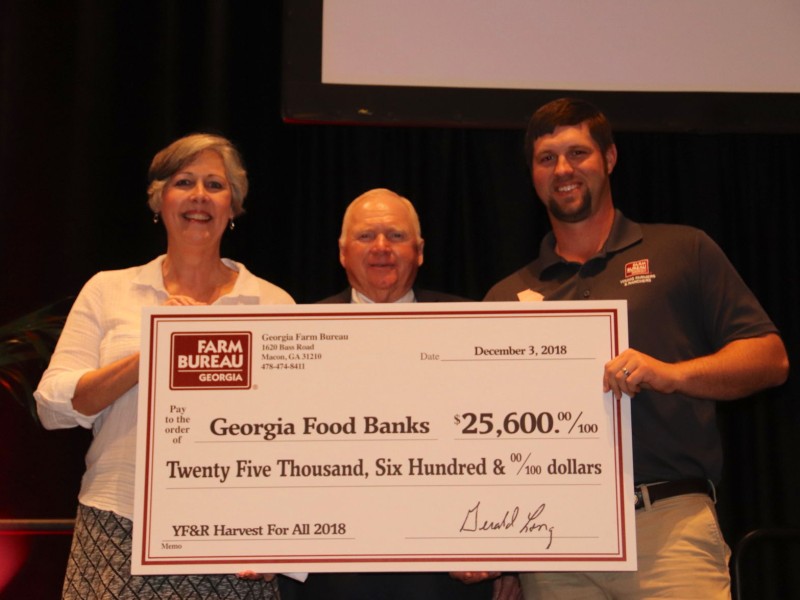
MACON — The Georgia Farm Bureau’s Harvest for All campaign raised funds for a donation of $25,600 to address food insecurity, and it is expected to have a statewide impact.
The GFB presented to the Georgia Food Bank Association the check during the 81st annual GFB Convention conducted earlier this week. The drive collected donations from county farm bureaus and the organization’s state office, as well as the GFB Young Farmers & Ranchers Committee’s Calf’s Weight in Change drive held earlier this year.
Food insecurity occurs when households experience periods when their diets are reduced in quality, variety or desirability, eating patterns are disrupted or food intake is reduced. Over the past three years, an average of 13 percent of Georgia households have experienced food insecurity.
Danah Craft, GFBA’s executive director, said a third of Georgia’s food-insecure residents do not qualify for other nutrition assistance programs, and they often turn to the GFBA and its partners to meet their nutrition needs.
On average, food banks can provide four meals for every dollar they receive, Craft said, meaning GFB’s donation will provide approximately 100,000 meals.
“Food insecurity is complex,” Craft said. “It’s seasonal for some folks. It’s temporary for many, but it is absolutely a critical need that has to be met.”
Officials said that, for more than a decade, GFB has contributed to the food insecurity cause, donating more than $200,000 in that time to help the GFBA feed hungry Georgians.
“It’s heart-breaking that so many people face real challenges to get the most basic needs of life,” GFB President Gerald Long said. “There are too many Georgians who aren’t sure how or when they will get their next meal, so we are committed to support the Georgia Food Bank Association and its programs through our Harvest for All program.”
In addition to helping with purchases of high-protein foods like chicken and peanut butter, officials said donated money also helps the GFBA offset costs associated with collecting and distributing food donations.
“Generally, those funds get split up equally among the eight food banks,” Craft said. “A lot of times they’ll use that money to buy things that aren’t donated that are critically important for nutrition for the families they serve, like protein. We are grateful for Georgia Farm Bureau and the generous hearts of Georgia’s farmer and rancher communities.”
The GFBA distributes the funds to America’s Second Harvest of Coastal Georgia in Savannah, the Atlanta Community Food Bank, the Chattanooga Area Food Bank (Food Bank of Northwest Georgia), Feeding the Valley in Columbus, the Food Bank of Northeast Georgia in Athens, Golden Harvest in Augusta, the Middle Georgia Community Food Bank in Macon and Second Harvest of South Georgia in Valdosta. To see which counties each food bank serves, find “Find You Food Bank” on georgiafoodbankassociation.org.
Officials said past GFB Harvest for All campaigns have solicited direct donations of food. Since 2004, GFB has coordinated 13 Harvest for All campaigns, through which GFB members across the state donated about 49,000 pounds of staple food items in addition to the cash donations distributed to the food banks located throughout Georgia affiliated with Feeding America.
The USDA’s Economic Research Service report, “Household Food Security in the United States in 2017,” documented food insecurity in 11.8 percent of households nationwide in 2017. Food insecurity has been linked to a variety of chronic health issues.
The 13 percent of Georgia households that experienced food insecurity over the three years from 2015 to 2017 exceeds the national average. The full report is available on the agency’s website.
Feeding America’s Map the Meal Gap interactive tool, which tracks county-level hunger statistics, showed that 44 of Georgia’s 159 counties had food insecurity in more than 20 percent of their households. In Clay, Dougherty, Hancock, Macon, Randolph and Terrell counties, more than 25 percent of households experienced food insecurity in 2016, the most recent year for which statistics are cited in the map report.
Clay County had the highest household food insecurity rate in the state at 28.4 percent.
The Map the Meal Gap report indicated 1.5 million food-insecure people in Georgia in 2016, or 15.1 percent of the state’s total population, including more than 523,000 children. Nationally, the report estimated more than 40 million food-insecure people, including more than 12 million children.
Related Articles

Dougherty Jail graduates first class of female GED recipients
“It was an escape. I can say this has been challenging. I want to express my gratitude for being able to attend this program.”
From cotton to cloud: In the data center debate, is rural Georgia once again being asked to carry the cost?
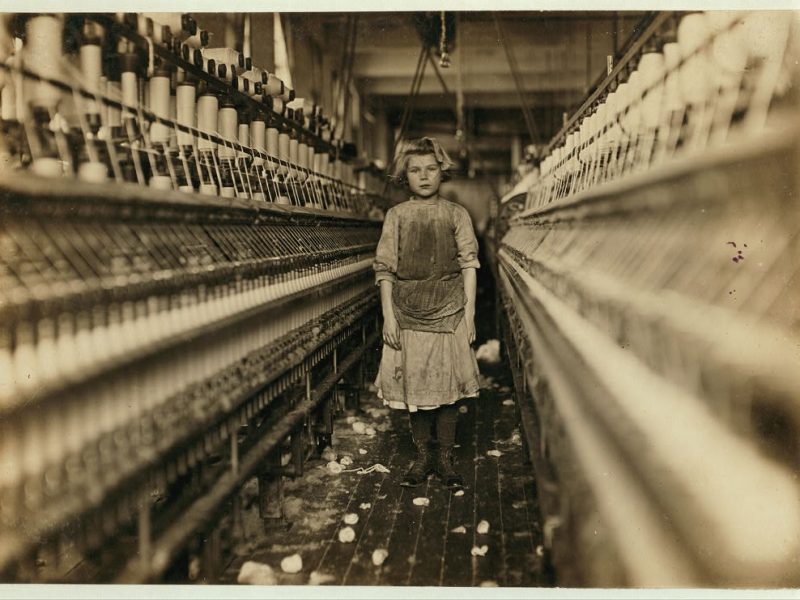
Across much of rural Georgia, the abandoned cotton warehouses and shrinking tax bases remain — enduring reminders that industries built to serve distant markets do not necessarily stay rooted in the communities that first sustained them.
Dawson Council approves $400,000 lifeline in emergency meeting as financial accountability remains elusive
Less than a week after city officials publicly acknowledged the City of Dawson cannot continue operating without additional financing, the Dawson City Council convened a hastily called emergency meeting Tuesday evening and unanimously approved authority to borrow up to $400,000 through a tax anticipation note.
