
Education efforts continue for safe infant sleeping
Experts encourage infant sleeping in their own accommodations, on their backs
By Jennifer Parks
ALBANY — Co-sleeping, while encouraged for family bonding, can have fatal consequences when the proper measures are not taken with infants.
Experts say sleeping in the same room with a child in a bassinet, crib or playpen by the bed is not a problem. It is often when the infant ends up in the bed that a problem occurs.
“Bed sharing is where (the danger) comes in,” said Daneta Kegler, child health director for the Southwest Public Health District.
In such cases, there is potential for a child to end up under the covers, rolled onto by an adult or stuck between the mattress and the headboard or footboard.
“(Infants) should be placed on their backs with no other objects in the crib with them,” Kegler said.
After the 12-month mark, guidelines are a little looser. By that time, children are able to roll over and can more easily adjust themselves. Once they are able to roll over, it is still ideal for them to start off on their backs, but there is no need to re-position them if they roll over on their own.
Children usually start rolling themselves over between 4-6 months of age. On the shelves of some stores are wedges that can be placed in cribs that are said to help prevent Sudden Infant Death Syndrome, or SIDS. Kegler does not recommend relying on such products.
“Weekly, about three babies in Georgia die from SIDS,” said April Little, nurse manager of the mother and baby unit at Phoebe Putney Memorial Hospital. “Education is important to families. It (the mindset) is different than what it used to be.”
Ultimately, bedsharing with adults is an unsafe practice for infants. Until the point a child can roll over and better control their head, putting them on their tummy to sleep might result in their chest not being able to rise and fall as it should.
“Babies don’t lay still,” Kegler said. “(In a bed, something) can get on their face, and they are not getting oxygen if they are on their stomach with their head against the mattress.”
Kegler said parents who come in to a Public Health setting are strongly encouraged to put their infants on their backs, and officials emphasize that parents and infants should not be in the same bed together despite any temptation otherwise.
“There is a constant need for education. There is still work to be done,” Kegler said. “I advise parents to discuss that, or to providers I encourage (them) to address that (during office visits).”
Bedsharing does not necessarily do more for bonding, and if breastfeeding or bonding is a concern, the bassinet can be next to the bed the parents sleep in. While pushing safe sleeping, supervised tummy time is still encouraged for infants to build up strength in their neck.
To prevent overheating, onesies are preferred over fluffy blankets. Parents are encouraged to dress infants in one layer more than they might wear, and sleeping on the back is encouraged even when there is a chance of the child spitting up.
“They will not aspirate,” Little said. “(When they are on their backs) there is an alignment of the esophagus and the trachea.”
Officials say breastfeeding, along with meeting an infant’s nutritional needs, reduces the risk of SIDS as does a lack of cigarette smoke.
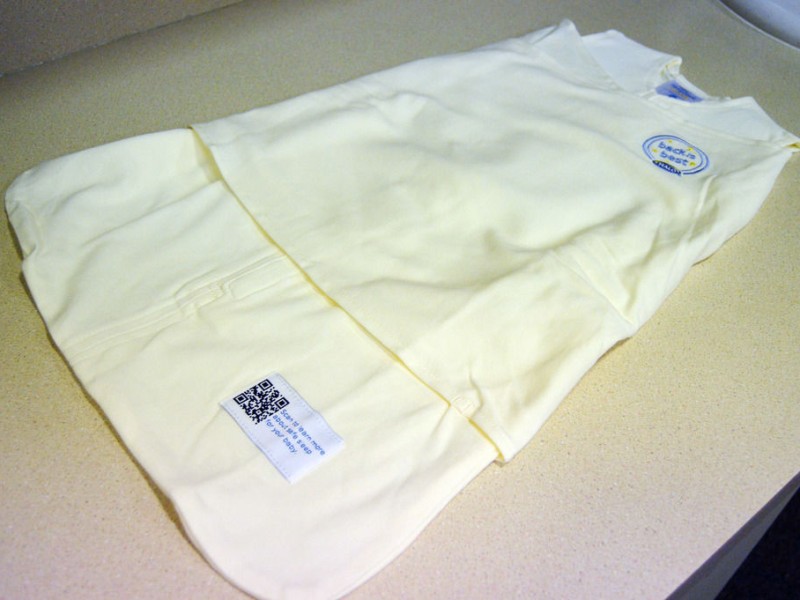
Little said that Phoebe has two ongoing initiatives, Cribs for Kids and a statewide initiative. The latter is being funded by Medicaid and will provide new sleep sacks with swaddle capability to each infant, which averages 175-220 a month, going home from the Albany hospital.
“We are practicing what we are preaching, and the state has gone a step above. We are actually giving them (the patients) something,” Little said. “There are all sorts of new initiatives.
“Evidence-based practices have come full circle. All that stuff that is new really makes sense.”
Little said parents are asking about sleep sacks, but audits of the new initiatives at Phoebe should also give a good indication of how well education efforts are working.
“Three in a week is a lot, and we’ve got to do something … and let mothers know why we are doing this,” Little said.
Education cannot guarantee advice will be followed, but once sleep sacks start going home with every infant — likely within the next couple of months — there ought to a big difference in data, the nurse manager said.
“They (parents) won’t need to buy anything, they will have it in their hands and that will help with compliance,” Little said.
The Centers for Disease Control and Prevention said about 3,500 fatalities occur due to Sudden Unexpected Infant Deaths, or SUID, each year. In 2014, 25 percent of cases were due to accidental suffocation and strangulation in bed, 44 percent were due to SIDS and 31 percent could not be attributed to a specific cause.
The CDC said death rates due to accidental suffocation and strangulation were unchanged until the late 1990s, and that rates started to increase beginning in 1998 — reaching the highest rate at 21.4 deaths per 100,000 live births in 2014.
For 2014, the Georgia Department of Public Health Office of Health Indicators for Planning showed no deaths in the 14-county Southwest Public Health District due to suffocation among infants, but in the same region at the same time, there were three deaths due to SIDS in Decatur, Dougherty and Lee counties.
Related Articles

Albany teen, 16, makes bodybuilding debut at Atlanta OCB Pro/Am
Crockett, an Albany resident and student at Albany Technical College Academy, placed second in the teen bikini division this weekend at the OCB Immortal Muscle Pro/Am Bodybuilding Competition in Atlanta, becoming the youngest competitor across all categories at the event.
Phoebe opens new urgent care clinic in Camilla
Phoebe Putney Health System has expanded its network of urgent care clinics by opening a new location in Camilla.
Colquitt Regional introduces new heart failure treatment
Colquitt Regional Medical Center recently announced a major advancement in its cardiac care services with the introduction of the biventricular implantable cardiac device (ICD)
