
Enhanced Personal Health Care drives improvements in Southwest Georgia health care
Launched in Georgia in July 2013, about 90 Albany providers are currently participating
By Jennifer Parks
ALBANY — Health disparities in rural areas are the end results of a number of factors, among them limited access and continuity of care. A renewed focus on enhanced care is under way among providers in the Albany area to improve overall quality, and in the long run, bring down overall costs.
By participating in a program sponsored by Blue Cross and Blue Shield of Georgia known as Enhanced Personal Health Care (EPHC), officials with BCBSGa say primary care doctors practicing in Albany have been among the most successful in the state at delivering high-quality care and lower costs.
The program was launched in Georgia in July 2013, and more than 1,200 physicians — including 90 Albany providers — across the state currently participate on a voluntary basis. Officials said EPHC is the centerpiece of BCBSGa’s collaboration strategy, known as BCBSGa Togetherworks, and is built on the belief that the primary care/patient relationship is the most important part of promoting health and wellness.
The program’s goal is to strengthen that bond while rewarding primary care physicians for emphasizing quality and value in everyday practice.
The EPHC team is equipped with many tools to share, arming providers with information and insights they need to manage population health and deliver patient-centered care. Resources include member data that enable providers to target members with chronic conditions or gaps in care.
A person may have a fragmented relationship with his or her primary care provider, so EPHC strives to focus wholly on the patients through 27 measures — including 24 related to clinical quality such as prescriptions, hospital admission and preventive screenings.
“The main driver is quality care,” said Alexandra Leopold, regional vice president of provider solutions for BCBSGa.
These providers care for more than 200,000 BCBSGa members. In recognition of their results, participating BCBSGa providers received $21.5 million in shared savings, and in many cases, practices reinvest the shared savings by hiring care coordinators or purchasing electronic health records to assist with population health management.
“There have been some financial components of the model,” Leopold said.
Since February 2015, officials say Shaw Center for Women’s Health in Thomasville has maintained 100 percent compliance with delivering recommended cervical cancer screenings. From September 2014 through February, a 22 percent improvement in the rate of annual eye exams has been achieved for patients with diabetes who are treated at the McIntosh Clinic in Thomasville, and from September 2015 to February, Dr. Brian Griner of Griner Medical Group in Valdosta maintained 100 percent compliance prescribing the most effective asthma medications for his patients.
Between September 2014 and February at Southwest Georgia Healthcare — which has several clinic sites throughout the region — there has been a 19 percent increase in testing diabetic patients’ HbA1c levels. Since beginning participation in July 2014, primary care providers at Albany Internal Medicine have seen an 18 percent overall drop in their patients’ emergency room medical visits and a 32 percent decrease in the rate of potentially avoidable emergency room visits.
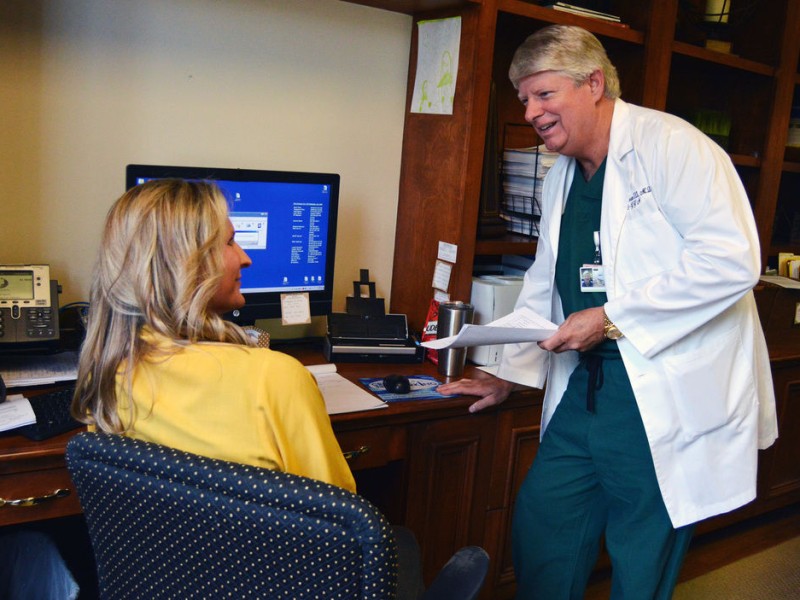
Dr. Joe Stubbs with Albany Internal Medicine said the program has offered an opportunity to better manage a patient’s health outside the office. If one of its patients has to go to the emergency room, there is a push to see them quickly afterward. If they have to go to another physician, for whatever reason, AIM makes sure they know what the nature of the visit is and ensures patients are clear on the treatment regimen they are on.
By doing those things, emergency medical visits are reduced and patients’ needs can be taken care of more efficiently. Any confusion in a treatment regimen can often land someone back in the hospital within 30 days, thereby increasing costs in the long run.
“It makes it easier and it saves money,” Stubbs said of the new approach.
Stubbs said his practice has also established a walk-in clinic with extended hours, making it easier for patients to get in the door. AIM is in touch within 48 hours of a patient’s hospital discharge and arranges to see them in the office after 14 days. More staff has lately been dedicated to such outreach, he said.
He said the first year on the program was a real eye-opener. Since that time, work has been done on the practice’s electronic health records system, which has revealed some gaps in continuity that were not evident before.
When such gaps are addressed, there is a benefit to the patients as well as the medical staff.
“I think is has helped us be better primary care providers,” Stubbs said. “We are better able to provide care to each patient.
“(In the long term), I hope this thing will continue to grow. As it grows, we see improvement on overall quality of care.”
The Veranda has seen a marked drop in similar measures since July 2014, lowering the rate of potentially avoidable emergency room visits by 28 percent.
The mindset at The Veranda is that the patient should not be out of mind when they are absent from the office. Staff members consider themselves to be “an extra cheerleader” for the patient. There is a focus to get patients in for wellness visits, especially when they are considered high-risk.
On its care coordination team, one person is dedicated to outbound referrals — which on its own goes a long way in making sure patients don’t hit barriers or get lost in the system.
“I think it has been a very big help,” said Nancy Brown, registered health information administrator at The Veranda.
The Veranda has a commitment with certain medical practices to guarantee an information exchange so that all the providers involved in a patient’s care can make sure there is no duplication of efforts, in turn saving the industry money. The care coordination team gets to know the patients, and when they get to the bottom of why they are not coming in for screenings, the team is able to effectively alleviate their problems.
“It is rewarding when we get care opportunities sorted out,” said Megan Watkins, a member of the care coordination team.
Sometimes it’s a simple matter of making sure people know there are opportunities to get after-hours care through an extended-hour clinic, and ensuring they have the after-hours phone number. Everyone is on the health care team, and even in larger health care practices, there is still a desire for their patients to have a strong enough quality of life to enjoy retirement.
From The Veranda’s experience, there is now a use that appears obvious for the development of a practice’s electronic health records system. Now, it is helping to keep better track of who needs help when.
“It is an exciting time to be in health care,” said Traci Brooks, another member of The Veranda care coordination team.
BCBSGa members who see a physician participating in the EPHC program reported many benefits, including better access to urgent care, better communication with providers and higher satisfaction with the amount of time they spent in front of a doctor.
Statewide in 2014, participating Georgia primary care physicians had a 1.7 percent higher rate of delivering recommended care for diabetic patients, a 3.5 percent better rate of delivering evidence-based adult preventive services and a 4.4 percent better performance on ensuring patients took their medications as prescribed.
Officials with BCBSGa said more than 40,000 primary care physicians are participating in the program across the country, caring for 4.7 million members of BCBSGa and its affiliated plans.
Annually, the providers participate in a meeting allowing them to share best practices. Based on that communication, the indications are encouraging. There is a collaboration and continuum of care that did not exist before.
“It is really, really powerful,” Leopold said.
To earn shared savings bonus payments, practices must meet quality performance goals, which include quality standards established by organizations such as the National Committee on Quality Assurance, the American Diabetes Association, the American Academy of Pediatrics and others. Primary care physicians who maintain or improve quality may earn up to 35 percent of any cost savings that have been obtained over the last year, BCBSGa said.

Related Articles

Albany teen, 16, makes bodybuilding debut at Atlanta OCB Pro/Am
Crockett, an Albany resident and student at Albany Technical College Academy, placed second in the teen bikini division this weekend at the OCB Immortal Muscle Pro/Am Bodybuilding Competition in Atlanta, becoming the youngest competitor across all categories at the event.
Phoebe opens new urgent care clinic in Camilla
Phoebe Putney Health System has expanded its network of urgent care clinics by opening a new location in Camilla.
Colquitt Regional introduces new heart failure treatment
Colquitt Regional Medical Center recently announced a major advancement in its cardiac care services with the introduction of the biventricular implantable cardiac device (ICD)
