
Healthy Living Farms strives to nourish the body, mind and soul of South Georgia
Non-profit, organic farm having a significant impact
By Brad McEwen
ALBANY — Thanks to some divine inspiration Albany’s Healthy Living Farms is not only nourishing the bodies, hearts and minds of Southwest Georgians, it is becoming a successful agribusiness that hopes to be a model for small-scale farming in rural Georgia.
Run almost entirely by volunteers Healthy Living Farms (HLF) is a small, organic farm, operating just outside of the Albany city limits, that exists as an affiliate of Trumpet of God Ministries.
As such the farm is guided by the principals set forth in Isiah 28:26, 29, which states “The farmer knows just what to do, for God has given him understanding. The Lord of Heaven’s Armies is a wonderful teacher, and he gives the farmer great wisdom.”
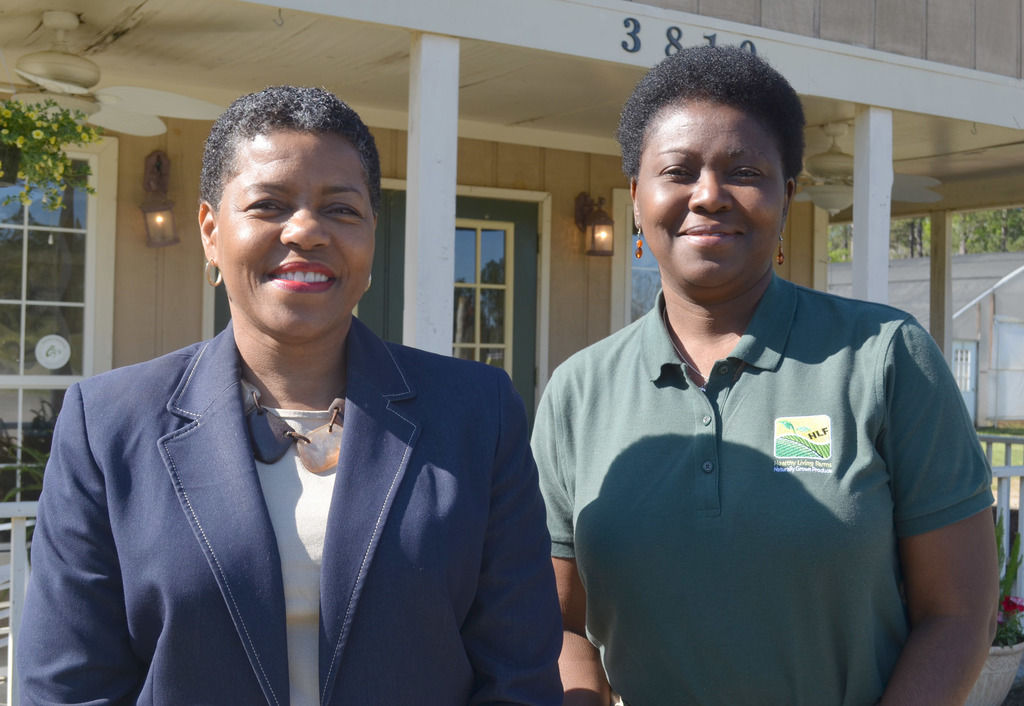
According to Charlene Glover, who in addition to being a minister, also serves as the farm’s CEO, the idea for healthy living farms was born from her concern about the quality of food available to people in Southwest Georgia, which in her mind was having a negative impact on the community.
“I was a part of the Albany Area Chamber of Commerce Board and I guess it was in 2010, 2011, and we were looking at some stats for our region,” Glover said. “We were seeing some pervasive sicknesses like diabetes, ADD and ADHD in children, and some specific cancers and it just triggered a thought in my heart.”
Those issues really stuck in Glover’s heart and as she continued to think about some of the root causes of those illnesses, an idea became clear in her mind.
“I’m a pastor and a spiritual person, and I’m always looking for an opportunity to bring health to people holistically, so I realized there was a need for quality food,” Glover said. “We don’t have a lot of options in Southwest Georgia, especially in Albany and personally I was going to Tallahassee and Atlanta to Whole Foods and Fresh Market to buy produce and naturally grown products and organic products, and it was just divine inspiration to do something to start providing quality and naturally grown food in the area.”
Armed with an idea Glover eventually approached others at Trumpet of God and the idea of creating a marketplace initiative began to take shape.
Ultimately the church was able to purchase 16 acres of land on Gillionville Road, with the idea of creating a non-profit, volunteer run, naturally grown farm, where they could grow crops to be sold in an on-site farmer’s market, and the idea was overwhelmingly accepted by the congregation.
“The goal was to be able to create an opportunity for people like myself and others who desired organic and naturally grown foods, as well as provide an option for people that don’t have options for food in their communities,” Glover said. “We went to our congregation and said that we’ve found some property and that we believed it was a part of a divine vision that God had given us to bring holistic health to our congregation, our community and our region, and we got instant buy in.”
In fact, that congregation not only supported the idea, but it became the source of the labor necessary to begin the actual farming operation in 2013.
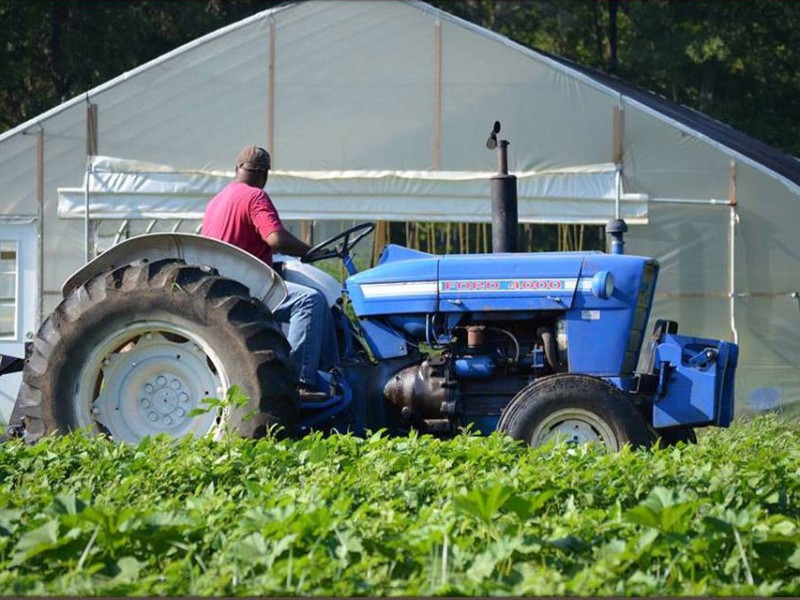
With the exception of Ann Milton, who serves as the farm’s project director, volunteers handle all the duties at Healthy Living Farms including preparing the land for planting, tending the fields, harvesting the crop and selling the bounty at the farmer’s market.
Last year, the farm was the recipient of 3,100 hours of volunteer labor, which came on a schedule determined by the v0lunteers themselves.
“For the last three years we have largely run the operation with volunteers,” said Glover. “It’s incredible. People would get off work, schedule themselves, or we’d have a rotation schedule, and they’d come out and spend, two, three, four hours, as daylight permitted, and on Saturdays.”
In addition to simpling having a volunteer base within the congregation from which to get labor, Glover and the other organizers quickly learned that many in the congregation had knowledge about farming.
“We had a couple of gentlemen that we didn’t know,” said Glover. “One of them had 12 years in farming and the other (Albert Whitfield) he’s like God’s gift, he can do everything. He does plumbing, farming and electrical. He installed all of our irrigation systems. He’s like our right and our left hand for everything we do out here. We’ve just been so blessed with the support we’ve gotten.”
The farm has also gotten a lot of support from the community at large, thanks to the farmer’s market and the farm’s Community Supported Agriculture (CSA) program, which Milton spearheads.
“We implemented the CSA in 2014,” said Milton. “It started as a pilot program and we put out flyers and used social media to advertise for the CSA and people began to respond. They said, ‘this is something that I’ve heard about from my family members in North Georgia,’ and they’re just so pleased to have it here.”
Milton said the farm worked with the local Small Business Development Center in Albany to help develop a business plan and was able to obtain a grant from the U.S. Department of Agriculture (USDA) to help bring the CSA completely online in 2015.
Healthy Living Farms has also gotten a lot of support through the Albany Chamber having manned a booth at the Chamber’s Business Expo.
Glover and Milton also said they’ve been amazed at the level of support they’ve gotten from various agencies and organizations that work with different farmers, especially those that are engaged in organic farming.
Because HLF is certified naturally grown and working to become recognized by the USDA as certified organic, the organization has been able to tap into a wealth of resources coming from places like Georgia Organics, and various institutions like the University of Georgia, Fort Valley State University, and Florida A&M.
“We’ve been to numerous trainings,” said Glover. “We went to many, many trainings to learn how to farm, especially how to farm today because we farm differently. The way the ground in nurtured and cared for is quite different than the way they did when my grandparents were farming.”
Glover said HLF has also benefited from intense networking, which is something she is very passionate and adamant about. In fact, one of the ways in which HLF hopes to help the surrounding community is by helping other people and organizations get tapped into the right resources so that they can be successful with their growing endeavors.
“I would really encourage all the small farmers to engage with their local agencies,” said Glover. “There is a wealth of knowledge and information that is available to help them farm more efficiently and with greater productivity. And to also network. I think one of the biggest things we’ve found is the importance of networking.”
The concept of networking has also been beneficial in HLF’s mission to become more than just a successful farm, but to become a successful agribusiness.
As Glover sees it, the farm isn’t just a place to grow and sell food, it’s a way to teach people about business concepts as well. The farm, in truth, serves as a model to show others how to create a viable business.
“We want to be a part of the evolution of agribusiness in Southwest Georgia and we want to introduce agribusiness from the organic side,” said Glover.
To that end she and Milton recently travelled to Washington D.C. to meet with lawmakers such as Rep. Sanford Bishop and Sen. David Perdue, where they were able to share some of the successes of HLF and also to advocate for the importance of different programs that benefit emerging and socially disadvantaged farmers who want to get involved in sustainable, organic farming.
“We got a great response, and some great recognition for our community” said Glover of the visit. “We went up to advocate and ask that for the fiscal year 2017 budget to please not cut some of the programming they were looking at cutting, and to increase other programs they were looking at. We shared our story about how we benefited by having those resources available locally.
“I also believe we brought an awareness for socially disadvantaged, small, and beginning farmers that there’s a real need in Southwest Georgia because the one thing we can do is farm. We can’t bring some of the major industries here but we can grow crops and we can produce produce.”
And while being able to produce crops, and sell them to a market that is in need, is HLF’s primary function, producing healthy food and teaching people why they need healthy food is still at the heart of what the organization does.
“One of the things that we’re endeavoring to do is grow in a sustainable way where we give consideration to the health of people, through what they eat, the environment, and just providing quality food in an atmosphere or environment for the holistic well-being of individuals, and for our community at large,” said Glover. “I personally believe that some of the sicknesses we’re discovering are directly correlated to the foods we’re eating. We’re promoting good food and good food leads to a good, healthy body and a good, healthy mind.”
Glover, Milton and the others involved at HLF are especially concerned with educating young people, which is why they are working with the school system to devise a way to start teaching children about farming, business and healthy eating.
“I believe the more you educate and present information and insight to people, it’s like creating a culture,” said Glover. “You have to change the existing culture and a lot of our young people, particularly in our area, because of our social stats, with poverty, that they don’t even have a clue that eating is affecting their life, and not only just their health, but their mental capacity, their acuity, those kinds of things.”
“We have educators and professors from the universities, math and science teachers, come out and work with the children and help them understand how all of this ties in to their whole quality of life. So, our goal is to help the children understand the significance of planting a seed, nurturing the ground and the seed, and then eating from that, harvesting that. Some kids think that food comes from McDonald’s.”
Milton echoed those sentiments saying that it’s critical that young people learn the importance of having a healthy diet, and critical that adults change their ways in order to set a positive example.
“If you think about the eating habits that we had as children, we have to break those habits in order to eat healthy,” Milton said. “What you grow up with that’s what you tend to lean toward, because that’s what you’ve been doing. You have to be deliberate about breaking those habits. If we start our children at a young age eating healthy, those are lifelong benefits.”
It’s that vision of a healthy, more empowered society that fuels the women’s passion and excitement for what is happening at HLF, which is something that they believe will have long-term impact for Southwest Georgia.
“I go to sleep some nights and I see lush, green fields,” said Glover. “You know without a vision you perish. I have a vision and He keeps that vision alive. I look forward to us being a significant organic grower in our area, to create a culture for healthy food, and a system for healthy food, as well as educating and influencing the culture for quality health through eating. I look forward to using the farm to educate young people in enterprise and how they can take perhaps what’s at their hand and use their influence to contribute to our community as well as have an economic impact.”
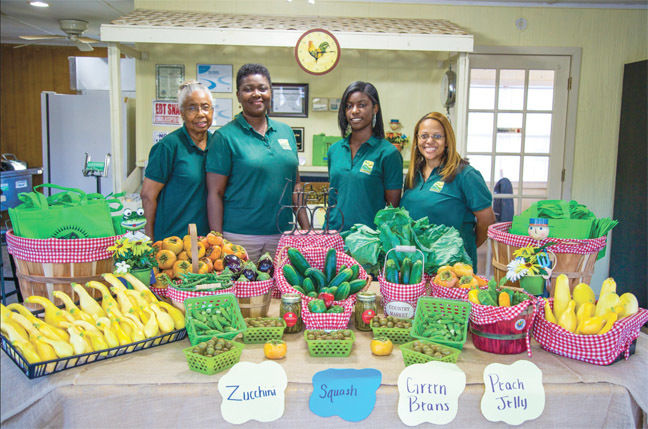
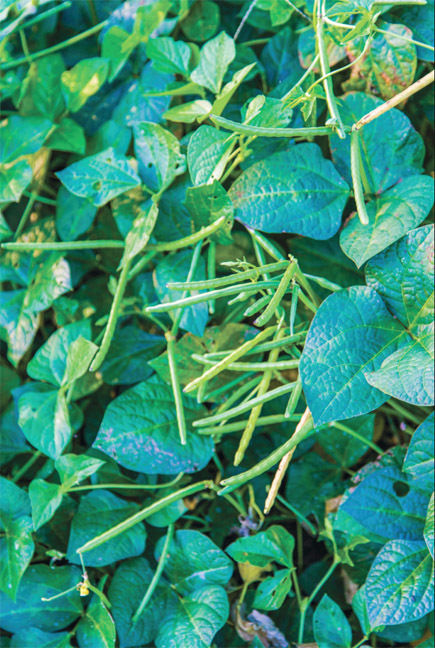
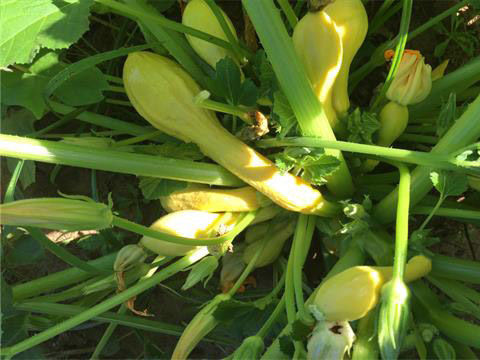
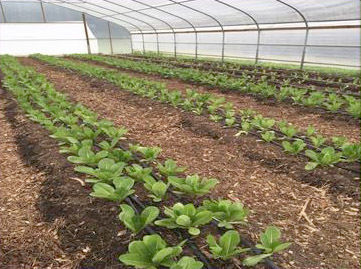
Currently Healthy Living Farms is gearing up for the next planting season where there will again be a focus on the farm’s staple crops such as kale, spinach, romaine lettuce, squash, lady finger peas, okra, tomatoes, as well as a few other items such as eggplant, broccoli and carrots.
Healthy Living Farms has also developed partnerships with other small farmers in the area and will carry items from those producers, such as persimmons, plums, berries, watermelon, muscadines and other things, in the farmer’s market when it reopens once the crops start coming in.
“By Healthy Living Farms being here now we have provided access for the community to come and purchase locally grown,” said Glover. “It’s coming directly from the field or in a 75 miles radius, into the market, so they’re pretty much buying it fresh right out of the field.”
The farm is also hoping to expand operations and begin farming more than the 3.5 acres currently in production. That will require additional input from volunteers and the hiring of a full-time farmer to help oversee crop production.
Additionally Glover said she hopes to see an expansion of the farm’s educational programs which will include having workshops, such as those offered at Lowe’s and Home Improvement where people will get hands-on knowledge of farming and operating a business.
Already the farm has engaged in some of that, having had a chef come to the farm last year and prepare healthy meals using crops grown on the farm, and locally, organically grown livestock.
“We brought an international chef in and we fed about 125 people throughout the community and she cooked food directly from our produce and people loved it,” Glover said. “It was probably the best meal I’d ever had and that’s not exaggerating. Everything was naturally grown, she prepared it as naturally as she could to preserve the life of the vegetables and things like that. We had grain fed beef and free range chicken and it was just a wonderful experience.”
Glover said HLF also hopes to one day increase its vertical farming methods to produce more yield from limited space, as well as venturing into aquaculture to begin raising tilapia.
“I believe it’s still evolving,” said Glover. “I think we’re living in an area where reformation is needed in every aspect of life and I like we’re reformers and we’re bringing that to the food industry in Southwest Georgia.
To learn more about Healthy Living Farms, the farmer’s market and the CSA, visit the Healthy Living Farms Facebook page where the farm will post hours of operation, as well as how to get involved in the mission.

Related Articles
Federal agency to investigate Monday paragliding fatality
The death of a 63-year-old man who was killed in a paragliding accident on Monday is under investigation by the National Transportation Board, according to Dougherty County Coroner Michael Fowler.

Audit of police surveillance cameras results in arrests of five former APD officers
“The bottom line is when we find people who have misused resources that they have, we’re going to hold them accountable. These resources help fight crime, but we will not tolerate when they are misused.”

New commander takes helm as Marine Corps logistics adapts to evolving battlefield
Brig. Gen. Kevin G. Collins assumed command of Marine Corps Logistics Command during a change of command ceremony at Marine Corps Logistics Base Albany, succeeding Maj. Gen. Keith D. Reventlow after four years leading the organization responsible for sustaining Marine forces around the globe.
