
Lee County Commission OKs solar project for water treatment plant
Lee County water treatment plant going green
By Brad McEwen
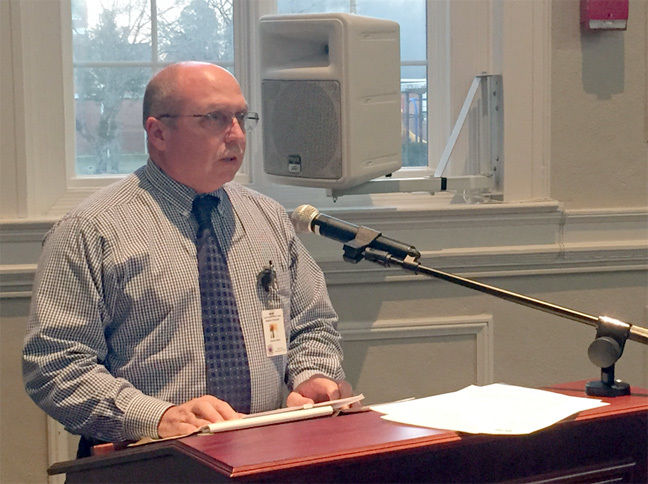
LEESBURG — Operations at the Lee County water and wastewater treatment plant will soon be getting a bit greener while reducing energy costs after the Board of Commissioners has agreed to support the Lee County Utility Authority’s move to install a solar array at the facility.
In approving a resolution Tuesday night, the commission unanimously gave the go-ahead for the Utility Authority to move forward with a $997,500 project to install the solar panels on roughly 3.4 acres of property adjacent to the county’s water treatment plant.
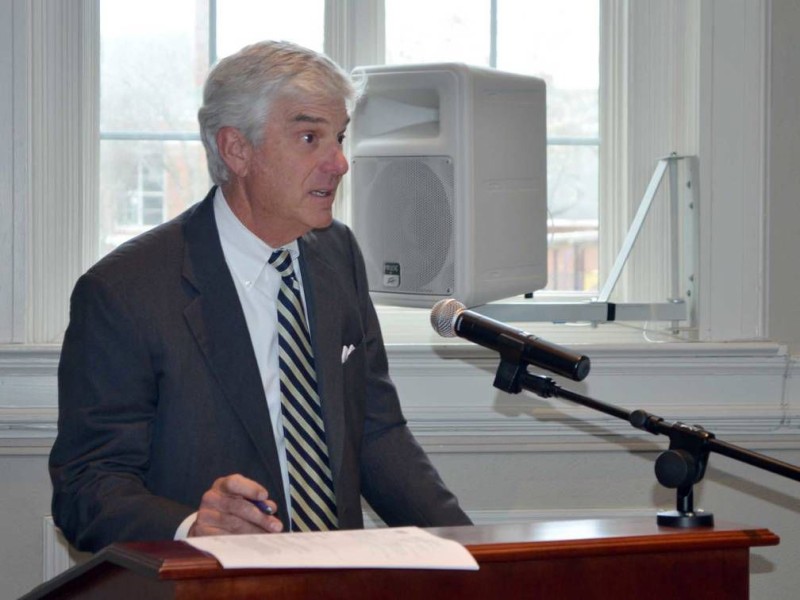
According to the plan laid out by Utility Authority Director Chris Boswell, Carl Hofstadter and Kelvin Seagraves, the latter two representatives of the Hofstadter & Associates engineering firm, the Utility Authority will execute a 15-year loan agreement for $748,125 with the Georgia Environmental Finance Authority (GEFA) to generate roughly 75 percent of the project cost. The other 25 percent, $249,375, will come in the form a GEFA grant.
Once installed, the panels are expected to generate 59 percent of the electricity needed to operate the facility, which should create an energy savings of approximately $58,352 in the first year.
Even after adjusting for a 3 percent annual increase in the cost of the remaining power that the plant will need to purchase from Sumter EMC, the energy savings, Hofstadter said, should offset the estimated $3,500 in annual maintenance costs and the $52,359 annual debt service on the loan.
Although the net savings from the project will be minimal at first, Hofstadter said once the loan is repaid, the energy savings for the treatment plant should be considerable.
“The main thing that we’re looking at is to save the county (utility) authority money through electricity,” said Hofstadter. “As you’re aware, power’s going up and up and up and up. This will remain the same. The real savings will be in 15 years. When this thing’s paid off, you will not have a payment. So the electricity that you produce will basically be free.”
In addition to the cost savings, Hofstadter pointed out that the solar project was also a green project that would help protect the environment. Estimates provided to the commission indicated that the solar array’s annual output of 607,835 kilowatt hours would have a significant impact.
“You’re saving about 407 tons of carbon a year, which runs 49 cars, or 40,000 gallons of gasoline will not be burned up because you’re doing this green,” said Hofstadter. “You can feel good about yourself and all like that. You are helping the environment. You are doing that.”
Although the Utility Authority would be the entity borrowing the money and making the payments, county commissioners had to give their approval because the authority cannot enter into the loan agreement without the county agreeing to step in if the authority cannot make the loan payments.
“Your deal is simply to say that if they can’t pay it, you will and that you will agree that if you have to pay it you will levy a tax sufficient to pay the debt service, if at any point they can’t pay it,” County Attorney Jimmy Skipper explained. “It’s similar to what you do with a school bond issue except with a school bond issue you don’t agree to make the payments you just agree to levy the tax to gin the money up.”
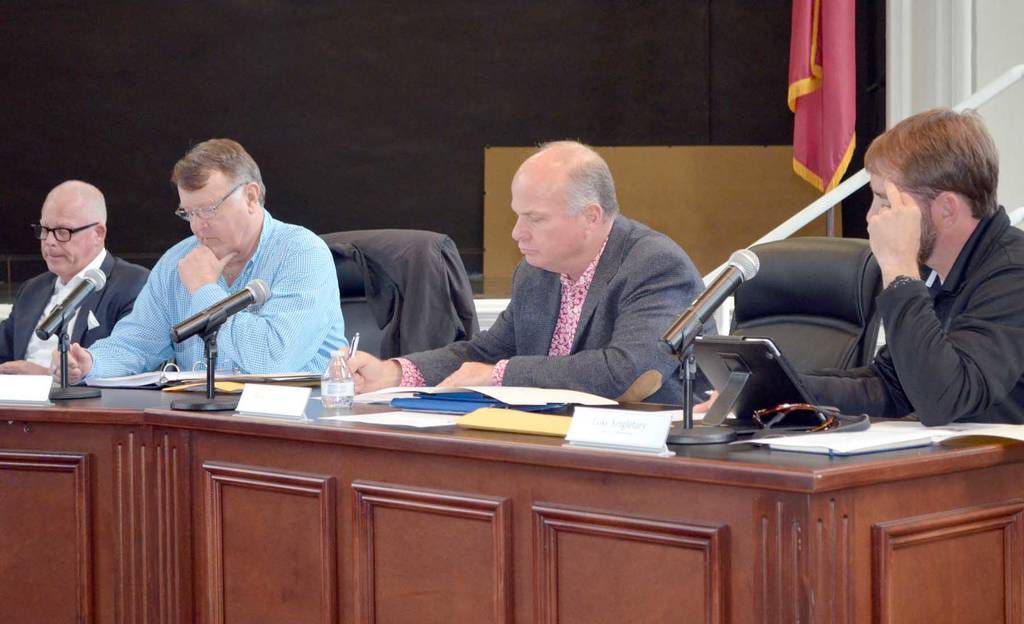
After some discussion, the general consensus among commissioners was that the time was right to move forward with the project because of the GEFA grant funds, which Hofstadter said might not be available in the future.
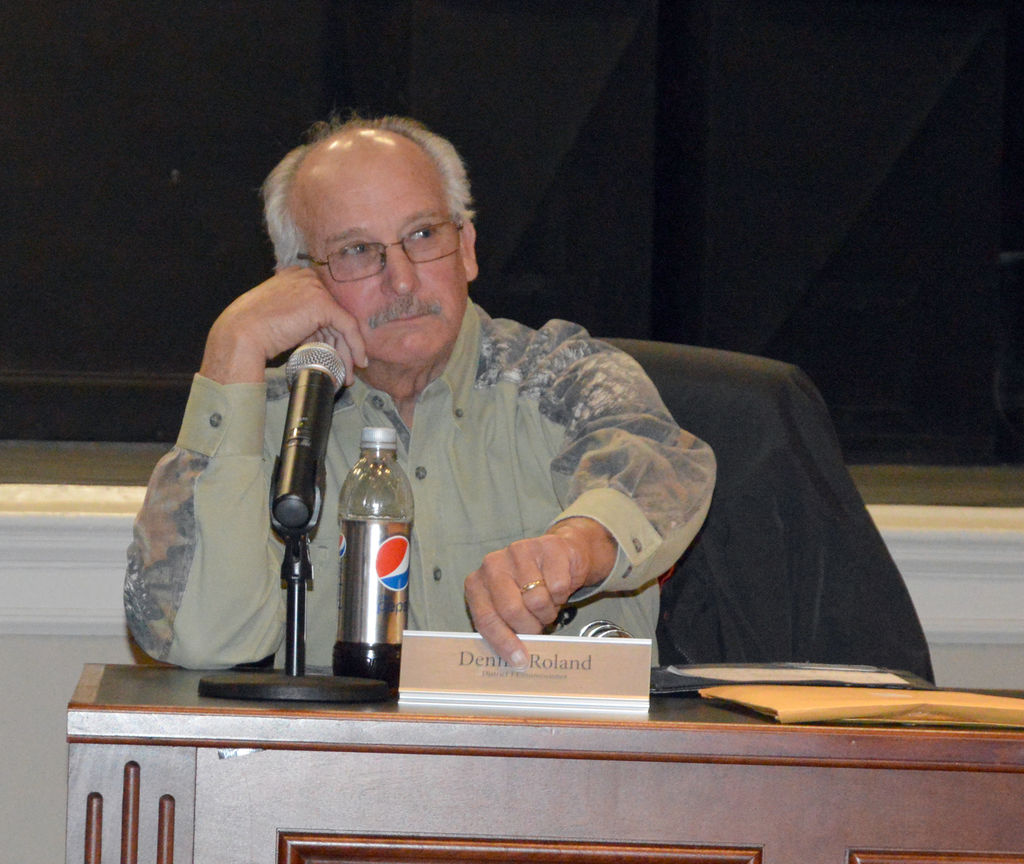
“For me, the one thing that does make it attractive is the grant money,” County Commissioner Luke Singletary said. “Because if we decide to do this in two years, we say, ‘you know what, that is a pretty good idea,’ and the grant money’s not available, it would raise the cost of project.”
Commissioner Bill Williams, who also sits on the Utility Authority Board that approved the project previously, also voiced his support, saying the monthly savings just made sense.
“I’m all for it if it works like they say it’s going to,” Williams said. “I mean, we’re paying $8,000 a month utility bill. It’s going to save money. The savings is going to make the payment.”
In other actions, the board:
— Voted unanimously to approve a variance request for Easter Seals of Southern Georgia allowing the nonprofit to forego the placement of a commercial dumpster at its new Lee County Megan’s House site;
— Voted unanimously to approve the submission of an application to the Hazardous Waste Trust from the Georgia Environmental Protection Division for reimbursement in the amount of $10,764.20 for work performed at the Lee County Municipal Solid Waste Landfill;
— Approved an agreement with Marsh & McLennen Agency regarding HIPPAA (Health Insurance Portability and Accountability Act);
— Approved an automatic aid agreement between Lee County Public Safety and Lee State Prison to enhance fire services protection countywide;
— Awarded a bid of $5,890 to Drawdy Roofing & Vinyl Siding to replace the roof of the Lee County Health Department building and a $3,600 bid to S&S Roofing and Construction to replace the roof of the Lee County Elections Warehouse.
In addition, the board heard a capital projects update from county Co-Manager Mike Sistrunk, as well as an update on the Georgia Department of Natural Resource’s planned boat ramp at Sutton’s Landing.
The board also heard a presentation from Liberty House Executive Director Silke Deeley about the services the nonprofit provides to Lee County citizens.
The commission’s next meeting is scheduled for 6 p.m. March 28.
Related Articles
17th annual Unity in the Community brings food, fun to Albany
“We think it’s the perfect time to have a barbecue with all the violence in the community. It’s a chance to come together and do something positive. “
NAMI Albany keeps mental health awareness on community’s radar
“One of the most powerful things we can do is talk openly about mental health. The more we talk about it, the easier it becomes.”

Lee County hospital bonds: What the $200 million plan means for taxpayers
The Hospital Authority of Lee County will hold a public hearing at 3:30 p.m. today on a plan to issue up to $200 million in bonds for a proposed acute-care hospital off Grand Island Drive.
