
Nationwide CDL driver shortage eating at companies’ bottom lines
Increasing transportation costs are driving up prices of goods
By Terry Lewis
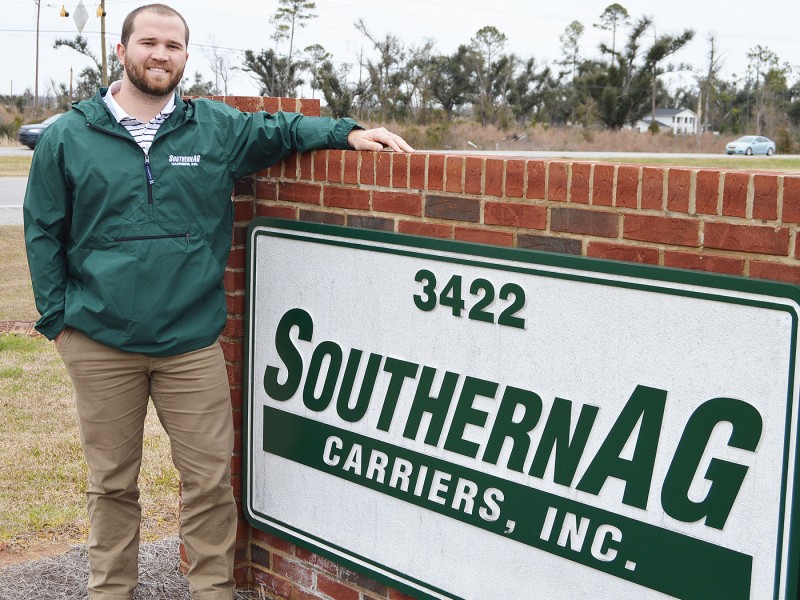
ALBANY — During a recent forum focusing on the region’s work force, Southern Ag Carriers President Hugh Nall lamented that finding qualified CDL drivers was a difficult task for the company.
“We need at least 25 drivers right now,” Nall said.
Nall’s problem is not unique to the trucking industry. In the latter part of last year, Albany Technical College President Anthony Parker might have provided a solution to the haulers’ problems, unveiling the Albany Technical College Transportation Academy.
The academy is designed to create a pool of trained, qualified employees — both drivers and diesel technicians — to support the transportation industry and those industries that rely on efficient and cost-effective systems to move goods and services across the region and the country.
ATC has created an eight-week pathway to a commercial driver’s license. The Albany Tech course is a rigorous training program providing each student the skills and expertise necessary to become a successful truck driver. Students receive classroom, driving range and road instruction from faculty who have been in the field for years.
The Albany Tech curriculum includes 200 hours behind the wheel so that students gain experience in different driving situations, within the city, on the highway and in rural areas.
College officials say academy graduates are being heavily recruited by national trucking firms. Albany Tech Career Services staff add that graduates are seeing a 99 percent job placement rate and that most students should begin earning from $30,000 to $50,000 a year after training.
“We should graduate 65 to 70 students this semester,” ATC President Anthony Parker said. “We will likely reach our goal of 200 graduates, or more, this year.”
Southern Ag recruiting manager Devin Griffin said recently he’s not seen a huge influx of driver applications from Albany Tech, but the number is noticeable.
“There has been a driver shortage for everybody for the past two decades,” Griffin said, noting Walmart announced last week it was giving its drivers $1,500-a-year raises. “I’ve been waiting for that to happen. It makes you wonder why there is a driver shortage. I think it may reach a point where rates will make shipping obsolete to some degree and won’t be worth the money. I think we’ll see a lot of warehouses being built to set up short runs rather than long hauls.
“But I’m just speculating because we are still a long way from that happening.”
Related Articles

Federal agency to investigate Monday paragliding fatality
The death of a 63-year-old man who was killed in a paragliding accident on Monday is under investigation by the National Transportation Board, according to Dougherty County Coroner Michael Fowler.

Audit of police surveillance cameras results in arrests of five former APD officers
“The bottom line is when we find people who have misused resources that they have, we’re going to hold them accountable. These resources help fight crime, but we will not tolerate when they are misused.”

New commander takes helm as Marine Corps logistics adapts to evolving battlefield
Brig. Gen. Kevin G. Collins assumed command of Marine Corps Logistics Command during a change of command ceremony at Marine Corps Logistics Base Albany, succeeding Maj. Gen. Keith D. Reventlow after four years leading the organization responsible for sustaining Marine forces around the globe.
