
OPEC Grinch sends gas prices upward
Experts see gas pump prices rising 10-15 cents in the short-term
By Jim Hendricks
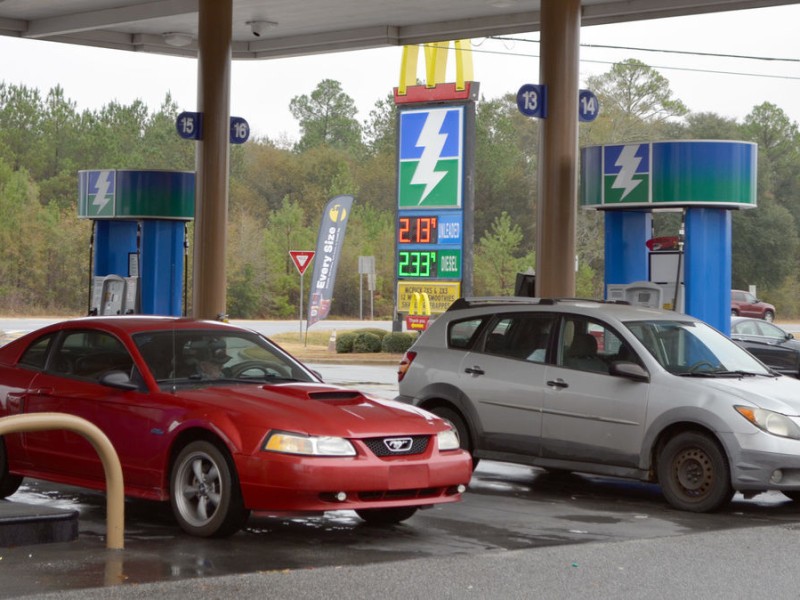
ALBANY — How much gas prices ultimately will be affected by OPEC’s decision to cut back on production starting in January is being debated, but the Grinch already has arrived in Albany, where the average gas price has risen more than 7 cents over the past week.
Monday-morning benchmarks for the five-county metro Albany area were at $2.137, a rise of 7.8 cents, on AAA’s Daily Fuel Gauge Report, while GasBuddy had the morning benchmark at $2.131, up 7.2 cents from its Nov. 28 survey. Albany motorists were paying 18.4-19 cents more per gallon than they were last year on Dec. 5.
Both surveys had the highest average Monday in Savannah, which was at $2.155-$2.158. Albany ranked second-highest among the state’s eight largest metro areas in the AAA survey and was third-highest on GasBuddy’s, which had metro Atlanta at No. 2.
Both surveys had the national average just above $2.18, up 5.6-6.1 cents in a week and about 14 cents a gallon higher than Dec. 5, 2015. In Georgia, the average was about 2.125, up 4-4.5 cents in a week and about 15 cents more than the state’s drivers were paying last year.
“OPEC seems to be taking the role of the Grinch this holiday season: The era of low oil prices may be over for now,” Patrick DeHaan, senior petroleum analyst for GasBuddy, said.
Mark Jenkins, a spokesman for AAA, said the OPEC action on Nov. 30 sent crude prices to a 17-month high, which has brought pump prices up with them. His organization has a pessimistic outlook for those hoping gas will move back down.
“AAA forecasts that gas prices could rise a total of 10 to 15 cents based on the recent surge in crude oil prices,” Jenkins said. “How the market responds this week could send prices even further. It’s unclear how much more upside momentum oil prices have, but some analysts believe they could eventually reach $54 a barrel. If that happens, the rise in pump prices could reach a quarter (per gallon).”
The OPEC agreement calls for the cartel to cut production 1.2 million barrels of crude oil per day to tighten the world supply. The organization also said it would establish a monitoring committee to push compliance with the decision. The agreement is for six months, and OPEC will meet again May 25 to determine whether to extend the cuts. That meeting will come a couple of days before the U.S. summer driving season kicks off on Memorial Day weekend.
DeHaan was skeptical that OPEC will stick by its agreement, but said the damage already was done for motorists this month.
“If I had a nickle for every time OPEC said it was going to cut oil production, I could probably buy everyone free gas on Christmas,” DeHaan said. “While OPEC signaled at its meeting in Vienna that it would cut crude oil production, it also created a committee to monitor the reduced production quotas — addressing the issue of cheating — an issue that has been pervasive for the organization.
“For now, oil markets have bid up oil prices in a fury believing the agreement, which comes into force in January, is exactly what’s needed to balance supply and demand. I, however, believe this rally represents a balloon that’s filled with too much air and risks a correction (popping the balloon) that may be seen in due time.”
2016, however, will close out with the higher price trend intact.
“But as I wait for the balloon to burst, the rally in oil prices will lead to higher gasoline prices in much of the country over the next couple of weeks as prices catch up to the feverish rise in oil prices,” DeHaan said. “From the east to the west, average prices could rise 5-15 cents a gallon in the week ahead, so motorists should plan accordingly and expect increases in nearly all communities.”
Related Articles

Albany Commission OKs $400,000 purchase of Chamber building
“It’s just a (big) space that was going to take a considerable investment. It’s a great building that really doesn’t meet our needs anymore.”

Roaming ‘gator causes a stir in Dougherty County subdivision
“Everybody came out to look. It gave a lot of excitement in the subdivision here. He started out in the front yard and he ended up in the back.”

Albany Commission hits pause on data centers for study, drafting regulations
The Albany City Commission compromised between six months and 18 months to set a moratorium of 12 months on permitting data centers in the city. The resolution approved in a unanimous vote allows for a six-month extension.
