
Record travel expected over Christmas-New Year’s holiday period
Strong economy, low gas prices help fuel travel
By Jim Hendricks
Herald Correspondent
ALBANY — If you’re driving during the Christmas holidays, you can expect record-setting traffic with more than one out of three Americans sharing the roads, skies and rails with you.
AAA, which forecasts holiday travel periods in the United States, is forecasting that 112.5 million people will travel during the year-end holidays of Christmas and New Year’s, which AAA defines as the 11-day period of Dec. 22-Jan. 1. That’s a 4.4 percent increase over 2017, which was one day shorter.
“’Tis the season for holiday travel, and more Americans than ever will journey to spend time with friends and family or choose to take a vacation,” Bryan Shilling, managing director of AAA Travel products and services, said.
Of those traveling, the vast majority will take to U.S. roadways. About 102.1 million Americans will drive to destinations that are 50 miles or farther from their homes.
Consumer confidence is fueling the heavy travel, but the cost of fuel, which has been dropping, certainly hasn’t hindered decisions to head over the river and through the woods to see friends and relatives.
“Strong economic growth fueled by robust consumer spending continues to drive strong demand for seasonal travel,” Shilling said. “With a record-breaking one-third of the country choosing to travel this holiday, roadways and airports are sure to be busy.”
On Friday, AAA’s Daily Fuel Gauge Report had the national average for a gallon of gas at $2.349, down 25.1 cents since last month and 8.5 cents from the Dec. 21, 2017 average gas price.
In Albany, several gas stations have dropped below $2 a gallon. Georgia on Friday had a statewide average of $2.155 on the Daily Fuel Gauge Report, down 29.7 cents from a month ago and 11.7 cents below last year. Metro Albany on Friday averaged $2.07, down 28.7 cents in a month and a dime per gallon lower than 2017.
Those heading to Florida locations will see higher gas costs. On Friday, the sunshine state — which has three of the top 10 destinations for travelers — averaged $2.249, down 21.7 cents from November and 10.8 cents below last year. Gas prices in Orlando, the nation’s No. 1 travel destination this holiday period, was a relative bargain at $2.14 on Friday, while No. 9 Fort Lauderdale was higher at $2.331 and Miami added a dime more to reach $2.43.
Overall, year-to-year travel will increase by 4 percent or more for modes of travel other than driving. About 6.7 million people, 4.2 percent more than in 2017, will take a plane, the highest level in 15 years. Trains, buses and cruise ships will accommodate 3.7 million passengers, up 4 percent from last year, AAA predicts.
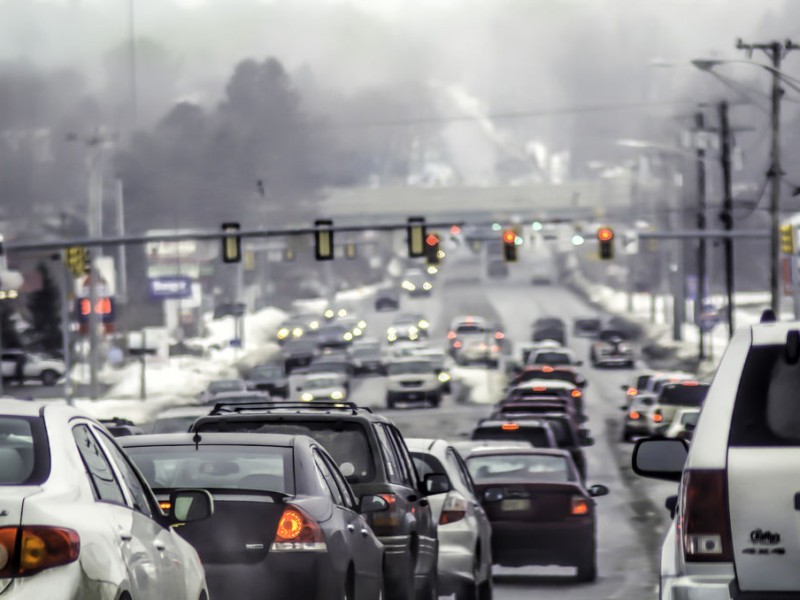
Of course, all the travel — especially the driving — means traffic snarls frequently will be an issue. Officials with INRIX, a global mobility analytics company, project that travel times could be four times longer than normal in the most congested U.S. cities, including Atlanta.
“With a record-level number of travelers hitting the road this holiday, drivers must be prepared for delays in major metro areas,” Trevor Reed, transportation analyst at INRIX, said, adding the worst day was expected to be this past Thursday.
“Our advice is to avoid traveling during peak commuting hours,” he said. “If schedules allow, leave bright and early — or after the morning commute.”
Those driving also need to take precautions to arrive safely, officials with the Georgia Department of Public Safety warned.
“State troopers will be keeping a close eye out for motorists breaking state traffic laws and exercising bad driving habits that could potentially cause a fatal crash,” Col. Mark W. McDonough, commissioner of the department, said.
The Georgia State Patrol reckons the Christmas travel period this year as being 126-hours long, from 6 p.m. Friday until 11:59 p.m. on Wednesday. The 102-hour New Year’s holiday period begins at 6 p.m. Dec. 28 and ends at 11:59 p.m. on New Year’s Day.
Last year, the 2017 Christmas holiday travel period was 102-hours long. GSP investigated 554 crashes that resulted in 283 injuries and 11 fatalities. Troopers issued a total of 7,461 citations and 12,432 warnings, with 198 people arrested for driving impaired. Four more traffic deaths were handled by local agencies, bringing the statewide total to 15.
During the 2017 New Year’s holiday travel period, which was 78 hours long, GSP worked 370 wrecks that resulted in 205 injuries and five fatalities. In addition, troopers issued 6,542 citations, 10,680 warnings, and arrested 234 people for driving under the influence. Again, four fatalities were worked by local agencies. That brought the total traffic-related deaths for the period to nine in Georgia.
GSP officials are urging those who consume alcohol to have a designated sober driver, or to utilize a taxi, rideshare, friend or family member to get home safely.
“This is a festive time of the year, and we want everyone to enjoy the holiday season,” McDonough said. “But we also want everyone to be safe out on our roads.”
When it comes to using those roads or taking other means of travel, people may sing about a white Christmas, but they prefer warm green ones in practice. Nine of the top 10 holiday destinations are in climates where snow is rare and temperatures are warm. New York City, at No. 7, was the only cold-weather choice in the top 10.
Anaheim, Calif., where Disneyland is the big draw, ranks third behind Orlando, known for its own array of Disney and other theme parks, and No. 2 Cancun, Mexico. The rest of the top destinations are Nos. 4-6 Punta Cana, Dominican Republic; Montego Bay, Jamaica, and Honolulu, and Nos. 8-10 Kahului, Hawaii; Fort Lauderdale and Miami.
Related Articles

Small actions can help save big on utility bills
The high temperatures of July and August can bring scorching utility bills as air conditioners hum to keep houses cool. Albany Utilities Residential Conservation Auditor Willie Jackson offered some tips on making summer cooling bills more manageable.

Bigger budget will mean improvements at Dougherty County’s landfill
“It’s certainly an opportunity where we can grow and make this very beneficial for years to the community. It’s a service that we provide for the community and I want to prolong that resource for the community. It’s not just fill it up and close it.”
Putting on the Ritz: The rise, fall and renewal of Albany’s Harlem District
On July 7, the Albany City Commission unanimously approved final construction drawings for a comprehensive restoration of the Ritz Theatre and Cultural Center, clearing the way for the project to move into competitive bidding after years of planning and preservation efforts. The decision marks the latest chapter in a decades-long effort to preserve one of Southwest Georgia’s most significant African American landmarks.
