
Roads to success
Lee County leaders working on road improvement
By Brad McEwen
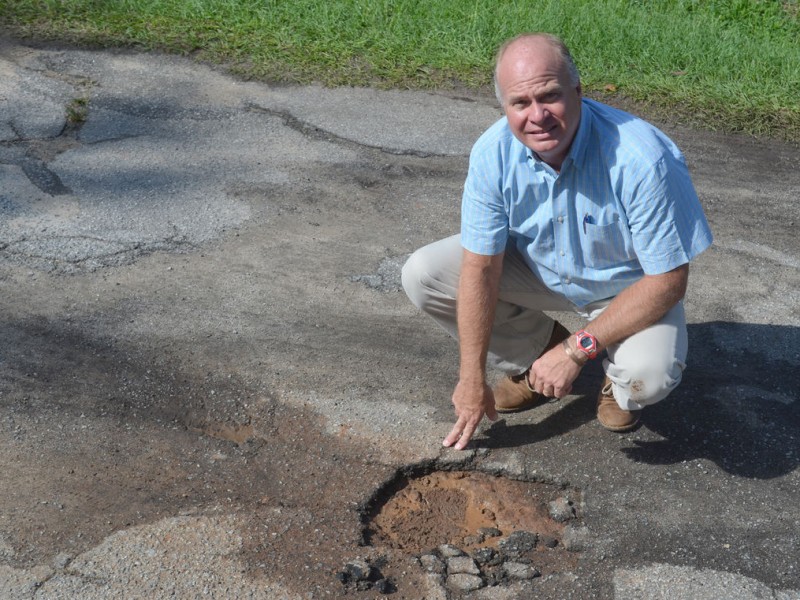
LEESBURG — With new asphalt barely dried on three of Lee County’s major thoroughfares, area leaders are already looking ahead to continued road improvement in years to come, improvements one county commissioner in particular feels are vital to the future health of the growing community.
“Roads are as important a responsibility for a county commission as anything,” Lee County Commission Chairman Rick Muggridge said recently. “For economic development to happen, three things have to exist: quality health care, quality education and transportation. Without those things, people are not going to move to your community and your community is not going to be economically viable.”
At it’s most recent meeting, the county’s board of commissioners voted to finalize how the county would prioritize the nearly $600,000 it is set to receive from the Georgia Department of Transportation’s Local Maintenance and Improvement Grant (LMIG) program.
The 2017 plan calls for the resurfacing of seven county roadways, including one mile of Creekside Drive, the length of Colonial Drive, .7 miles of Airport Road, 2.69 miles of Lovers Lane Road, 2.89 miles of Armena Road, 1.1 miles of Old Stage Road, and .59 miles of Marlow Lane.
That project list is one of the most ambitious Lee County has undertaken in recent years, thanks to the largest LMIG allotment GDOT has ever granted the county, and the commitment county leaders have made to improving Lee County roadways.
Muggridge, a staunch supporter of infrastructure improvements for the county, said the focus on roads began roughly four years ago, when the county’s staff began investigating the quality of roads throughout Lee County.
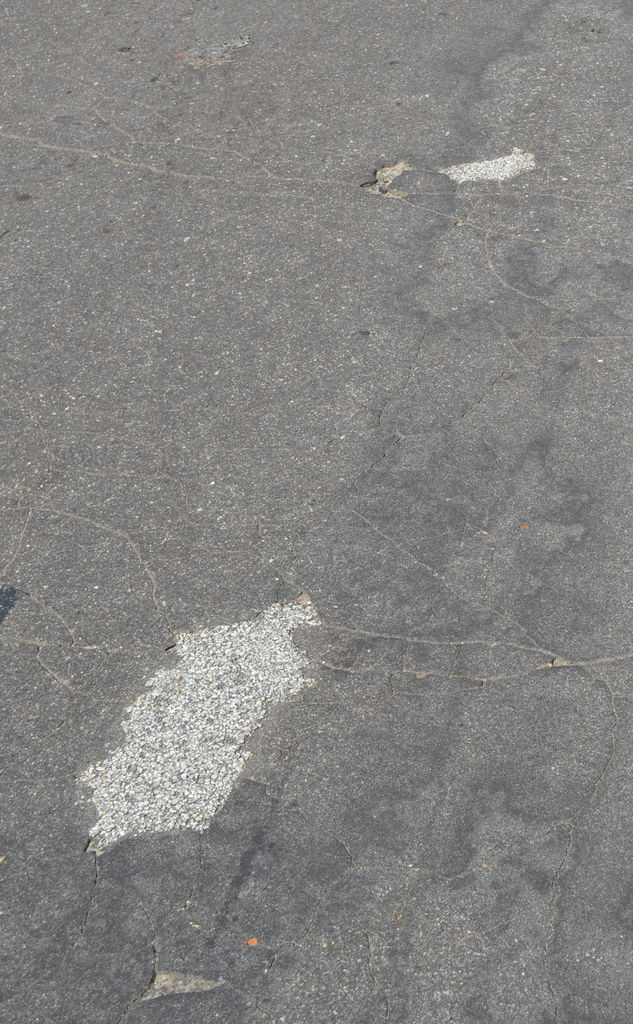
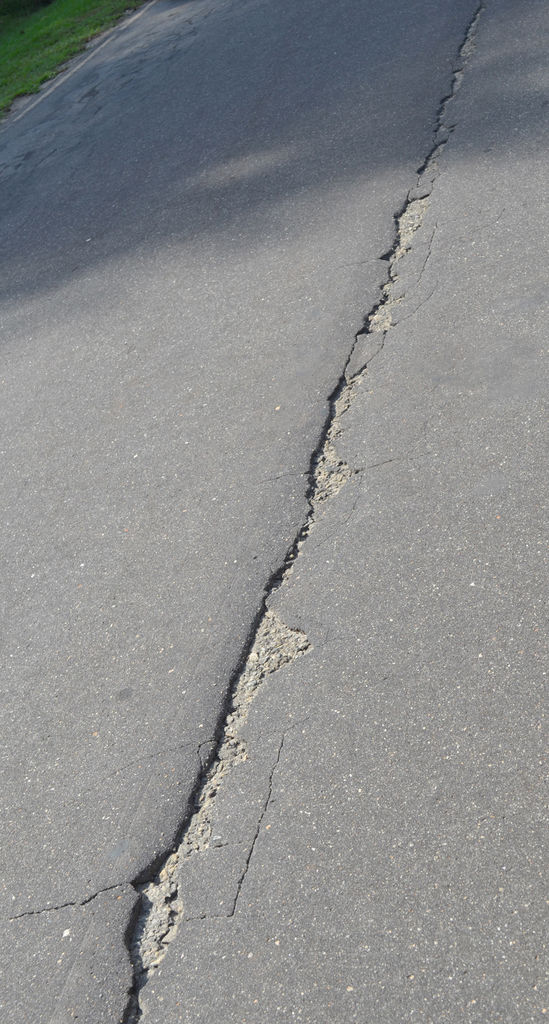
“In 2012 we had a study done on the condition of our pavement, and it became crystal clear that we were not maintaining our roads,” said Muggridge. “The majority of the roads were in average to poor condition. To keep up even the roads that we already had, we should be resurfacing around 8 to 11 miles, every year. We weren’t. We weren’t resurfacing a mile of road in some years.”
The information contained in that report, which was conducted by The Barnhardt Group, armed county leaders with in-depth detail about the condition of the county’s road network. In addition to determining the overall road network quality, which in that report is known as pavement condition index (PCI), the Barnhardt study used field data gathered from what was, at that time, Lee County’s 288 centerline miles.
In addition to determining that the county’s overall PCI was 59 on a scale of 0-100, with 100 being brand new, the report also figured the value of the county’s infrastructure at that time. Using the industry standard of assigning a value of $42 per square yard, the report estimated the county’s 4,232,621 square yards of roadway was worth $177,770,068.
Additionally, the report indicated that the county was severely underfunding roads, and determined that even if the county spent $300,000 a year on road improvement, the PCI rating would continue to decline. The report gave leaders a rough framework of how to best improve the PCI with whatever budget was available for road maintenance.
The general philosophy presented in the report suggested a plan to improve the PCI by not focusing primarily on the worst roads, which would quickly deplete a budget, but by developing a system by which the county “allocated a certain amount toward keeping good roads good, a large amount to make their fair roads better, and a smaller amount to rehabilitate their poor roads.”
Following that report, Muggridge said, the county set about developing a specific master plan for prioritizing the improvement of the county’s roads, based on real data and not the opinions of elected officials.
“I’ll credit (former county engineering and planning director) Matthew Inman, and Mike Sistrunk, with creating a priority ranking that takes a lot of the politics out of the process,” said Muggridge. “They look at No. 1, when it comes to resurfacing, how much are we spending annually in maintenance? How many calls are we getting? What is our cost to maintain whatever the condition of that road is? No. 2, what’s the traffic count? And road conditions.”
Despite having a priority road list, however, Muggridge said funding is always an issue when it comes to road maintenance, so rather than just come up with a plan, the county also had to look at funding options. One of the steps that was ultimately taken to ensure work was being done was the commission raising the county millage rate two years ago.
“In ‘14 we took the extraordinary step of raising the millage rate because at the end of the budget, as we got ready to put it together, we had spent the money that was there and we hadn’t addressed any roads,” Muggridge said. “So, to address roads, we made the difficult decision to raise the millage. And since then we have been resurfacing significantly more miles of road every year. In ‘15 we did 8.6 miles, in ‘16 we did 7.1 and in ‘17 we’re going to do almost 9 miles of resurfacing, and that’s where we need to be.”
Making the county’s task of repaving roads a little easier has been GDOT’s renewed focus on funneling dollars to the local level to help with road work through LMIG.
Since 2013 the county has received roughly $400,000 annually, which along with a 30 percent match that the county takes from SPLOST funds have financed the resurfacing of whatever roads are at or near the top of the priority list.
In 2014 the county paved and added stormwater improvements to parts of Livingston Road, Ragan Street, Thomas Street and Lane Street; and in 2015 the county resurfaced parts of Robert B. Lee, North Doublegate Drive and James Pond Road.
The 2016 LMIG projects consisted of the just-completed resurfacing of Bronwood Road, Kinchafoonee Creek Road and Oakland Road, three important and heavily-trafficked roads within the County.
At the same time, as the county has been improving its roads, so too has the state of Georgia, thanks, Muggridge said, to the passage of House Bill 170.
“What we’ve seen with the courage of the legislature, I guess it was two years ago, by passing House Bill 170, they created a new source of revenue to dramatically increase the funding for DOT,” said Muggridge. “And we have been a direct beneficiary of that, thanks to DOT, thanks to Representative (Ed) Rynders. As I said, because of that additional funding, they were able to pave and resurface U.S. 19, which is awesome.
“So truly, in the last three years our citizens have seen a pretty dramatic increase in the quality of our pavement. Now we’ve still got a very long way to go. There’s several neighborhoods where those residential surface streets need to be addressed. It costs money, but it’s money well-spent.”
Muggridge also pointed out that, in addition to resurfacing older roads, the additional GDOT funding has allowed the county to look at building new roads as the community grows and expands, something that couldn’t even be considered for cost reasons if county dollars were the sole means for resurfacing.
Although new roads are something that the commission can look into, coming to a consensus hasn’t always been easy, as each commissioner has an opinion about where new roads should be located.
“The reality is, resurfacing is one dynamic, new roads are another,” the commission chairman said. “And I think you’ll find the board has dramatically different opinions on that. We’ve come together on resurfacing fairly well, and we’ve resurfaced far more roads than we’ve built. But we have built some roads in the last few years.”
Indeed, in the last few years, the county has added David and Donald roads in 2013, Westover Boulevard and Livingston Road in 2014, and in 2015 the county completed two densely populated residential roads, Thomas Lane and Regan Street, and a mile of Forrester Parkway, to help with planned commercial development.
In 2016 the county continued adding roadway by building a quarter-mile of Marlow Lane, effectively connecting residential areas just north of the Dougherty County line with the heavily commercial U.S. Highway 82. That project, known as Marlow Lane Extension, should be complete within the month.
As Muggridge points out, road improvements are pricey, but counties like Lee have gotten yet another boost through federal legislation, which has allowed the states and counties to free up money that might have been earmarked for resurfacing to instead build new roads.
“Two things happened in close proximity,” Muggridge said. “No. 1, House Bill 170 passed, and then about eight months later, I guess it was, Congress finally passed a highway bill. And they passed a six-year highway bill which we’ve been begging for for many years. So now we know, we being the state of Georgia, what we can expect from the feds in regard to transportation.
“People way smarter than me, they said, ‘We’re going to take these federal dollars, and we’re going to put it in resurfacing.’ That frees up our state money for new projects.”
While Muggridge is excited about the various things that have happened to allow Lee County more opportunity to resurface and build roads, he’s still convinced there is more to be done. And he doesn’t want to see the county rest on its laurels.
“There’s still a lot that needs to be done,” Muggridge said. “But I think you’ve seen it’s something the board is behind. Everyone politics for their road, but it was a five-zero vote last year, and it was a five-zero vote this year. At the end of the day, everybody said, ‘You know, the reality is, this is the right thing to do for the whole county.’ And if you look at it, we’ve been on the north side, we’ve been in the middle, we’ve been in the south. So we’re hitting everybody.”
Related Articles

James Rubino installed in new role at Marine Corps Logistics Command in Albany
James L. Rubino recently assumed the role as executive deputy of Marine Corps Logistics Command in Albany. In his new role he will oversee integrated logistics support.

Rain depresses voter turnout in Dougherty County
“A lot of people don’t vote when it’s raining. People don’t do a lot of things when it’s raining.”
City of Albany faces shortfall for police, fire salaries
“We can’t tell staff to hire more police officers and then complain at what it costs.”
