
State to see large boost in transportation funding
Transportation official: Federal, state funds to flow into Georgia
By Carlton Fletcher
ALBANY — Georgia will see work on vital transportation projects ramp up quickly now that President Obama has finalized with his signature passage of a long-awaited federal transportation bill, according to the Georgia Department of Transportation’s deputy commissioner.
Mike Dover told Albany and Dougherty County commissioners during a joint meeting of those two bodies with the local state legislative delegation Monday that some $1.1 billion to $1.3 billion in federal funding will be added to a proposed $750 million in additional transportation funds that will be included in the department’s Fiscal 2016 budget. Dover said the additional funding will come from the recent increase in state gasoline taxes.
“With the additional $750 million in funding and $519 million more in our amended budget, our state funding is going to total $1.7 billion,” Dover said. “The additional $1.1 billion to $1.3 billion in federal funds will allow us to do some long-term planning finally.
“Transportation is really aligning for the state of Georgia.”
Dover told local leaders HB 170, the Transportation Funding Act of 2014, will give Georgia an additional $200 million in routine maintenance funding, which he said will allow the state to more readily contract with small and minority-owned businesses.
“Bidders who prequalify under our regulations will have an opportunity to bid on projects from $50,000 to $2 million,” the deputy transportation commissioner said. “Small and minority businesses will have opportunities they haven’t had before.”
When local officials discovered that the Tifton District office planned a meeting with Disadvantaged Business Enterprise and small businesses Dec. 16, they chastised regional officials for not more widely publicizing the meeting.
“This is a well-kept secret as far as the folks around here are concerned,” District 6 Dougherty County Commissioner Anthony Jones said. “We need to figure out a way to get the word out there so that our businesses can prequalify. We definitely have folks that can cut grass (on rights of way), do striping and complete other maintenance projects.”
State Rep. Winfred Dukes said the plan to allow small and minority businesses to bid on outsourced state projects could be a “game-changer” for a number of local business owners.
Dover said the increase in transportation funding should also lead to an increase of around 30 percent in Local Maintenance Improvement Grant money used typically for local resurfacing projects.
“An additional $41 million in LMIG funding will mean a significant increase in city and county grant funding,” he said.
Dover also told the local officials the county would be eligible to request a Transportation Investment Act (T-SPLOST) tax separate from other counties in the region starting in July of 2017. The Southwest Georgia District was one of nine in the state that collectively rejected a T-SPLOST measure in 2010 that would have addressed regional transportation needs. The DOT official said the three regions that approved T-SPLOST measures had collected more than $400 million in taxes that had been used on 811 specific transportation projects.
“Until July 17, any county outside metro Atlanta would have to reapply (for a T-SPLOST referendum) as a region,” Dover said. “After that, though, counties may apply individually to present a referendum that would allow the county to add a 1 percent or any portion of 1 percent tax.”
Dover also told the state and local officials the 66-mile State Highway 133 Valdosta-to-Albany four-laning project, which is seen as vital to the future of Marine Corps Logistics Base-Albany in the event of any base closure discussions, is moving forward with the recent letting of a part of the $270 million project. He said three separate projects on the Albany-to-Moultrie portion of 133 are being considered for future funding.
Related Articles
Albany/Dougherty County among local governments looking at data centers
“Our understanding is that data center developments look like an easy fix for the problems that face rural America, but this is a Faustian deal at best. You can see the effects in communities across the state and country.
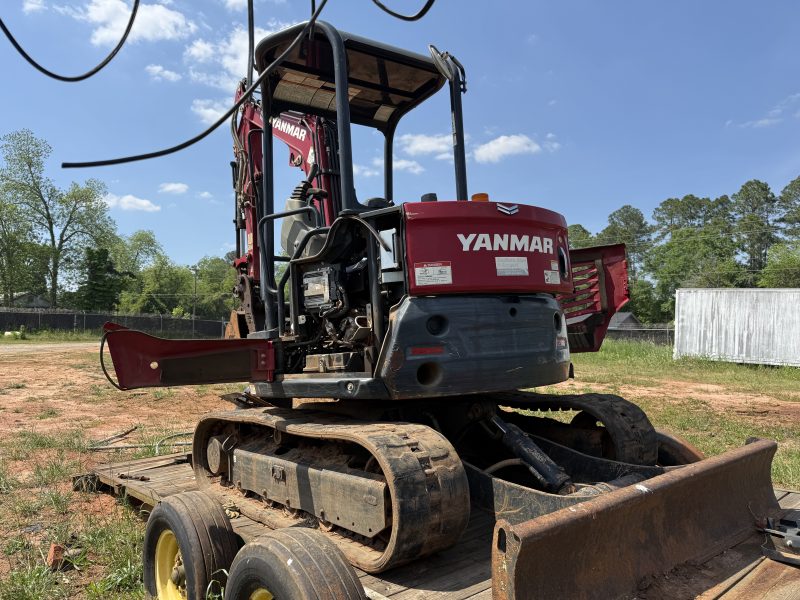
Dawson approves $68K excavator purchase after months of contradictory public statements
The decision concludes one portion of a controversy that has generated months of public scrutiny but leaves several unanswered questions regarding how the city’s original machine was damaged, whether employees were held accountable and what documentation supports the decision to replace rather than repair it.
Dawson proposes borrowing up to $420,000 to stay afloat as finances unravel
Documents obtained by The Dawson News show city officials are proposing to balance the budget through a transfer from the Public Utilities Fund while simultaneously seeking authority to borrow as much as $420,000 from a private financial institution to continue meeting payroll and other operating expenses as Dawson works to complete financial audits that have remained unfinished since 2023.
