
Summer weather highlights water safety need for adults, children
Officials warn drowning can occur in a couple of inches of water
By Jennifer Parks
ALBANY — Hot weather and the closure of schools during the summer months create a natural draw to pools, particularly among youngsters, so officials are urging the public to make pool safety a priority.
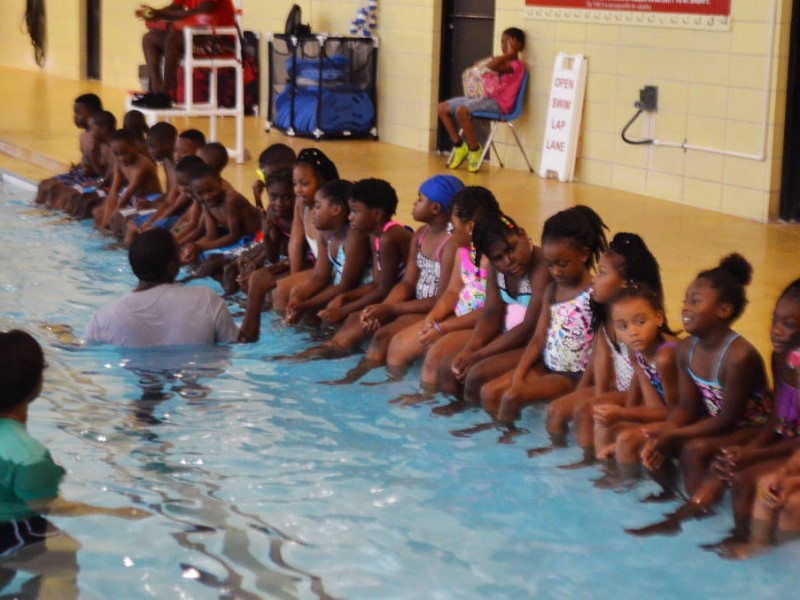
Teresa Manning, aquatics director for the Albany Area YMCA, said being “water safe” is a focus of the swimming lessons the Y conducts.
“We teach (students) how to fall into the pool and how to get out of the pool,” she said. “If we have not done that, we have missed the whole point.”
The interest in swimming lessons peaks during the summer months, so Manning said the ideal time to get into lessons is during the fall and winter months, before the peak season hits. At the Y, five instructors are working with about 50 who have recently signed up for lessons, in addition to those already being taught to swim at the facility.
“Swim lessons don’t have to wait,” Manning said. “You can have that swim party that sneaks up on you in April, and you don’t have to worry about that because you took care of that in January, December or November.
“Not knowing how to swim is a problem that can be solved.”
Manning said children who never learn to swim tend to grow up to become adults who cannot swim, who in turn have children who repeat the cycle. She said much of that comes from fear of the water, and a child is not likely to understand that swim lessons are the key to getting over that fear.
She added that the fear can be so great that it might take several lessons before a child is willing to blow bubbles in the water, and it can easily go away once they learn to swim and are able to have fun in the water.
A person never knows when swimming skills might come in handy, and it is never too late to learn, Manning said.
“You get that fear as a parent,” she noted. “(Parents should not) tell (kids) they are going to drown. We tell them they need to take lessons. The older they get, the more they are developing their own fear of the water.”
Swim lessons start at the shallow end of a pool. The ideal scenario is for a new swimmer to make it to the deep end, but that does not have to be the case.
“I am not taking you to the deep end until you are ready. I don’t care if you are an adult and you never get to the deep end,” Manning said. “I’m more concerned that if they need to save themselves, can they do it? Or can they hang out with their kids or grandkids in the shallow end? That’s what I care about.”
As cellphones have become a way of life, they can also be a distraction for parents while there is a child in the pool. All it takes is exposure to a couple of inches of water for drowning to occur.
“Drowning can happen very quickly,” Manning said. “All adults should be extra responsible.”
Public Health officials recommend keeping some basic health tips in mind while in the water. The main health concern is fecal matter contaminating water, and that the water can be swallowed and make others sick.
Chlorine does not kill germs instantly, and urine in water weakens the chemical’s effect.
“The main thing we deal with is public pools,” Dewayne Tanner, environmental health director for the Southwest Public Health District, said.
Tanner said public pools, including those at hotels and YMCA facilities, should have water tested twice daily to ensure the chlorine level is what it should be. In the event fecal matter does fall into the pool, the pool has to be closed and shocked, which is followed by an eight-hour turnover.
“We go in and inspect those pools at least twice a year,” Tanner said. “If they are not up to specifications, they cannot open until they meet the specifications.”
A private pool, if it is used often, should be checked on a daily basis. Tanner recommended that swimmers rinse off before getting into a pool.
Public Health officials also note that interactive fountains typically use recycled water. Individuals are urged to stay out of the water when suffering from diarrhea, take a bathroom break every hour, check diapers every 30-60 minutes and change diapers away from the water.
“We require a bathroom to be accessible,” Tanner said.
Health officials advise swimmers not to drink pool water and not to sit on water jets. Barriers, covers and drains should be utilized; children should be kept at arm’s length, and individuals ought to look before they leap into the water.
The Georgia Department of Public Health Office of Health Indicators for Planning said the Southwest Public Health District, which includes Dougherty County, saw nine drowning deaths in 2015, up from four in 2014.
Other basic tips for swimming pool safety include:
— Never leave a child alone, regardless of whether they can swim, not even for a few minutes;
— Use a buddy system and maintain eye contact. Never swim alone, especially if there is no lifeguard;
— Keep the pool area locked and secure when not in use. Use a high fence, with a lock a small child cannot reach;
— Swim only in supervised and approved areas;
— Invest in safety and rescue equipment and keep it near the pool;
— Enroll children in swim lessons;
— Enforce water safety rules. No running, pushing or dunking;
— Take all toys out of the pool when not in use so children do not attempt to go in after them;
— Learn CPR and other water rescue techniques;
— Never falsely claim to need help in the water;
— Dump water from kiddie pools immediately after use;
— Use Coast Guard-approved flotation devices, such as puddle-jumpers and life jackets, on a child who does not know how to swim
Skin cancer, which the Centers for Disease Control and Prevention said impacts 5 million people annually in the United States at a cost of $8 billion, is also a concern during swimming outings, so liberal application of sunscreen is also recommended.
“A great way to ruin a day at the pool is to get fried,” Manning said.
Officials said people often underestimate the tendency to get dehydrated while swimming, so it is also encouraged to have something to eat and drink nearby.
“Take care of your body’s physical needs,” she said.
For more information on water safety, visit www.cdc.gov/homeandrecreationalsafety/water-safety.
Related Articles

Federal agency to investigate Monday paragliding fatality
The death of a 63-year-old man who was killed in a paragliding accident on Monday is under investigation by the National Transportation Board, according to Dougherty County Coroner Michael Fowler.

Audit of police surveillance cameras results in arrests of five former APD officers
“The bottom line is when we find people who have misused resources that they have, we’re going to hold them accountable. These resources help fight crime, but we will not tolerate when they are misused.”

New commander takes helm as Marine Corps logistics adapts to evolving battlefield
Brig. Gen. Kevin G. Collins assumed command of Marine Corps Logistics Command during a change of command ceremony at Marine Corps Logistics Base Albany, succeeding Maj. Gen. Keith D. Reventlow after four years leading the organization responsible for sustaining Marine forces around the globe.
