
Thanksgiving travel expected to be highest since 2005
Nearly 51 million Americans will travel over the Thanksgiving period
File Photo
By Jim Hendricks
ALBANY — Though gas prices are up significantly from last year, AAA Auto Club is predicting a whopping 50.9 million Americans will travel out of town over the five-day Thanksgiving holiday period, an increase of 3.3 percent from last Thanksgiving.
In Georgia, the number of travelers will be up about the same percentage — 3.2 percent — with 1.4 million Georgians heading away from home, and the vast majority — 1.3 million — driving to their destinations.
AAA officials say they expect the volume of travelers to be the highest in a dozen years.
“Thanksgiving kicks off the start of what will likely become the busiest holiday season in more than a decade,” Vicky Evans, assistant vice president of travel sales development for AAA, said. “A strong economy and labor market are generating rising incomes and higher consumer confidence.
“These factors should help fuel consumer spending and generate a strong finish for the travel industry this year.”
Most travelers drive to their Thanksgiving holiday destinations and the uptick this year is coming despite much higher gas pump prices than motorists saw in 2016. On Sunday, the AAA Daily Fuel Gauge Report, a nationwide survey of retail gas prices, showed the national average at $2.544, up 40.1 cents from the $2.143 U.S. motorists were averaging the same date last year.
In Georgia, the picture’s better, but prices are more than a quarter a gallon higher than they were in 2016. AAA’s report on Sunday had the state average at $2.393, up 27.7 cents from the $2.116 Georgians were averaging last year. For the five-county metro Albany area, the average Sunday was $2.319, up 30.6 cents from last year’s $2.013 average.
Still, AAA says the highest prices at the pump since 2014 won’t hurt holiday travel, which it defines as going to a destination 50 or more miles away from home. It’s expected to be at its highest volume since Thanksgiving 2005.
The organization’s Georgia forecast says that, in addition to the overall number of travelers and the number of motorists, 107,802 Georgians will travel by air, the most since 116,695 flew in 2007. That 4.5 percent year-over-year increase, AAA officials say, is the largest percentage increase among the three major transportation modes. Another 30,947 Georgians will travel by other modes, including trains, buses and cruises.
“AAA forecasts Georgians will pay the highest Thanksgiving gas prices since 2014, thanks to strong demand and high oil prices,” Garrett Townsend, Georgia public affairs director for AAA, said. “Although it will be more expensive to drive to grandma’s house compared to recent years, the current price at the pump is not high enough to deter Georgians from taking a trip.
“Most people have already made their travel plans, and will not cancel them for moderate shifts in gas prices.”
And there’s a chance of some price relief at the pump before motorists gas up as they leave town this week.
After oil prices hit two-year highs, Townsend said, “oil prices are beginning to soften, thanks to growth in crude production and inventories; and wholesale gas prices are slipping due to high gasoline production. This should set the table for small discounts at the pump before the holiday arrives.”
Nationally, AAA forecasters say, 89 percent of all U.S. travelers – 45.5 million – will be on the road, an increase of 1.6 million people, or 3.2 percent, over last year.
As with Georgia, U.S. air travel is the highest-gaining transportation mode percentage-wise. Forecasters say consumers will pay the cheapest average airfare since 2013, which may be the reason they expect a 5 percent jump from last Thanksgiving, with an expected 3.95 million air travelers.
Those utilizing other modes of travel will be up 1.1 percent from 2016, with 1.48 million travelers.
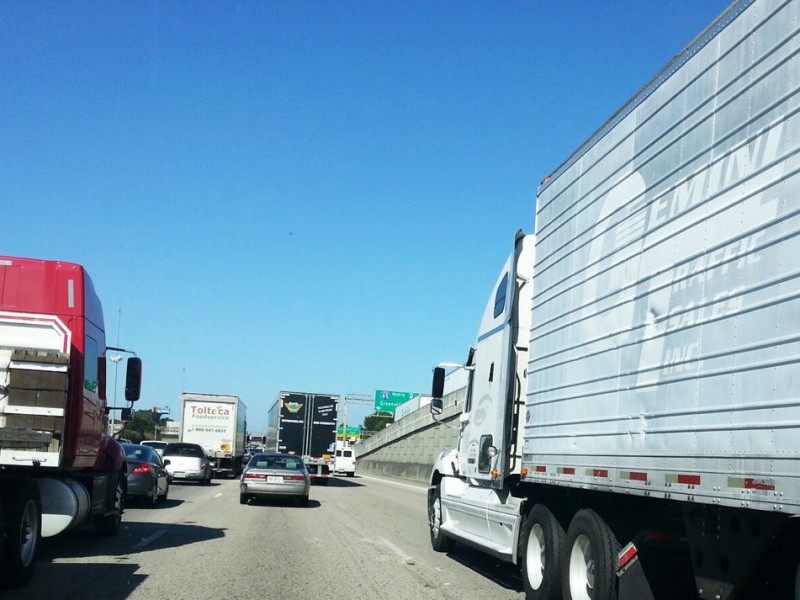
All the road travel, however, means motorists can expect congestion, especially in particularly high-volume areas on interstate highways.
“Thanksgiving has historically been one of the busiest holidays for road trips, and this year we could see record-level travel delays,” Townsend said. “Knowing when and where congestion will build can help drivers avoid the stress of sitting in traffic.”
Based on historical and recent travel trends for the holiday week, INRIX, a global transportation analytics company, and AAA have created a list of the 10 worst traffic hot-spots in Georgia. Problems could hit as early as Tuesday and drivers on Atlanta area interstate stretches from mid-afternoon to early evening Wednesday could see their travel time double, AAA officials say.
If you’re looking to avoid holiday driving stress, check traffic reports for these locations — or avoid them — this week (for I-285, CCW is traffic traveling counterclockwise on the circular route and CW is for traffic moving in a clockwise direction):
— Interstate Highway 75 North at exit 271 (Chastain Road);
— I-85 South at exit 113 (I-985);
— I-285 (CCW) at exit 10 (I-20 West);
— I-285 (CCW) at exit 20 (I-75);
— I-85 North at exit 102 (GA Highway 378/Beaver Dam Road);
— I-285 (CW) at exit 26 (Glenridge Drive);
— I-75 South at exit 260 (Windy Hill Road);
— I-285 (CW) at exit 44 (Glenwood Road);
— I-75 North at exit 222 (Jodeco Road);
— I-75 South at exit 221 (Jonesboro Road).
Related Articles

James Rubino installed in new role at Marine Corps Logistics Command in Albany
James L. Rubino recently assumed the role as executive deputy of Marine Corps Logistics Command in Albany. In his new role he will oversee integrated logistics support.

Rain depresses voter turnout in Dougherty County
“A lot of people don’t vote when it’s raining. People don’t do a lot of things when it’s raining.”
City of Albany faces shortfall for police, fire salaries
“We can’t tell staff to hire more police officers and then complain at what it costs.”
