
Wernick ready to seek life of anonymity
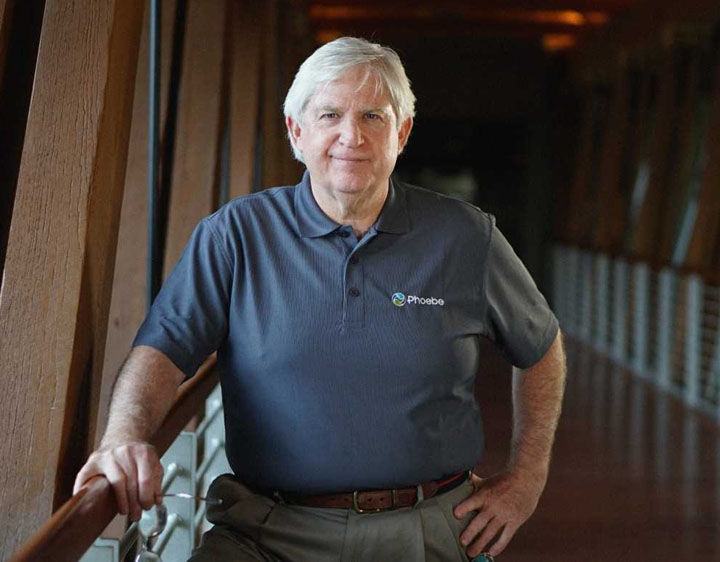
Phoebe CEO reflects on 30 years as head of hospital
Special Photo
By Carlton Fletcher
EDITOR’S NOTE: First in a series.
It is not the critic who counts; not the man who points out how the strong man stumbles, or where the doer of deeds could have done them better. The credit belongs to the man who is actually in the arena, whose face is marred by dust and sweat and blood; who strives valiantly; who errs, who comes short again and again, because there is no effort without error and shortcoming; but who does actually strive to do the deeds; who knows great enthusiasms, the great devotions; who spends himself in a worthy cause; who at the best knows in the end the triumph of high achievement, and who at the worst, if he fails, at least fails while daring greatly, so that his place shall never be with those cold and timid souls who neither know victory nor defeat.
ALBANY — It’s easy to see why Joel Wernick finds inspiration in the words of U.S. President Teddy Roosevelt.
Even as he’s been vilified, accused, castigated and his accomplishments belittled, Wernick has remained the man in the arena in the local health care industry; the one striving, sometimes failing, but always doing the things that he thought would make health care in the Phoebe Health System and Phoebe Putney Memorial Hospital in particular a little bit better today than it was yesterday.
As he gets ready to cede the mantel of “Phoebe personified” to Scott Steiner, ready to step away from a 30-year career that saw him successfully mastermind a plan to turn a small community hospital into a regional health care hub, it’s obvious that Wernick is not one to go gently into that good night, to walk away from a lofty perch that he — by God — built and settle into a more anonymous role of everyman. But it’s also easy to see that the man with the large, Type A personality is eager to see what’s next
“I look forward to being at a place in my life where I won’t be in charge of anybody but myself,” Wernick said during an extended conversation. “I expect to fill my time with a lot of activity, to be involved in other organizations — even some entrepreneurial — but I don’t expect to be the terminal decision-maker.
“I think I’m going to enjoy slowing down and just watching things grow.”
Wernick stops short of offering a direct answer to a question about how his work at Phoebe might be judged by the board of directors that brought him here, choosing instead to pass such assessment on to others who had an inside view of the constant effort.
“That’s the kind of question for those who’ve been involved in our institution for a very long time — people like Lem Griffin, John Culbreath and Lawrence Crimmins,” the outgoing Phoebe president/CEO said. “I do believe, though, if Harry Willson (the late chairman of the Phoebe board responsible for hiring Wernick) were here, he’d be very satisfied at where we started out and where we are today.
“One thing you have to consider, though, is that the report card from 30 years ago would not be the same one we’d see today. This is a much different place, and the expectations are not the same today.”
Wernick will attend an annual trip to New York to meet with Wall Street bond agents, work with Steiner to help him get acclimated, then slip as quietly as possible into the next phase of his life. He talked with The Albany Herald about his 30 years at Phoebe and his plans for the future in a frank conversation.
ALBANY HERALD: As you prepare to end your career at Phoebe, what’s your impression of the state of the hospital?
JOEL WERNICK: When we set out to make a long-term plan for the hospital in 1988-89-90, there were a handful of “must-dos” that would guide our future. One of the primary ones among them was plugging the gap of specialty services. People were leaving our community for specialty services — heart disease, cancer treatment — but what we’ve done over the years is bring in an incredibly gifted group of physicians who chose to bring their expertise here and partner with the hospital. Instead of “going somewhere” for treatment meaning Atlanta or other facilities, it came to mean coming to Phoebe. We were able to do that by bringing world-class facilities to our community. And over the years, while this was not a direct goal, one of the byproducts of our efforts is that we started attracting families here and became a magnet for the local economy.
AH: What’s it going to feel like not walking into this office to work and not being in charge?
JW: That’s a good question. I usually get up in the morning around 5:30 and walk five miles, get it done and start my day. One thing about this three-year process to find my successor is I’m confident things here will be left in good hands. I will definitely have no trouble filling the 24 hours in each day; I have plenty I want to do, including possibly going back to school. I enjoy seeing the English countryside, and I love our national parks. It’s not so much having a bucket list, it’s more doing things I’ve always liked to do. No matter where I go, I’m sure I’ll have a pair of well-worn hiking boots, a walking stick and a day pack with me. I look forward to decompressing from the constant din. There is no way to avoid stress in (the hospital) environment, and I believe the absence of stress is going to create a more relaxed atmosphere. (As CEO of Phoebe), there was this notion that you always had to be living in the future, looking perpetually ahead. I look forward to spending more time in the now. Being in charge is a relative phenomenon, but on March 1, someone else will become the board’s delegate. I won’t be in charge of anyone but myself.
AH: When you came here, you obviously had goals. Do you feel you’ve met them?
JW: The hospital is in a very stable financial position. … Our financial stability, facilities and physician manpower are sources of tremendous organizational pride. The board long ago understood that our physician manpower deficit put us at risk. Our residency program has been preparing and graduating family physicians now for more than 25 years. It’s one of the brightest stars of our organization and allowed us to turn a manpower negative into a surplus. Our relationship with the Medical College of Georgia is superlative, and that relationship is helping us make Albany a special place for future physicians. And that relationship will continue to pay benefits. From a broader, macro-economic perspective, with our sunshine, deep reservoir of clean water and a population that is generally good-natured, Golden Rule-living people, we should continue to develop a deep vein of qualified physicians to take care of our population.
AH: We’ve talked before about your critics. Address, please, how the very public criticism of you, and by association the hospital, impacted you and how you did your job over the years.
JW: When I came here, the health care market — with us being a not-for-profit and the other hospital (Palmyra Medical Centers) part of a for-profit conglomerate — what I’ll call rivalries developed. But when those rivalries turned mean-spirited, well, that was unfortunate. But I learned a long time ago to worry about the things I had control over, so for the most part I was able to just stay focused on the mission at hand. Fortunately, this organization has always had a board that never lost sight of that mission. The kind of unwarranted criticism I was subjected to never really hurt my pride as it was intended to do, but it did hurt that things that were said about me and the hospital sometimes lowered the confidence level of our incredible staff of caregivers. It’s amazing, though, the number of critics who, when they actually needed the services of the hospital, went from critics to believers.
AH: How involved were you in the process of finding your replacement, and do you feel that (Steiner) will be a good fit at Phoebe?
JW: I did not have a vote on who would be my successor. This is the person who will work with the board, so the person should be the board’s decision. I did offer input on our needs for the future, and I believe our board identified some excellent, highly-qualified candidates. Scott (Steiner) is coming to Albany from Detroit, so he’s experienced a health care market that has been immersed in community needs. Some of the issues Detroit has faced mirrors issues in Albany and southwest Georgia. I think he’s eager to be here, and this is an excellent situation for him. He’ll be working with a supportive, dedicated board. It’s the dedication of that board over the years that was instrumental in turning (Phoebe Health System) into a 1 1/2 billion-dollar business in a region of need, where 10 percent of the population had nothing (in the way of insurance) and 50-60 percent relied on government programs. I’m certain I would not have been here 30 years without the board’s support.
AH: I would think it would be difficult to cut ties with the place you’ve become synonymous with over the years. How will you do that?
JW: I don’t think it will be difficult. Everyone realizes there’s a new chief executive, and he has his own ways of doing things. If somebody needs me, though, it will be, “Here’s my phone number, give me a call.” Time fades. I’m reminded of Roy Barnes talking about the “shelf-life” of a former governor. He said he went to an Atlanta Braves game and in the second or third inning, when some of the folks in the less expensive seats started filtering down to fill in the vacant seats on the lower level, one guy kept looking over, staring at him. Finally, during the seventh-inning stretch after the guy’d had several beers, he walked over to Barnes and said, “Hey, buddy, you look familiar. Did you and I work together on the Ford factory line?” Gov. Barnes said, “It was then I knew the shelf-life of a former governor.” I think the shelf-life of a former CEO will be relatively short. And I’m going to work very hard at becoming anonymous.
PART II: Citizen Wernick.


Author

Related Articles
Dougherty County police expect to present report on surveillance cameras within two weeks
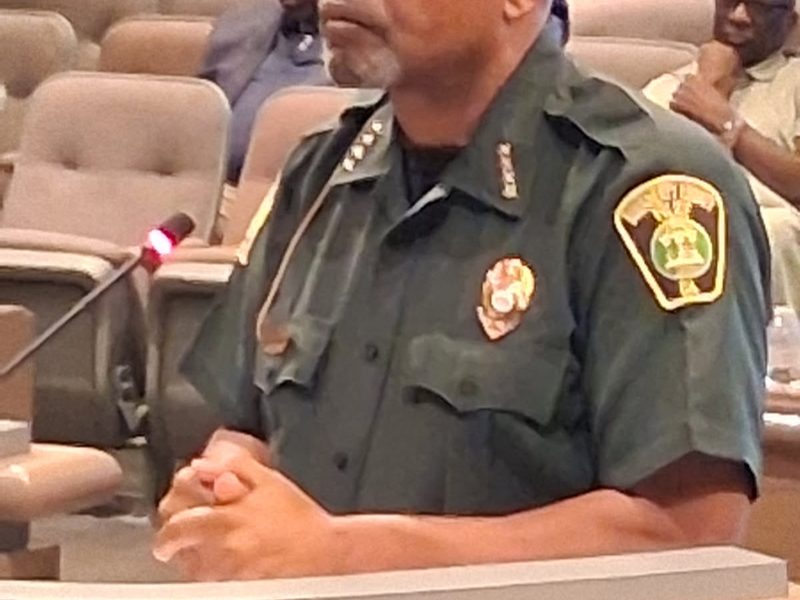
The Dougherty County Police Department initiated an auditing system for its surveillance cameras in August. The department said on Monday that it will present a report on audits dating from January within the next two weeks.
Southwest Georgia Career Expo lets job seekers shine in Albany
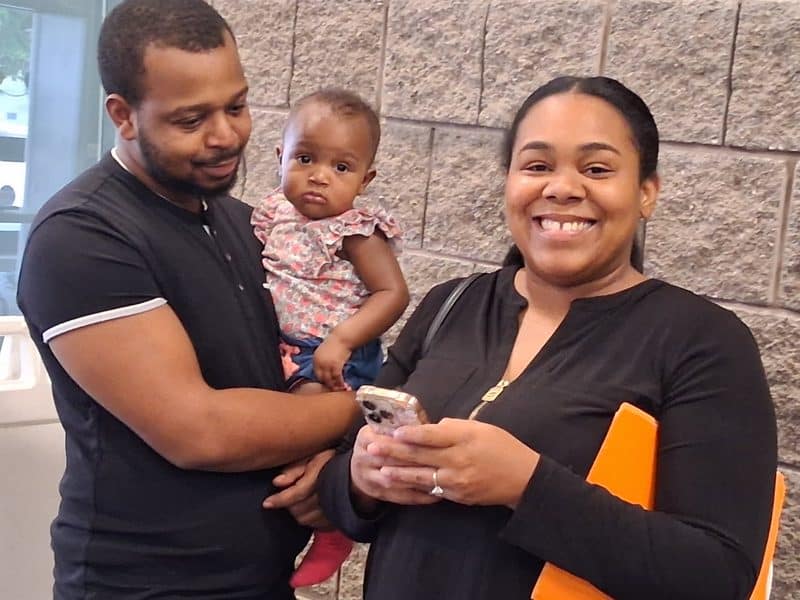
“I’m just trying to get a career, just anything that might spark my interest, really. I just want to see what’s out there.”

Joshua Harrison pounds the pavement to provide shoes for Dougherty County children
“Being able to work with the H.E.A.R.T. organization and they work with me as one of their protege sons, it really made my life different. I want to let children feel better about themselves.
