
Wrecker company: We asked for help, we got shafted
A-1 Wrecker Service takes issue with new Albany wrecker policy
By Carlton Fletcher
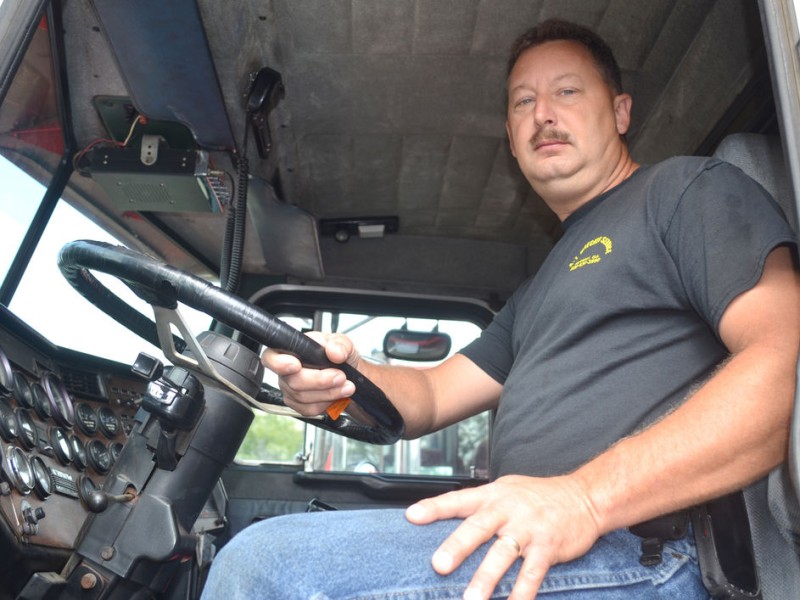
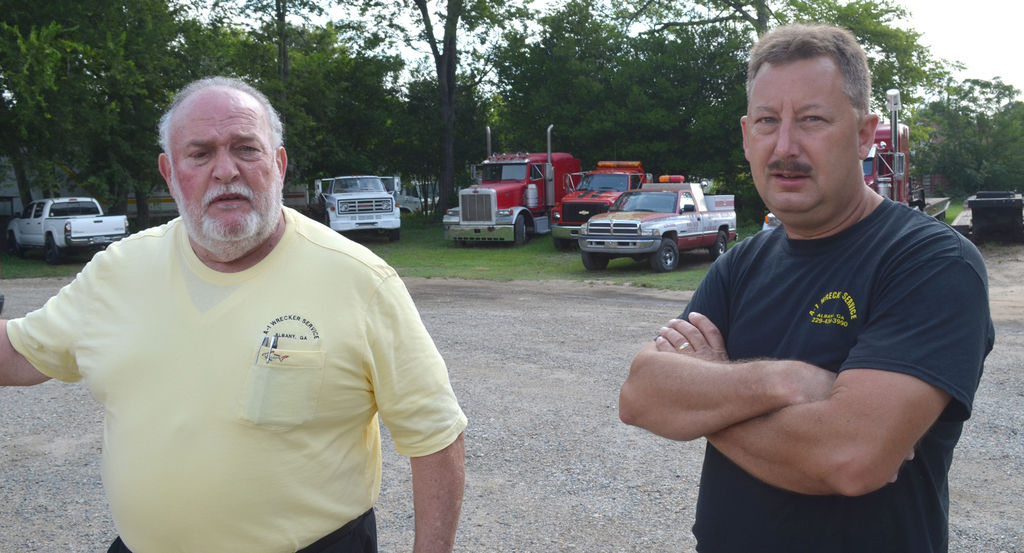
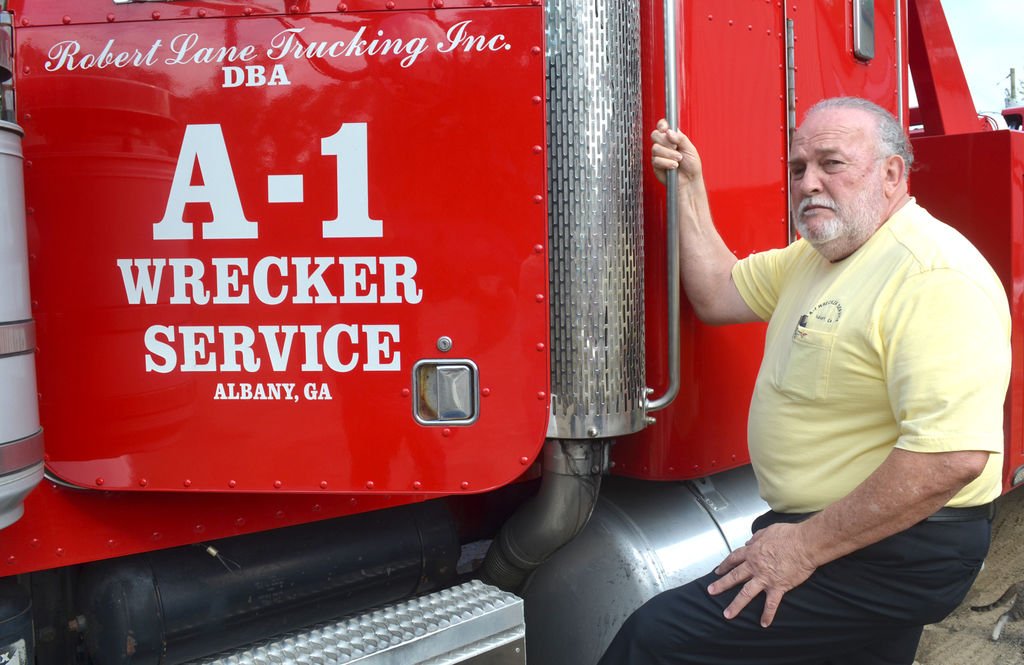
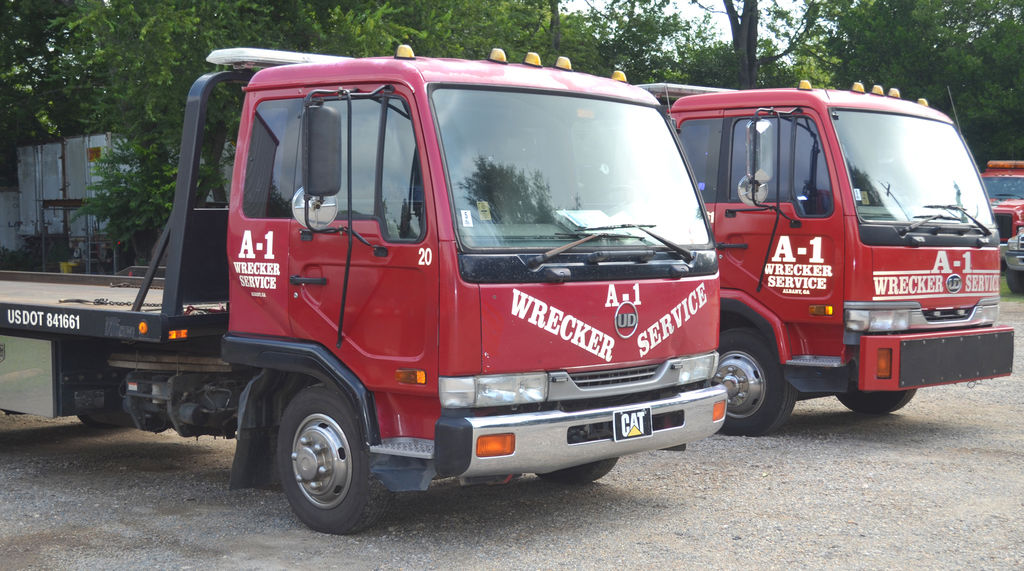
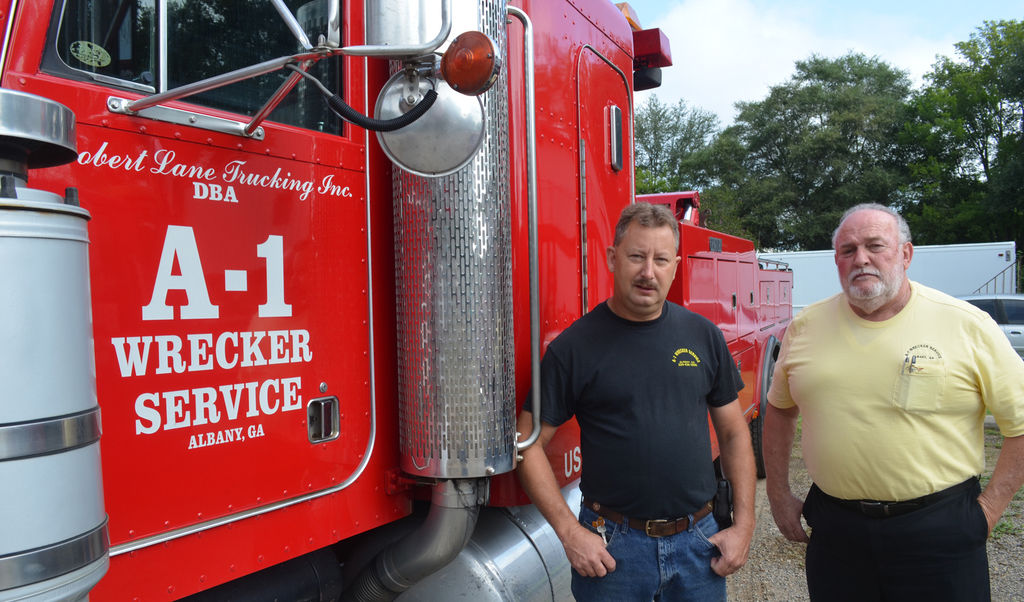
ALBANY — Robert Lane remembers well talking to city officials about starting his own wrecker service with a single truck and a lot of ambition back in May of 1982.
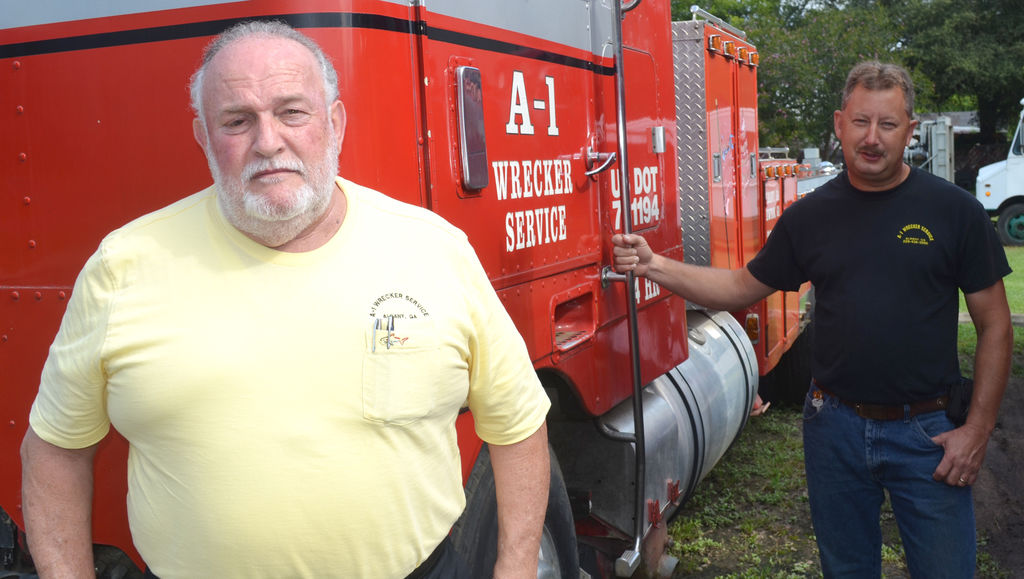
“I was told that if I wanted to be a part of towing vehicles from accident sites, I had to own a large truck,” Lane said as he and A-1 Wrecker Service Manager Robert Gilliam talked to a visitor. “I went out and got one, and let me tell you, it was hell to pay for that thing. It cost a little more than $100,000 back then, and it literally took me 25 years to pay it off.”
The Albany City Commission voted at its last business meeting to rescind the part of its ordinance requiring wrecker services that are part of the city’s emergency rotation to own large equipment, instead opting for a “tiered” system that requires E-911 operators to determine whether a wrecker service in the rotation can handle a call with smaller equipment or if larger equipment, like the truck Lane and other wrecker services that followed the city’s rules, were forced to buy.
“We started talking with city officials a couple of years ago because they kept adding people to the rotation who did not have the proper equipment,” Gilliam said. “We went to them asking for help, and instead we got shafted.”
Lane and Gilliam say the city’s failure to stick to its wrecker service requirements has opened the door for not only unqualified companies to join the lucrative city emergency rotation, which they and others say may lead to delays in clearing accident scenes, but has also allowed unscrupulous business owners to take advantage of accident victims.
“Look, we’re not asking you to take our word,” Gilliam said. “Here are invoices people have brought to us showing the charges they’ve paid for non-preferred towing services.”
He shows one from a rival company whose $380 charge includes a $150 fee for “special equipment,” and another from a different company whose $580 charge includes a $150 “cleanup fee.”
“We hear all the time from folks who are being charged between $500 and $2,000,” Gilliam said. “Not only are a lot of these companies underqualified, underinsured and without the equipment any company should have, they’re being allowed to overcharge people who are already in a difficult situation.”
Asked about A-1’s general charges, Gilliam says, “If there was a wreck, we charge $145. If it was a non-wreck call, we charge $95.”
The City Commission tasked Albany Fire Department Chief Ron Rowe, who’d inherited an obviously outdated wrecker service policy, with drawing up a new policy, and he brought one to the board that spelled out requirements necessary to get in on the roughly 2,200 to 2,600 non-preference calls that come in every year. One of the requirements was that wrecker companies own equipment large enough to move semis, delivery trucks and other large vehicles.
That plan met with opposition, the most vocal of which came from Ward II Commissioner Bobby Coleman. Coleman said the city should be “inclusive” in its policy and should open the door for “businesses that are reflective of the taxpayers of this community.”
One such wrecker service that met Coleman’s criteria — the most recent one added to the rotation — was Harris 1 Towing. Lane said that, after looking more closely at the new addition, he had a clearer understanding of what was taking place.
“It turns out Bobby Coleman is doing some work for the guy who owns Harris 1,” Lane said. “We knew that, and when it became clear we knew that, (Coleman) suddenly recused himself from the vote. But not the discussion.”
Coleman said he felt advocating for inclusion of smaller wrecker services was part of his duty as a member of the commission.
“I recused myself; I didn’t vote,” he said. “My job has nothing to do with the wrecker business, but I didn’t want there to be any question. This was just like I’ve always said: I’m just one man with one man’s opinion. It takes four votes to pass a law. I’ve said many times that when determining how taxpayer money is spent, it should reflect our taxpayers. But I want to make it clear that all people (who receive taxpayer funding) should be qualified, no matter what gender, race or national origin they are.
“My involvement (with Harris 1’s owner) has nothing to do with what’s right. And I feel that the people in Ward II put me in this seat to look after their best interest. It’s my duty.”
After his first attempt at a new wrecker policy was tabled, Rowe was asked to come up with an alternate plan for consideration that would allow wreckers that did not own large equipment to remain a part of the city’s emergency rotation. He came up with a “tiered” plan: “Tier 1” that would require all services to own and maintain larger equipment and “Tier 2” that would allow companies without the equipment to remain. Emergency operators would be required under the second plan to determine what type of equipment was needed.
Rowe originally recommended the “Tier 1” approach to eliminate what he said was the potential for human error. He said in the aftermath of the vote, though, that he might have been hasty in his initial assessment.
“Yes, I recommended Tier 1, but I think I made it clear that we could operate under either system,” Rowe said. “My top priority was simply to get a new policy in place so that we could enforce it. I was looking for consistency.
“I think we’re going to be able to provide great service under the new system, and after thinking about (his original comments), I think I need to give our employees credit for being able to make these tough decisions under pressure.”
Lane says he’s not so sure.
“We get calls from dispatch, and the operators will ask us if we can handle a certain situation,” he said. “They’ll ask us when we’re up (in the rotation) again. It’s pretty clear that they don’t know these things. And they shouldn’t be required to.”
Gilliam said commissioners and other wrecker services should be clear that his and Lane’s concerns are not an attempt to drive away competition, nor are they racially motivated, as some have suggested.
“We want to make it clear that there are black- and white-owned companies that are doing things the right way and the wrong way,” he said. “But what you’re going to get under this new system are companies that not only don’t have sufficient equipment, but companies that don’t have proper insurance. And while the city tries to say in their new policy that they are not in any way liable, when they send out companies that don’t have the proper equipment or insurance and there is a problem, I guarantee you it’s going to come back on the city.
“I think it’s pretty clear they don’t really understand this business. The city attorney (Nathan Davis) has been talking about a truck that can move vehicles that weigh 16,001 pounds. We’ve got trucks that can move 35 and 40 tons, and sometimes that’s not enough.”
Ward III Commissioner B.J. Fletcher, who was one of five board members who voted for the new wrecker policy, said her concern was for “small businesses” when she cast her vote. She said she’s remaining open-minded, though.
“If it proves that this was a mistake, that we are going to have issues with this new policy, I’ll be the first to admit I was wrong and will work hard to try and change the policy,” she said.
Lane, whose business includes nine employees and some 16 wreckers of various sizes, admits that the new city policy will cut into his income. But he says there are more far-reaching issues that the city should consider.
Confirming Gilliam’s estimate that A-1 gets around a third of its business from non-preferred calls, the A-1 owner says, “I don’t see how the city can justify what they’ve done. They talked about helping small businesses … we’re a small business. And we’ve been working and paying taxes here 34 years. All we ask is that we get treated fair.
“This has happened to us before, and I’m afraid it’s going to happen a lot more now. Some of the wrecker services in town will get called to a non-preferred accident site, and they’ll know right away they don’t have the equipment required to do the job. So they’ll call us and try to ‘sell’ us the job. They’ll say, ‘If you give me $200, you can have the job.’
“These city officials say they’re so concerned about the taxpayers. Well, the taxpayers are the ones who are going to be paying these outrageous fees.”
Author

Related Articles
Albany police investigate suspicious Sunday death
A 21-year-old Turner Job Corps student who was found unresponsive on Sunday evening was later pronounced dead at Phoebe Putney Memorial Hospital. The death is under investigation.

James Rubino installed in new role at Marine Corps Logistics Command in Albany
James L. Rubino recently assumed the role as executive deputy of Marine Corps Logistics Command in Albany. In his new role he will oversee integrated logistics support.

Rain depresses voter turnout in Dougherty County
“A lot of people don’t vote when it’s raining. People don’t do a lot of things when it’s raining.”
