
LORAN SMITH: Trip to Zimbabwe full of memories
Loran Smith
In 1984 on a trip to South Africa, there was an opportunity to fly from Johannesburg to Bulawayo, followed by a journey by van to Victoria Falls, which brought about one of the most memorable trips I have ever experienced.
The majesty and mystique of the falls, which are known as the “Smoke that Thunders,” are unparalleled. You can hear the roar of the falls long before you see them. Seeing the falls alone would be worth the trip, but there was more. The view of the Zambezi River and the bridge that spans the rushing waters below. Walk across the bridge and you are in Zambia. We did that. Take a boat trip on the Zambezi and enjoy a glass of wine as you watch the sunset on the Zambezi. Did that, too.
I am a collector of sunsets: Key West, Maui, anywhere in the Caribbean, the Golden Gate Bridge, Honfleur, Normandy, the Grand Canyon, Turnberry, Elba, Cabo da Roca among others. To feel the spray of Vic Falls, to see the sunset on the Zambezi, to walk across the bridge to Zambia — it would be difficult to outrank that trilogy. In my mind’s eye, I was seeing the world as a National Geographic camera sees it.
While at the falls, a decision was made to charter a plane to fly over the falls. A single-engine plane, which carried six passengers, including the pilot, allowed us to capture stunning views. Elephant, hippo and giraffe. Animals so powerful, yet so sleek and elegant. Bent on satisfying their hunger, using their unique skills to fill their stomachs. All are herbivores. They only eat vegetation, and it takes several hundred pounds a day sustain them. It is not likely that grass and vegetation will run out in Africa. As it is with the carnivores, there will always be something for them to eat in Africa. Water can be a problem, but, although the animals may become thirsty, the superior seldom go hungry.
Sitting by the pilot on our charter flight was a man named Ron Reeve-Johnson who had grown up in Old Rhodesia. He was an educator but had taken to farming when he inherited his father’s ranch. He was video-taping the falls for a class he was teaching. He mentioned that he and his family were emigrating to Rugby, England. Robert Mugabe, the heartless dictator, was in the outset of his repressive reign. The Reeve-Johnsons had no issue with black rule, but foresaw that their children — Lloyd, Helen and Robynne — would not have an opportunity to experience a quality education. The educational system under Mugabe was beginning to crumble.
We met his family afterward, and a warm friendship ensued. There have been several trips to see Jill (Ron died soon after becoming established at Rugby), who now lives near Oxford. Last summer, she told me about her son’s book, “Swept From Zimbabwe.” Lloyd, who lives in Australia, can remember his days on the farm when land owners and workers coexisted peacefully. He enjoyed the wildlife and African traditions. His life in rural Matabeland he considered idyllic. He had young black friends, but knew of the tensions between the Ndebele and Shona tribes. Mugabe is Shona, the dominant party.
While I have always been fascinated by the beauty and the constraints of Africa, the tragedy that is Zimbabwe is depressing. Lloyd Reeve-Johnson defines the excess of a dictator who has no reluctance to fly his wife on shopping sprees to Milan or Paris with a dozen or two henchmen and body guards in a Boeing aircraft with a capacity of 200. Meanwhile, his countrymen are starving and languishing in decay and despair. This has been going on for over three decades. Millions have fled Zimbabwe in search of food and survival.
Related Articles

Who decides elections in Terrell County? Data show older voters dominate turnout as turnout declines
According to the Georgia Secretary of State, 1,731 of Terrell County’s 6,048 active registered voters cast ballots in the May primary, a turnout rate of 28.6%. Four weeks later, only 922 voters participated in the June 16 primary runoff, reducing turnout to 15.2%.
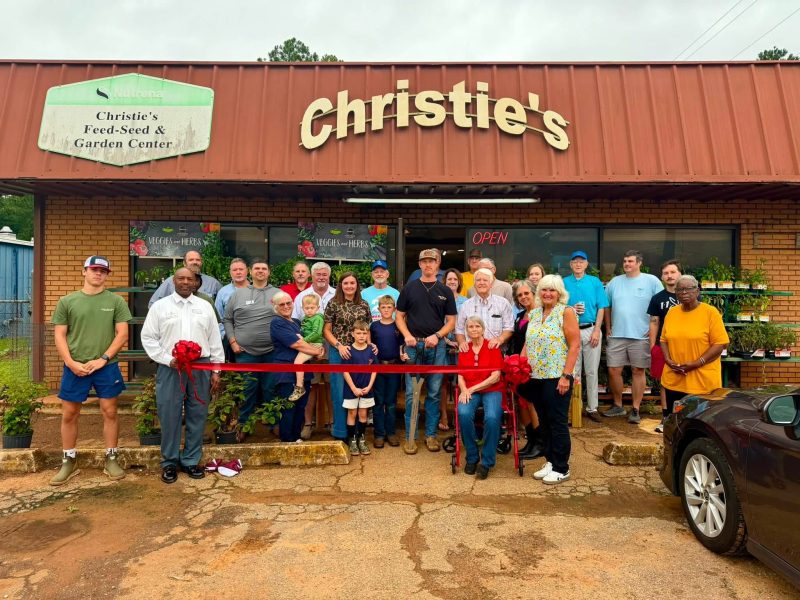
Christie’s Feed & Seed enters new chapter under new ownership
A longtime Dawson business has entered a new era as Riley and Jessie Davis officially assumed ownership of Christie’s Feed & Seed, with the Terrell County Chamber of Commerce marking the transition during a ribbon-cutting ceremony.

Dawson News grows online with Albany Herald website, Facebook page
Residents can now find Dawson News coverage alongside regional reporting on the Albany Herald’s website while also following breaking news, community events and feature stories through the Dawson News Facebook page.
