
More than 150 participate in Albany ‘No Kings’ protest
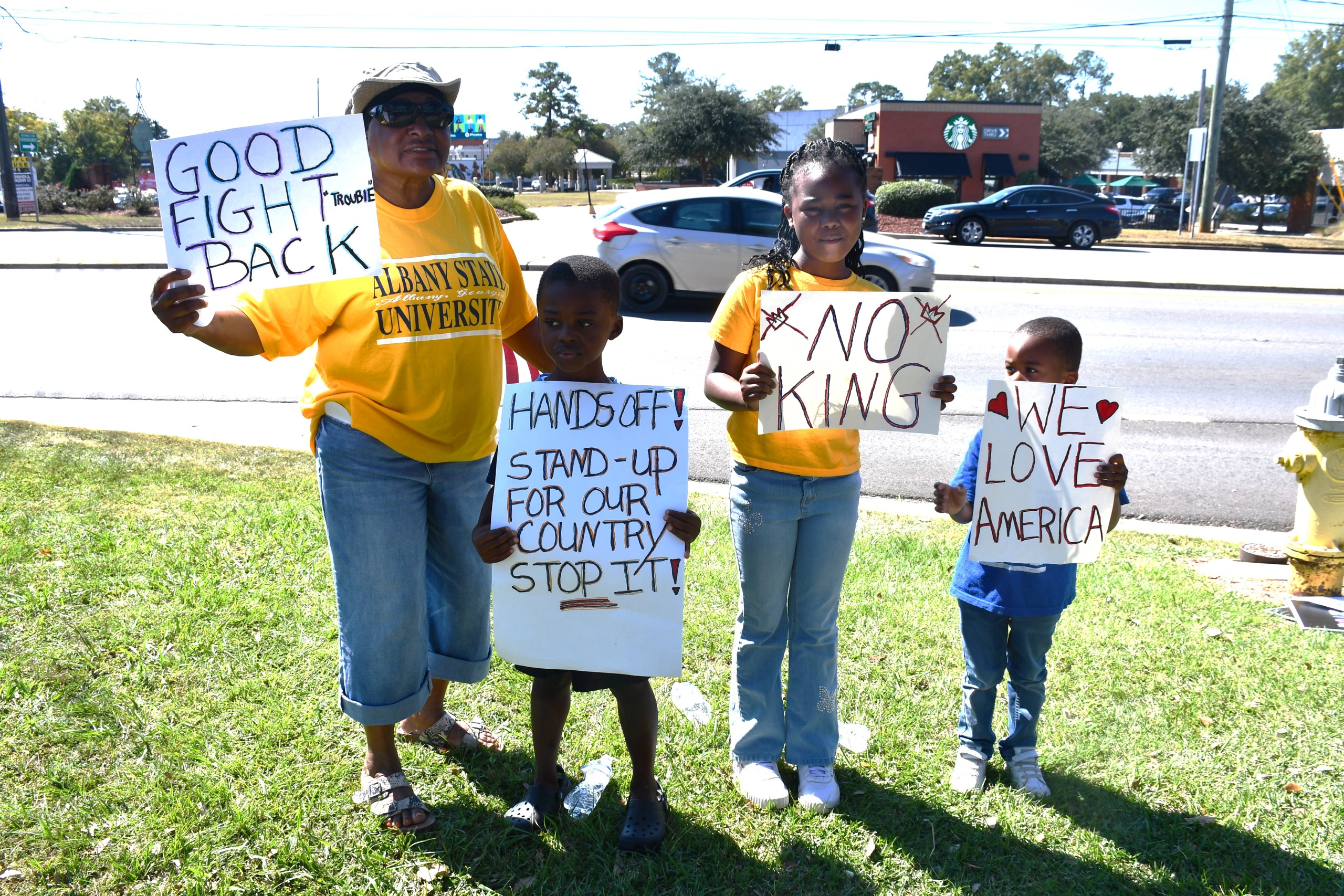
This was the second “No kings” protest in Albany, and organizers said the crowd was much larger than the June protest crowd. The event attracted people from all across southwest Georgia from 7 to 70 years old. Albany protesters showed up to condemn Trump policies on immigration, veteran and military affairs, voting rights, health care and more.

ALBANY – About 160 southwest Georgians joined millions across the U.S. Saturday for “No Kings” protests against the Trump administration.
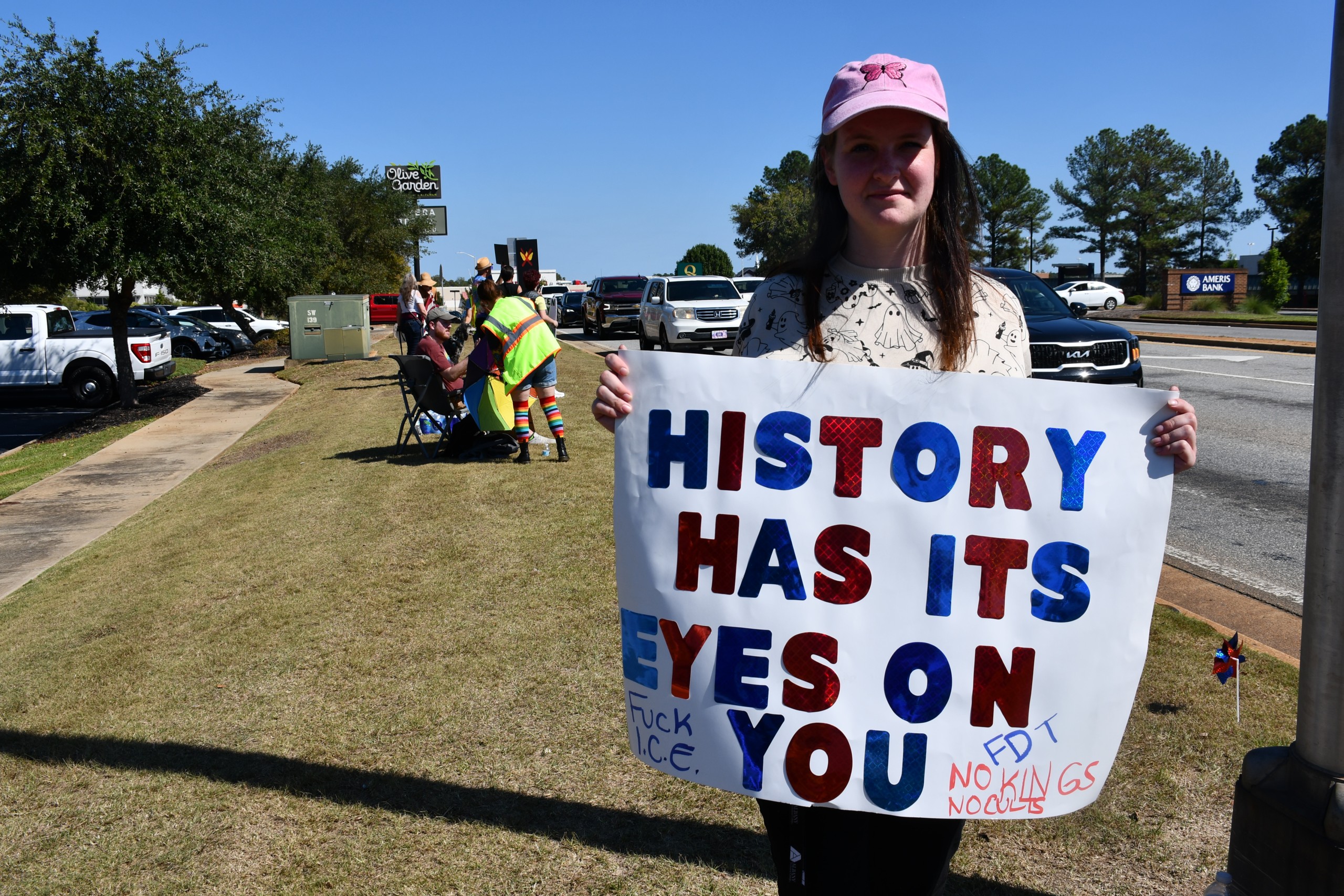
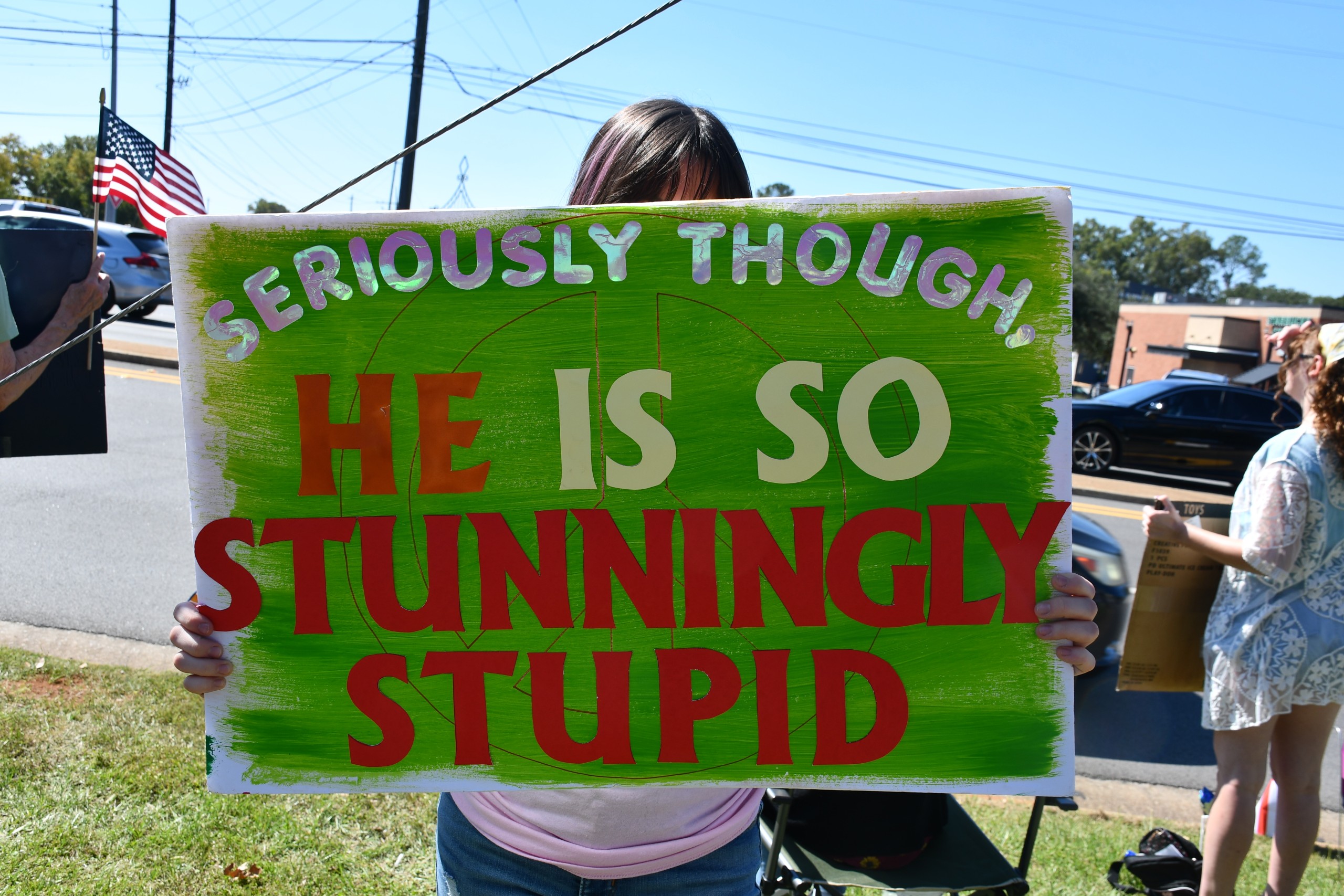
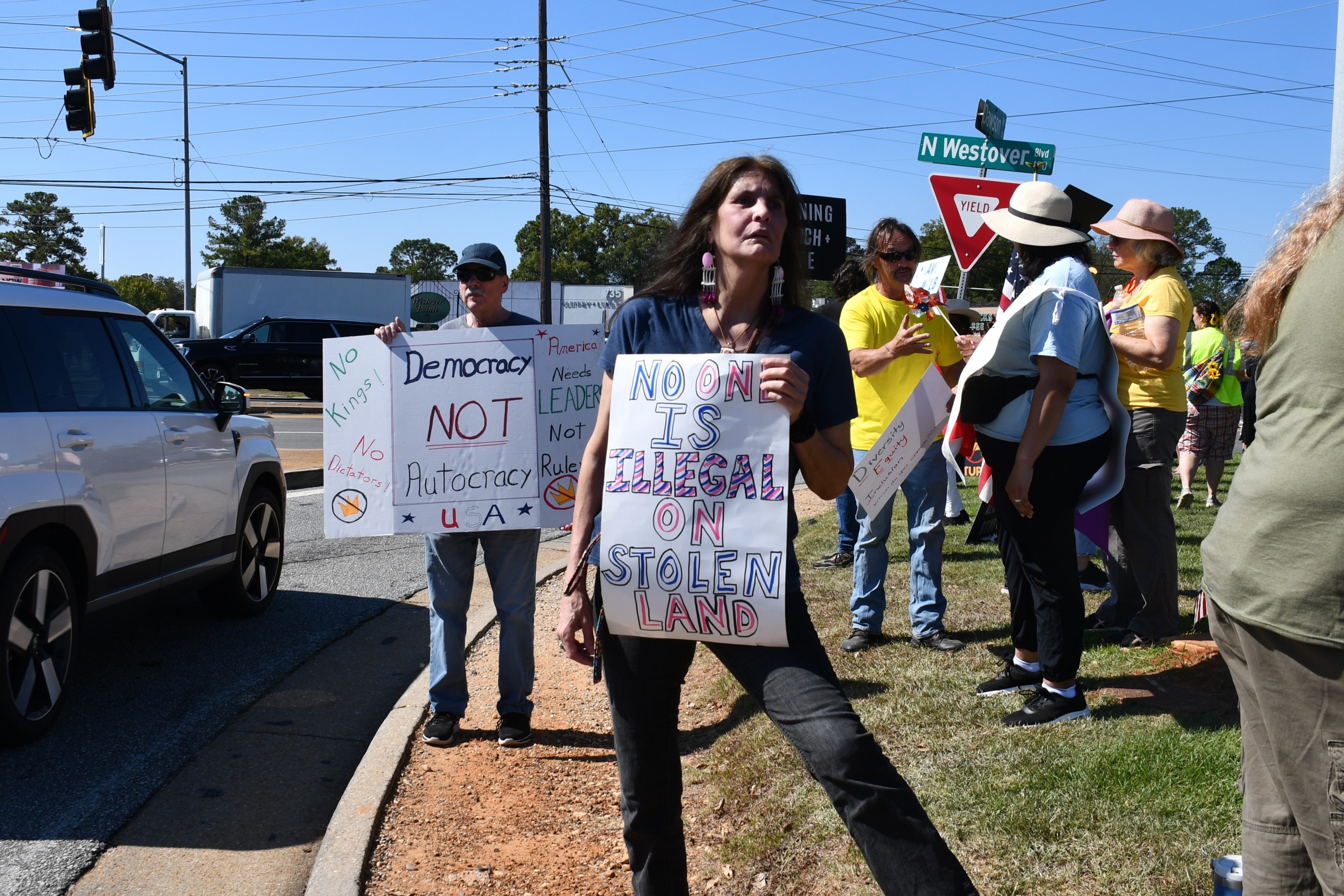
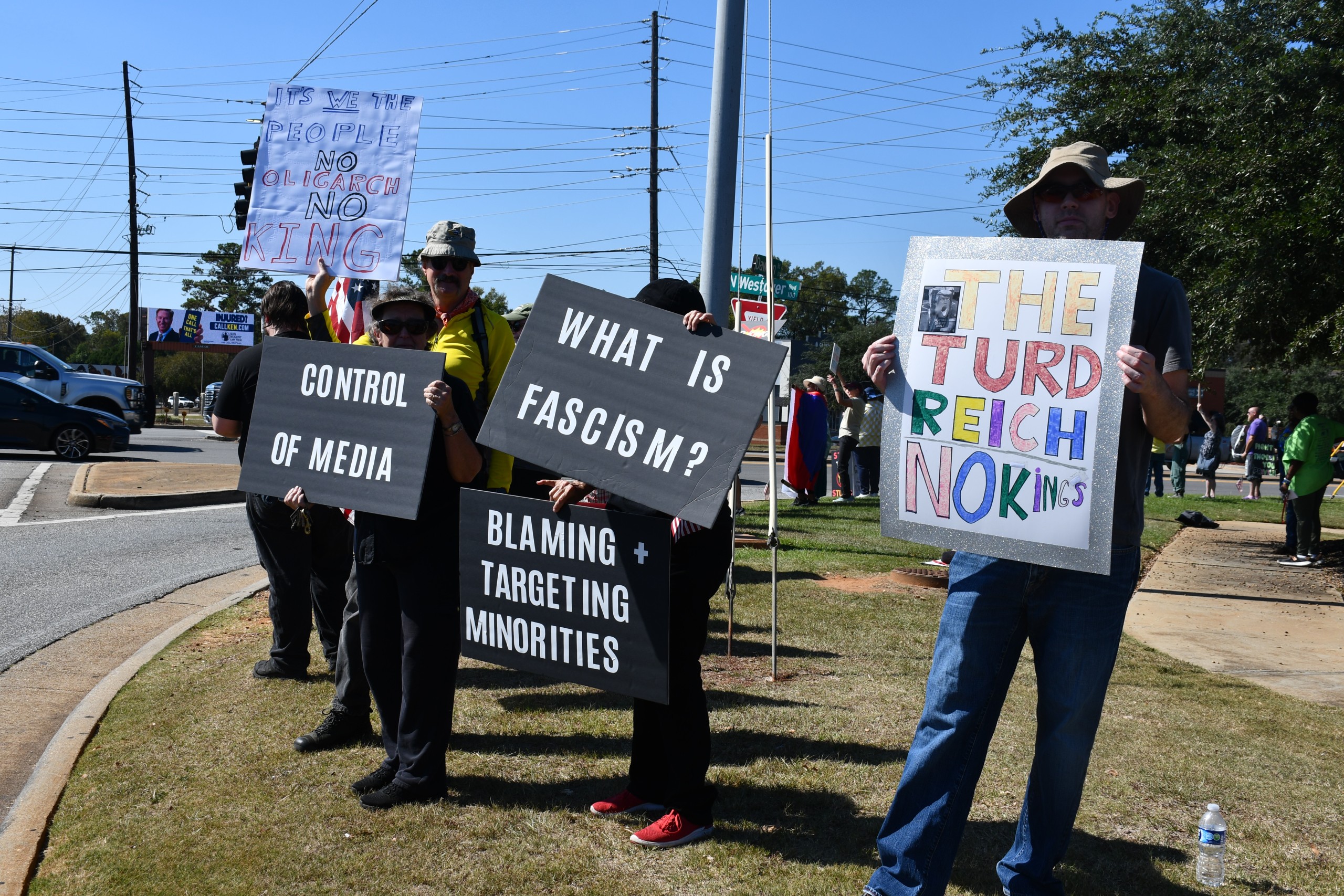
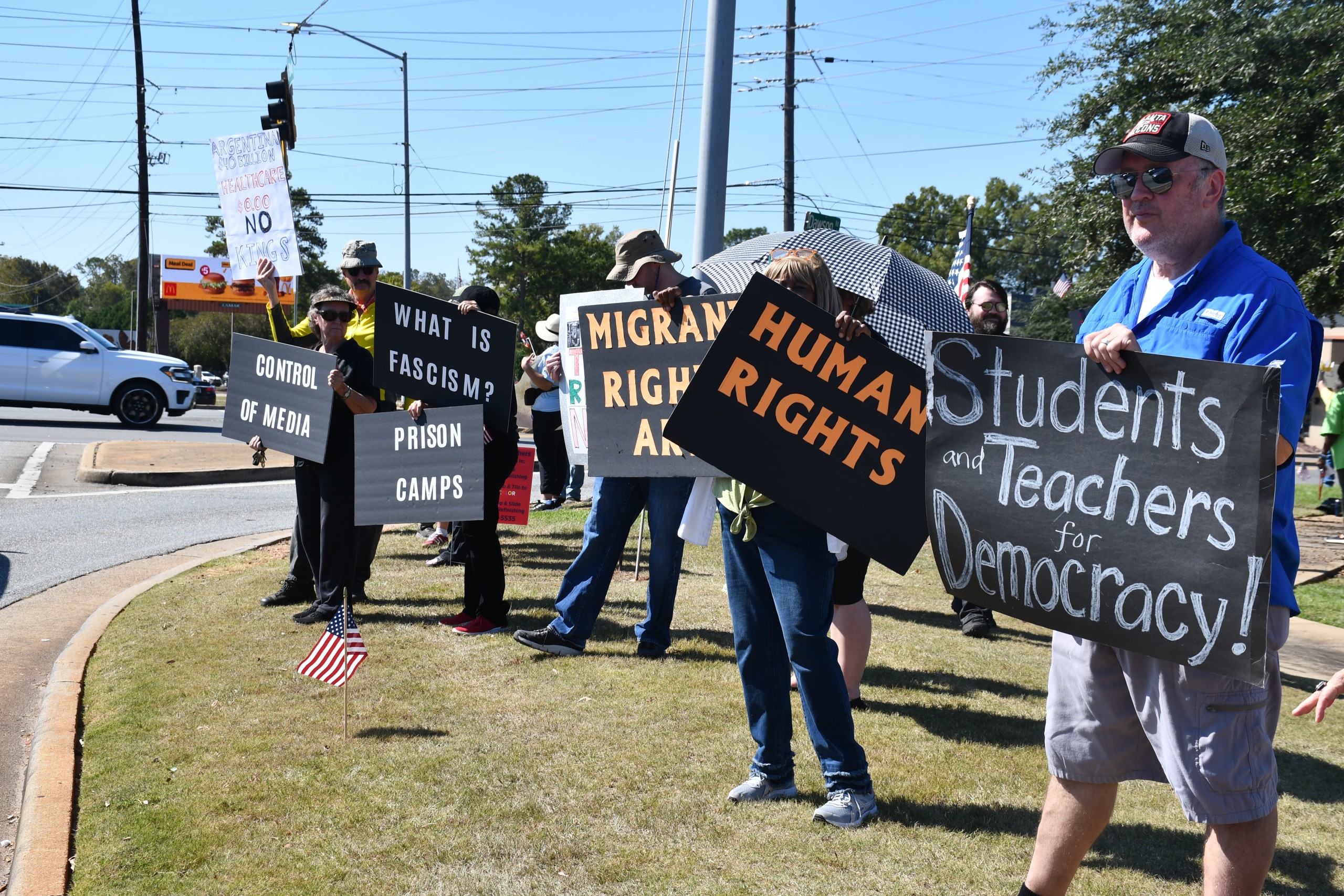
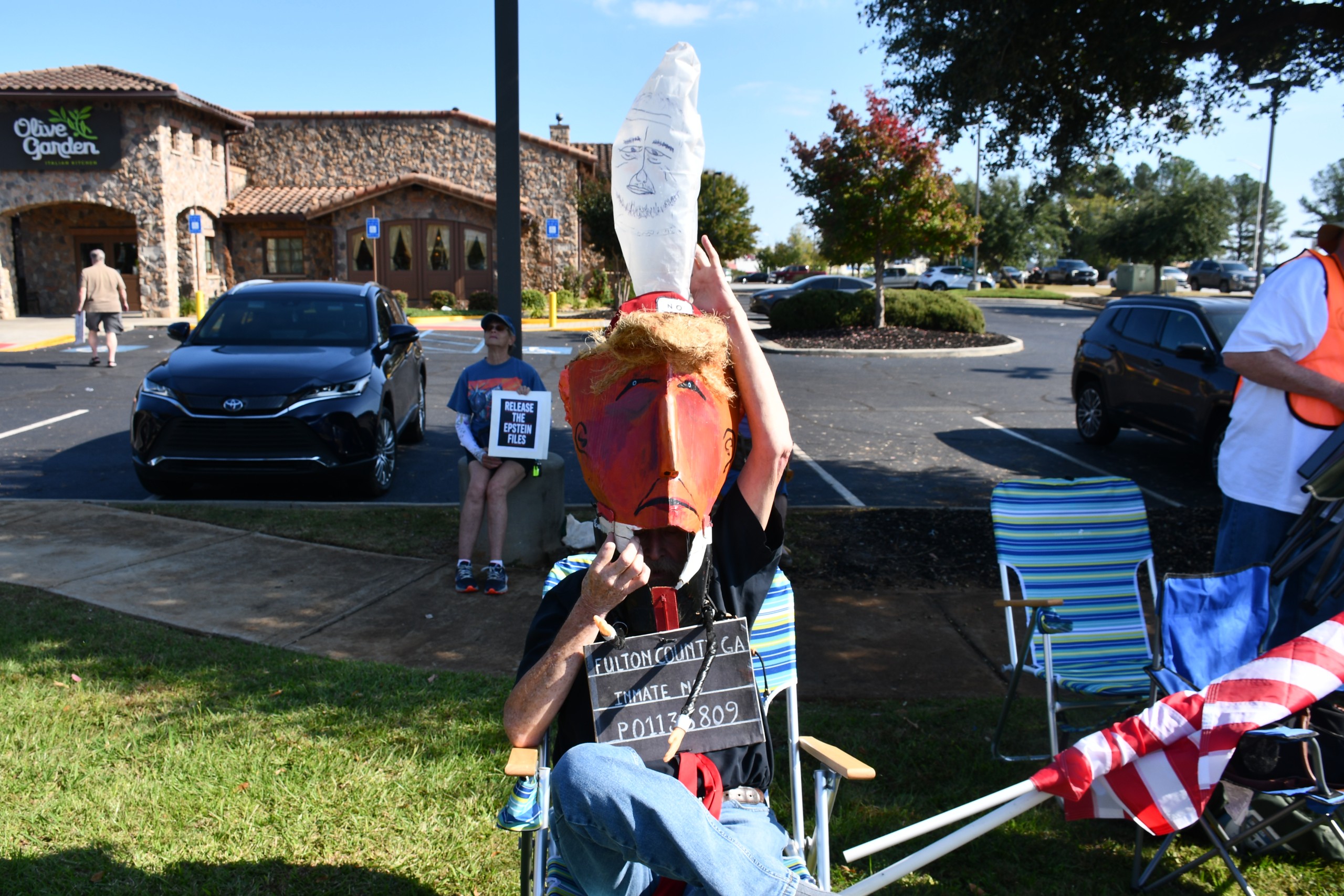
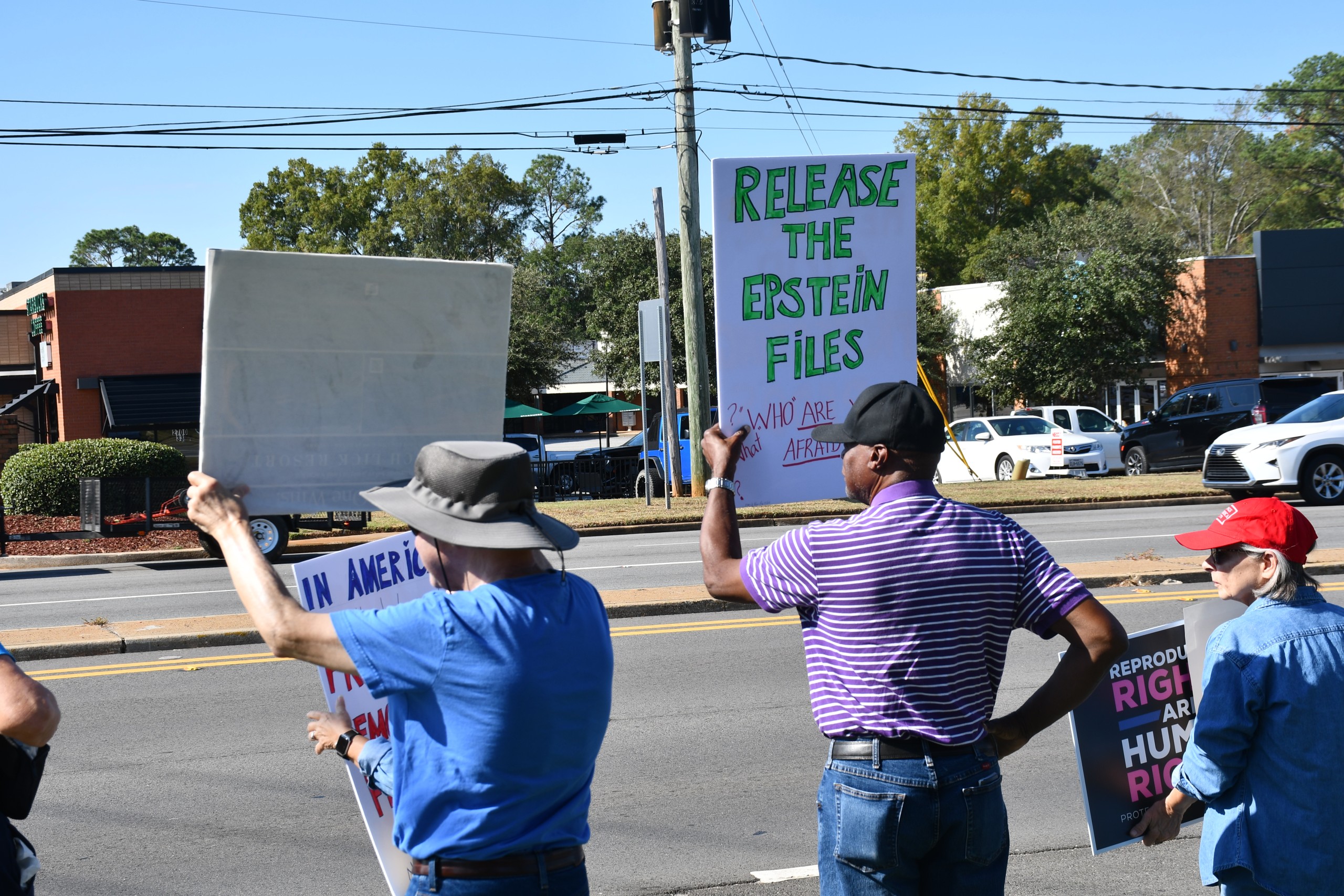
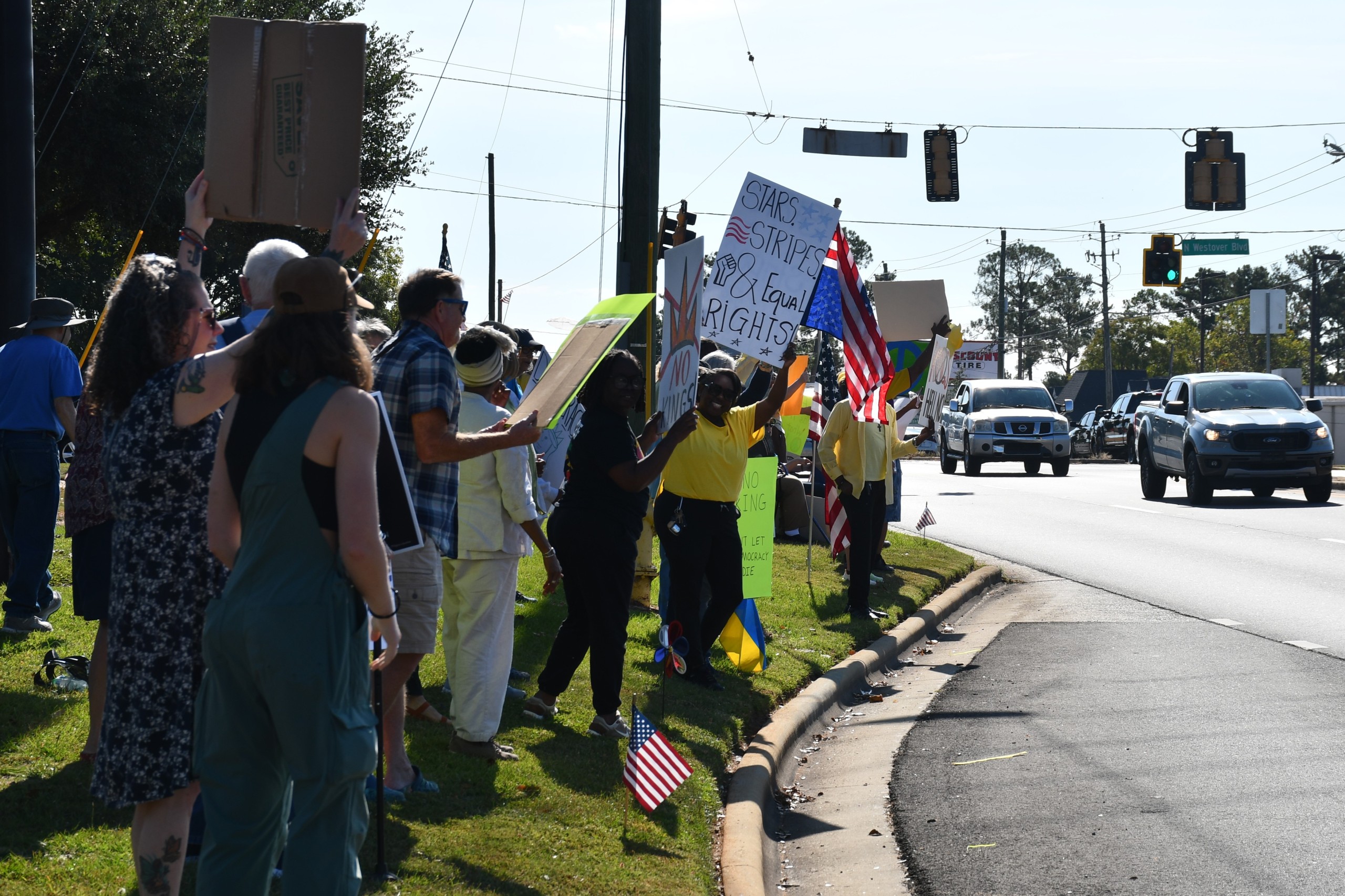
Protestors stood at the busy intersection of Dawson Road and Westover Boulevard, waving signs with messages like “Albany says no kings” and “Hate won’t make America great,” for two hours. For every one angry shout or engine revving in disagreement, the protesters received countless supportive honks and cheers.
Seven million people participated in the largely peaceful day of protests across the country in opposition of President Trump’s agenda. Protesters showed up in both major cities and rural towns.
This was the second “No Kings” protest in Albany, and organizers said the crowd was much larger than the June protest crowd. The event attracted people from all across southwest Georgia from 7 to 70 years old. Albany protesters showed up to condemn Trump policies on immigration, veteran and military affairs, voting rights, health care and more.
“We’re here because we love our country, not because we hate it,” James Malphrus, one of the protest organizers, said.
The protest saw visits from two Georgia lieutenant gubernatorial candidates, Josh McLaurin and Richard Wright. Wright said he stopped at protests in both Albany and Columbus to emphasize that the “No Kings” movement stretched beyond major cities like metro Atlanta.

As protesters shouted chants like, “We don’t want no kings,” Chris Dayani, an Albany resident, walked around and gathered signatures for a petition for the release of an Albany man who was detained by ICE in Miami. Dayani said the man had lived in the U.S. for 15 years. She collected several pages of signatures and handed out QR codes for a GoFundMe raising legal fees.
Rebecca Malphrus, a protest organizer, said Trump’s immigration policies were top of mind for her when she planned the Albany No Kings protest. The Trump administration has followed through on its promised “crackdown” on illegal immigration, conducting violent raids and deploying ICE agents across American cities in search of illegal immigrants, frequently picking up legal U.S. residents in its attempts.
Rebecca Malphrus said she knows people from southwest Georgia who have been deported.
“This is an agricultural area, and the people that harvest our food that literally goes straight to our table are now scared to exist,” she said. “Our constitution says that all people, all inhabitants, not just citizens, are entitled to due process, and that’s being ignored.”
Rebecca Malphrus said she’s worried about the stripping of Federal funding and how it will impact southwest Georgia communities as well.
“Trump’s taken funds designated for stuff like education, taken away insurance from the poorest people,” she said. “That hurts poor communities like Albany and surrounding communities.”
Annie Vanoteghem, an Albany resident, said the Albany area relies on federal funding because of its low income status, especially nonprofits and the public schools.
“We have so many kids … where the only hot meal they’re going to get is from their public schools, and the school nurse is going to be the only doctor they see that year,” she said. “They start taking those things away, it’s going to make it harder for people who are already disadvantaged to get to move up.”


Several veterans joined the protest, Saturday.
Dwight Leonard, a 67-year-old Marine veteran, traveled from Sylvester to be a part of the movement.
“I wanted to come out because I am an American who spent 28 years and seven months in the Marines, and I don’t like what they’re doing to our military or our people,” he said.
Leonard said the Trump administration disrespected military generals during the September gathering, at which top military leaders met in Virginia to hear from both Trump and Defense Secretary Pete Hegseth. At this meeting, Trump suggested using U.S. cities as “training grounds for our military.” Hegseth attacked what he called “woke” policies on diversity and gender inclusion. He told military leaders to “do the honorable thing and resign” if they don’t like his new approach.
Leonard said he’s concerned about Hegseth’s new policy, which ends permanent medical shaving waivers for troops. Leonard said these waivers were important, especially for many black men, like himself, who have pseudofolliculitis, an inflammatory skin condition that results from frequent shaving of curly hair.
He said the Trump administration is also attacking Veterans Affairs. Leonard said he’s already noticed longer wait times at the VA he goes to in Tuskegee, Ala.
“He’s destroying the infrastructure within the VA, the military,” Leonard said. “He wants to take away retirement benefits. He wants to strip down the federal government for his cronies.”
Kairi Sariah, a 33-year-old Albany resident and Air Force veteran, said she’s also worried about funding for the VA, especially when it comes to mental health support. After retiring from the military, Sariah worked for a nonprofit for veteran suicide prevention.
“(Trump’s administration is) (D)emolishing the VA … when there’s already an insane suicide crisis going on with veterans,” Sariah said. “For everyone that died overseas in the last 20 years, four have died at home by their own hand.”
Sariah, who is from Albany, said she felt a strong sense of community and love at Saturday’s protest.
“I’ve never been super political, but I do get down with spreading a message of love,” she said. “Love can bring us together.”

Several Saturday protesters came with a long history of protest. Dougherty County District 5 Commissioner Gloria Gaines was one of them, having participated in the Albany Civil Rights movement as a young girl, alongside Martin Luther King Jr. in the 1960s. So did Cuthbert Pastor Lamar Thomas, who marched in Birmingham, Ala., in 1963 after the 16th Street Baptist Church bombing, when the KKK claimed the lives of four African American girls. He held a sign that read “Hell no Kings,” Saturday.
Mackenzie Carter, a 22-year-old Albany resident, said she was protesting for women’s reproductive health and rights. Carter said she comes from a conservative family who voted for Trump and was nervous to attend her first protest, but she was more scared to not show up at all.
“I’m kind of terrified of the way this country is going and all of the hatred in it, and I’m fighting against all the hate, and I’m fighting not only for my reproductive rights, but my daughter’s, and my future grandkids’,” she said.
Yeshika Mann, an Albany resident, said she was concerned about the Trump Administration’s attacks on the Civil Rights Act and voting rights, seeking to roll back civil rights protections for historically marginalized groups.
“America can’t be great if it’s not great for everyone,” she said.
Vanoteghem said the Albany protest was a show of unity in the Albany community, which she said has a bipartisan population.
“People are coming together who would not typically march side by side,” she said. “The community is banning together to take some control back. It’s not just these big cities. It’s not just thousands of people in a street. It’s your neighbor and your co-worker and the dude you go to church with and your pastor.”
Author

Related Articles
Dougherty schools celebrate national award, state honors, alumni support
From a national blood donation award to state recognition for schools and teachers, the Dougherty County School System is celebrating achievements in community service and education.
Dougherty County police expect to present report on surveillance cameras within two weeks
The Dougherty County Police Department initiated an auditing system for its surveillance cameras in August. The department said on Monday that it will present a report on audits dating from January within the next two weeks.
Dawson driver recounts Walnut Street collapse after months of complaints about road conditions
Curtis Jackson knows he needs his car. But after a section of Walnut Street collapsed beneath his vehicle Friday, trapping him inside and sending him to the hospital, his first concern is getting himself well.
