
One year after fatal car accident, Deerfield-Windsor alumnus educates others on tourniquet safety
About one year ago, Vansh Patel lost his arm and lost his friend in a car accident on the night of his high school graduation. He could have lost his life if it hadn’t been for a friend’s tourniquet.
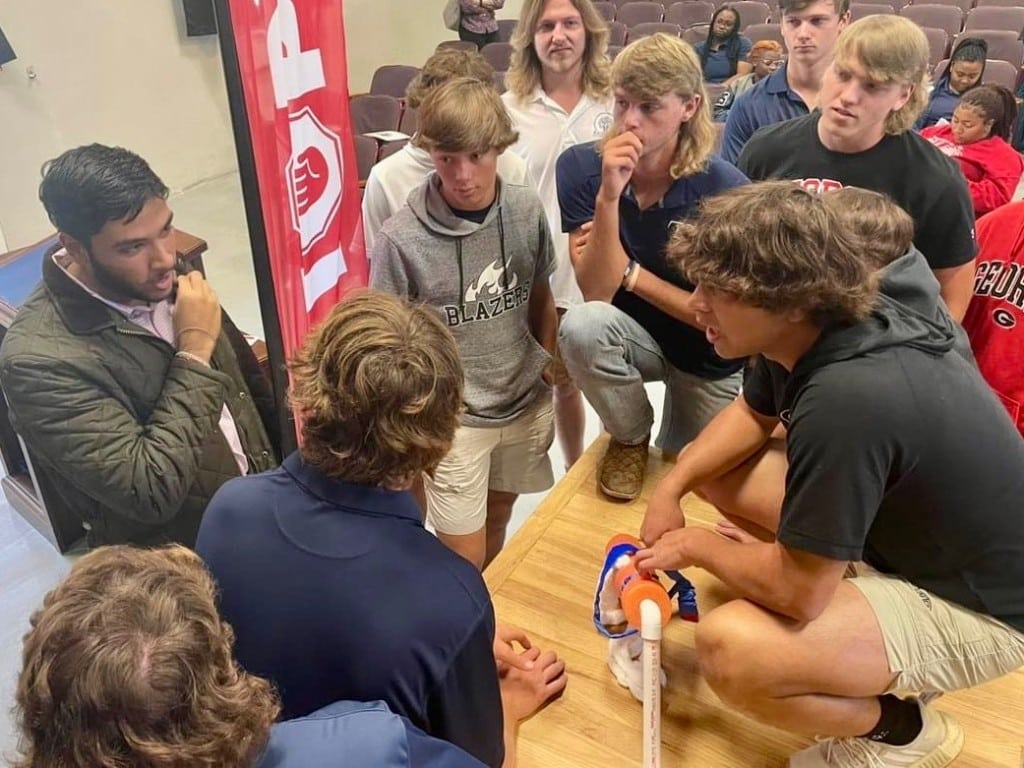
ALBANY – About one year ago, Vansh Patel lost his arm and lost his friend in a car accident on the night of his high school graduation.
He could have lost his life if it hadn’t been for a friend’s tourniquet. So during his recovery Patel decided he would become an advocate and educator for tourniquet use – hoping to educate others on how they may be able to save lives.
“Without a tourniquet, I probably would have bled out,” he said. “It’s something people overlook because it’s so unexpected, but it does happen all over the country. It’s important to know how to use it – have it in your back pocket when it’s needed.”
Since the accident, Patel has partnered with Phoebe Putney Memorial Hospital and Stop the Bleed, a program that teaches people to stop bleeding in a severely injured person, to educate others. He visits seniors in high schools, shares his story and teaches them how to use a tourniquet. May is National Trauma Awareness Month, and Patel wants to call attention injury prevention and preparedness.
“I can’t go back in time now and change what’s happened to me,” he said. “If I can use it for something positive, I think it’s better than rotting away and being negative about it.”
In May of 2024, on the same night he walked across the stage at Deerfield-Windsor School to receive his diploma, Patel was in a car accident that saw him ejected out of a truck. His friend, David Mullins, who was driving the truck, died at the scene.
Friends arrived at the scene of the accident just minutes later. One of them produced a tourniquet that had been given to the students during an emergency training session with Dougherty County EMS just three months earlier.
“Most of the kids took it (the training) as a joke, because no one expected something like that to happen, but because one kid had kept the tourniquet – that saved me that day,” Patel said.
Patel was airlifted to Grady Memorial Hospital where he underwent multiple surgeries. He was then transferred to inpatient at Phoebe Putney Memorial Hospital to begin rehabilitation, learning how to walk again and live with one arm.
This time period was a challenge for Patel, who had been slated to start at the Georgia Institute of Technology that fall. Patel said his parents were worried his injuries would limit his opportunities.
“The first couple of weeks, months maybe, of rehab, were definitely probably the hardest point I had to go through, where I didn’t really see myself coming out of it,” Patel said.
However, Patel said interacting with other rehabilitation patients inspired him to keep moving forward. When his friend who supplied the tourniquet visited Patel in the hospital, Patel said he made a promise.
“I told him I couldn’t repay him, but I was going to try through teaching others so it doesn’t happen again, and so they know how to be prepared for it,” he said.
About a week after Patel was out of a wheelchair and walking again, he visited his first classroom to teach students how to properly use a tourniquet and supply them with “emergency pouches” he created with Phoebe that have gauze and a tourniquet. He said he targets rural schools in south Georgia because of the far distances from hospital services and the frequency of farm-related injuries that could be helped by tourniquets.
Patel said he’s able to get the message across better to students as a recent high school graduate himself.
“I think just relating to them personally and kind of saying things like ‘this can happen to you when you’re not expecting it, so just be prepared rather than unprepared,’ and just seeing me in general, having recovered, kind of made them take it a little more seriously,” he said.
Patel takes a hands-on approach in teaching the students tourniquet safety and how to stop excessive bleeding. He interacts one-on-one with students, fielding questions and responding to their curiosity. He shares his own story and moves into motivational talks by the end of the session.
“I really start with kind of a background to my story, and then go into kind of just life lessons in general about … moving on with everything, and how bad things sometimes happen to good people, but if you change your perspective, then your outcome will change,” Patel said.
Helping others has helped with Patel’s mental recovery as well, and the last year’s experience influenced his education track as he started at Georgia Tech in January.
Patel studies Biology on a Medicine track at Georgia Tech. After going through rehabilitation himself, he said he wants to specialize in physical medicine and rehabilitation because he feels he will be able to connect with patients on a deeper level.
“I was blessed to have the greatest support system, but a lot of people don’t have that,” he said. “I think if I had the opportunity to be that support system for someone else, it would be great.”
Over the last year, Patel also acquired his Realtor’s license. He’s been designing an exercising attachment for amputees with residual limbs to be able to work out and avoid muscle imbalance. He began designing the prototype at home in his garage and has since furthered the device using resources at Georgia Tech.
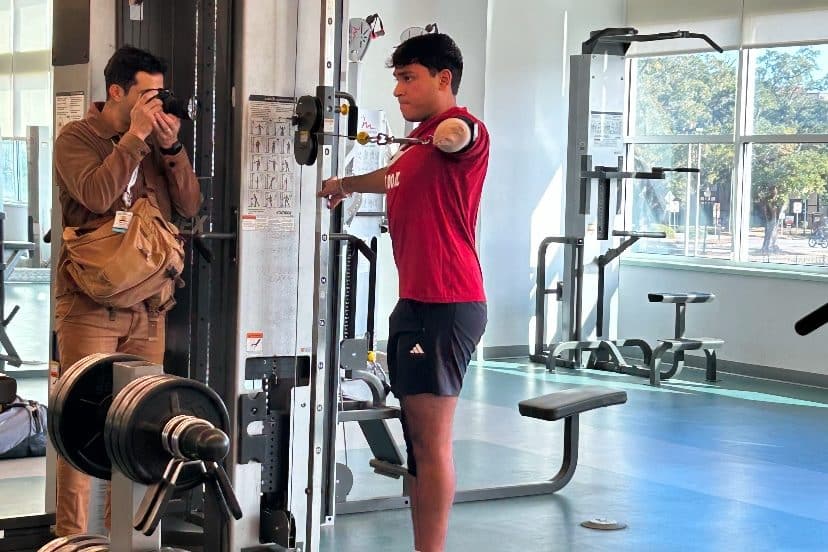
Helping others become educated in tourniquet use and other safety measures is something Patel said he wants to do forever, continuing to focus on rural schools but eventually reaching a national stage.
“I want to spread the message as far as I can because if someone just watches a video or sees something, they are more likely to maybe try and learn a little bit more,” Patel said.
For others recovering from a traumatic incident, Patel said perspective determines outcome.
“It’ll be the hardest thing you’ll probably ever go through … but if you just get over the first hurdle, it’ll get easier and easier every single day,” he said. “Once you’re three months into recovery, you’ll look back on your one month’s progress and be amazed at how far you’ve come.”
Author

Related Articles
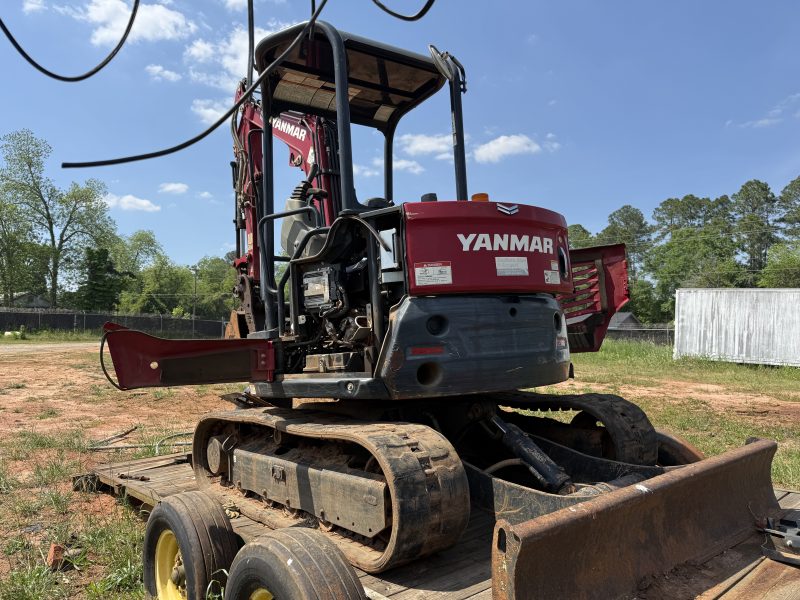
Dawson approves $68K excavator purchase after months of contradictory public statements
The decision concludes one portion of a controversy that has generated months of public scrutiny but leaves several unanswered questions regarding how the city’s original machine was damaged, whether employees were held accountable and what documentation supports the decision to replace rather than repair it.
Dawson proposes borrowing up to $420,000 to stay afloat as finances unravel
Documents obtained by The Dawson News show city officials are proposing to balance the budget through a transfer from the Public Utilities Fund while simultaneously seeking authority to borrow as much as $420,000 from a private financial institution to continue meeting payroll and other operating expenses as Dawson works to complete financial audits that have remained unfinished since 2023.
Albany Herald – July 11, 2026
Putting on the Ritz… Food, mini menagerie provide… Albany City Commission set to vote on… Following Lee’s lead, Terrell County hits…
