
PCOM South Georgia brings emphasis on rural mental health to Sunbelt Expo in Moultrie
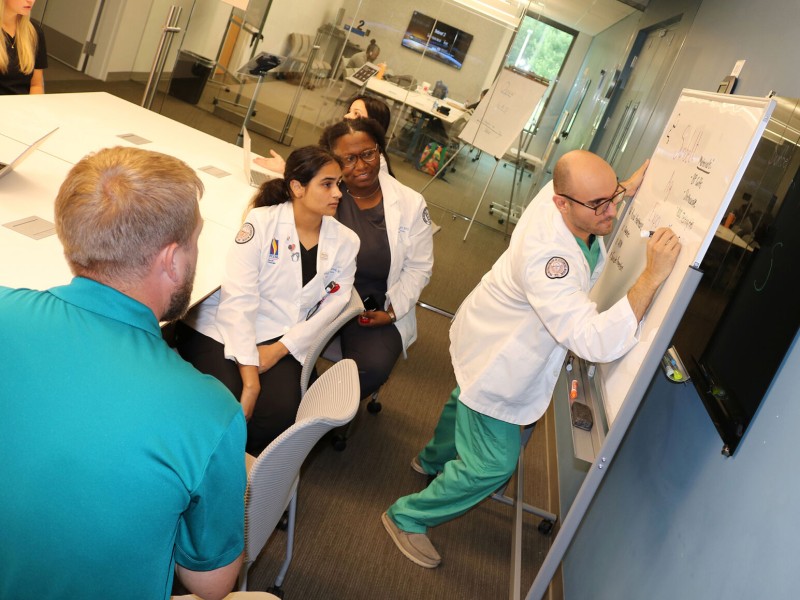
Special Photo: PCOM South Georgia
Alan Mauldin
[email protected]
MOULTRIE – In the 1960s television show, main character Oliver Wendell Douglas escaped big-city life as a lawyer in New York City to take on a rundown farm in rural America.
While the show is a campy comedy, the reality is that farming is an occupation that is as stressful as any, and the shortage of mental health professionals in rural areas can leave farmers few options to turn to for help.
In a study on farm-operator suicides, the U.S. Centers for Disease Control and Prevention noted that a rise in farmer suicide rates was of serious concern, given the increasing input costs, market volatility and production losses caused by climate change and natural disasters.
And over the past few years, those challenges of rising prices for fuel and farm chemicals and low crop prices have been among some of the worst in decades.
To help farmers protect their health, both mental and physical, the Sunbelt Ag Expo and Philadelphia College of Osteopathic Medicine-South Georgia, both based in Moultrie, are teaming up this year.
“We have partnered with PCOM, and they have developed a rural health initiative,” Expo Executive Director Chip Blalock said. “We think this is a great addition to what we are doing. We’re doing this to look after the family, because farmers are family to us.
“We want to make sure they have the resources they need before something bad happens.”
The PCOM South Georgia exhibit at the Expo will include information on topics and issues including stress management, managing type II diabetes, hypertension, treating high cholesterol, as well as the benefits of osteopathic manipulative treatment and more.
“With the rural health initiative, we’re also trying to think outside the box and look after our rural community,” Blalock said. “They (PCOM) just took the ball and ran with it. It’s going to be really good. People can get their blood pressure checked, and you can have a mental health consultation.”
The exhibit is open to all visitors and will be located in Agribusiness Building 4 for the three-day expo that will run Oct. 15-17, he said.
According to the CDC, studies have shown that the suicide rate among operators of farms may be double that of the the general population, with the highest incidence in the United States found among older, white males.
The study that examined U.S. farmer suicides from 2003 to 2017 said that in rural communities suicide deaths have “devastating emotional consequences on families and rural communities,” and can result in the loss of financial and emotional resources. This could possibly lead to mental health conditions and future suicide behavior among survivors.
The study said that more research is needed on predictors of farmer suicide as well as the effectiveness of tailored interventions, and that interventions should begin early due to the shortate of mental health professionals in rural areas.
Recommendations from the study included improving the ability of rural health care providers to detect and manage suicide risk, improving public awareness and reducing the stigma of seeking help, and training farmers and others in rural areas to serve as suicide prevention “gatekeepers” and provide peer support to reduce isolation.
Among the other health exhibits traditionally on the Expo grounds during the three days of the show are breast cancer awareness hosted by Colquitt Regional Medical Center and the Adventist Community Services/South Georgia contingent that offers health screenings.
PCOM’s exhibit will include the college’s Simbulance, a working ambulance that utilizes training mannequins as teaching tools, which will be open for tours. It also will have information about its Pathways programs that help regional middle school, high school and college students prepare for medical school.
“The mental health of farmers will be a critical topic due to the high stress in that profession,” Marla Golden, dean of osteopathic medicine at the college, said. “We are always eager to share information about PCOM, talk about what’s happening with health care in south Georgia and throughout the region and discuss information about educating future health care professionals. We want to make sure people who live in rural areas receive the quality health care they deserve.”
Author

Related Articles
Albany Rescue Mission in recovery but still can use some help
“We can’t do this without the community. We are so grateful for the willing vessels. We just can’t thank them enough. We also appreciate the other ministries that have sown seeds into our ministry.”

Plenty of oil, not enough diesel — and southwest Georgia farmers are paying for it
Sedrick Rowe doesn’t spray herbicides on his 10 acres of organic peanuts. He fights weeds with his tractor instead, which means he runs it more often than most farmers — and burns at least 30 gallons of diesel on a typical day. This harvest season, every one of those gallons costs more than it has at any point on record.

Dougherty schools plan task force as SNAP changes raise concern over free meals
The Dougherty County School System plans to create a task force to help families retain food assistance and navigate new reporting requirements as district officials warn that declining SNAP participation could eventually affect the federal provision that allows every student to eat free at school.
