
Preparing for autumn’s outdoor ouchies
Special Photo: UGA/CAES
Staff Reports
[email protected]
ATHENS — As autumn approaches and the stifling heat of summer begins to cool down, your family may be looking forward to spending more time outdoors.
Unfortunately, as Georgia is home to many stinging and biting insects, fall fun can turn into a minefield of discomfort. Elmer Gray, a research entomologist with the University of Georgia College of Agricultural and Environmental Sciences and specialist for UGA Cooperative Extension, shares information on some of the season’s most common culprits, urging residents to stay vigilant and take preventive measures.
When insects bite, they often inject saliva to digest the tissue and aid in the feeding process. Your body’s reaction to the components of the saliva causes the itching, redness and swelling associated with these bites. Some insects inject venom to subdue prey or protect themselves or their nests. Bees and wasps that live in colonies can attack in large numbers, potentially exposing victims to dangerous amounts of venom.
Most stinging events are a surprise. If stung, quickly get away from the area where the sting occurred and remove the stinger with a credit card or fingernail if it’s visible at the sting site. People usually experience pain, swelling and stiffness from a single sting. While the discomfort typically lasts an hour to a day or two, some people can develop severe reactions that require professional medical treatment.
If you have been stung, immediately remove any jewelry. If possible, find a shaded area to sit, hydrate and assess your condition. Physical pain and elevated emotions are typical following a sting, but try to remain calm, as most stings do not require medical attention. Seek medical attention if you develop swelling over the body, constricted breathing, nausea or joint pain. People who develop severe symptoms from a single sting should see their physician and consider carrying an allergy first-aid kit while outdoors.
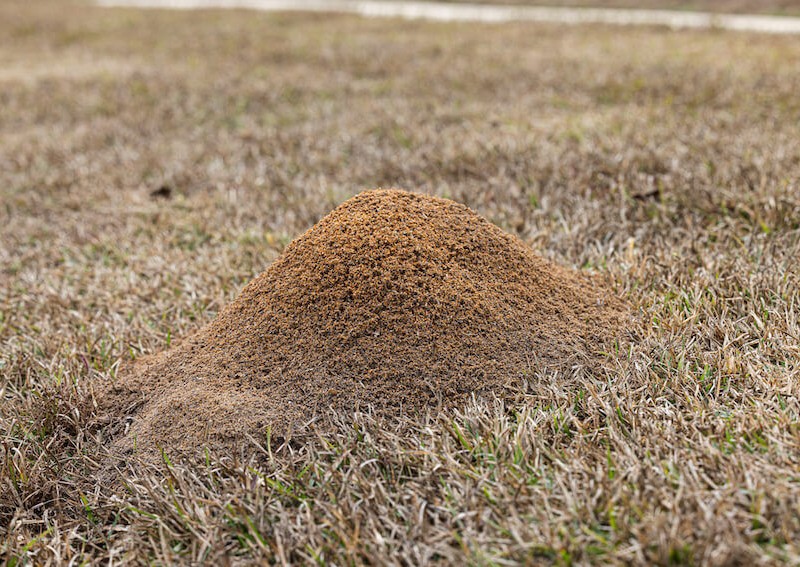
Fire ants, bees and wasps are all closely related and sting by injecting venom from the tip of their abdomen. Fire ants, the most common and troublesome ant in the Southeastern U.S., build characteristic mounds that can be problematic for farmers, lawn care professionals and residents alike. When the mound is disturbed, the fire ants respond aggressively and will induce multiple stings. Young children can be particularly susceptible to numerous stings if left unattended in infested areas. Each sting produces a swollen, red area with a blister that heals slowly. The fire ant sting is typically less painful than wasp and bee stings.
Yellow jackets, identified by their black and yellow banding, are a common nuisance in late summer. Colonies of these small wasps are initiated by overwintering queens that make paper nests underground and in hollow trees, wall voids and attics. A fully developed nest may contain a few hundred to thousands of adults. Yellow jackets feed on insect pests but are also attracted to food and soft drinks at picnics, camps and garbage sites. Solitary scavenging yellow jackets are usually nonaggressive unless provoked, but yellow jackets become very aggressive as a group if their nest is disturbed. Late summer activities like mowing and brush clearing around property edges can often disturb nests. When a large nest is disturbed, multiple yellow jackets may attach to the intruder’s clothing, creating the impression of being chased. The event isn’t over until all yellow jackets on your clothing are removed.
Umbrella wasps (paper wasps): These dusky brown wasps with orange markings construct open paper nests suspended from short stalks resembling umbrellas. Nests are typically built under the eaves of houses, on porches, in attics or amid dense shrubbery. A fertilized overwintering queen makes a new nest each year. These wasps feed on caterpillars and each nest contains up to about 250 wasps. Paper wasps are typically encountered when someone disturbs an unknown nest. If wasps start swarming you, immediately move away from the area and determine their origin. Disturbed wasps will typically stay near their nest. Left undisturbed, these wasps are not typically a problem; however, they often establish nests in areas close to our routine activities, increasing the likelihood of negative encounters.
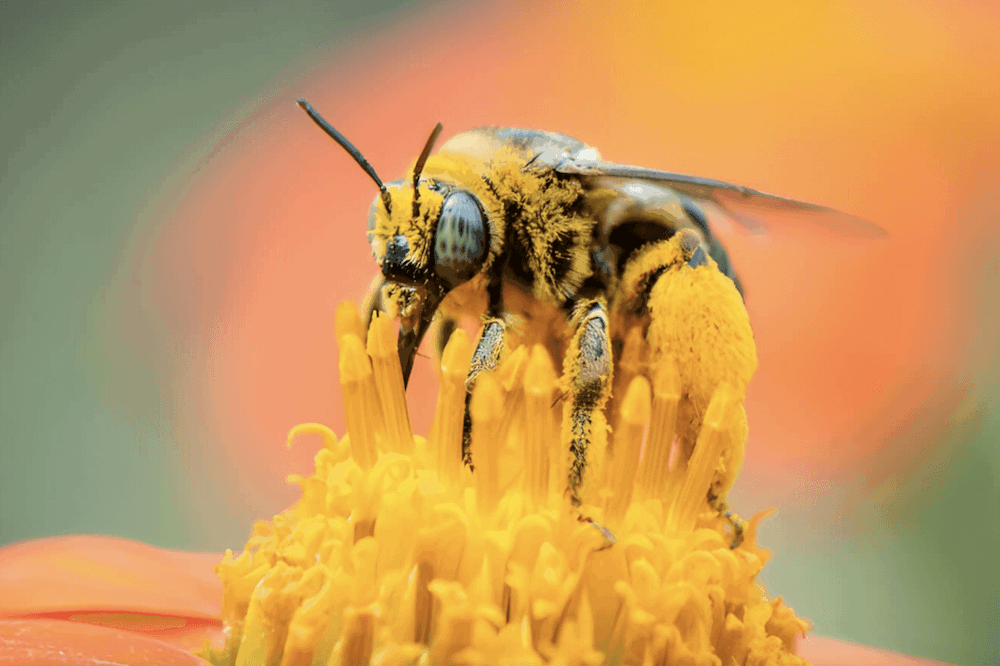
Honey bees: Honey bees were brought to the U.S. from Europe many years ago. Most colonies are managed in man-made hives but escaped swarms sometimes nest in hollow trees, wall voids and attics. Honeybee colonies last several years, with the queen and workers overwintering in the hive. People usually get stung while walking barefoot across a lawn with blooming clover or dandelions or if a bee gets trapped between clothing and skin. Honeybees typically don’t cause too much trouble.
Bald-faced hornets: Are a type of yellow jacket that builds nests suspended in trees and bushes. The nest looks like a bloated football high off the ground in a tree or bush, usually with a single entrance opening at the lower end of the nest. Left undisturbed, these nests don’t cause much of a problem and are an interesting conversation piece when collected after a hard frost.
Bumble bees: are big, buzzing, furry, yellow-and-black bees that produce an excruciating sting. Thankfully, they are very docile unless their nest is disturbed. Unlike carpenter bees, bumble bees have a yellow pubescence on their abdomen. Only fertilized females hibernate during the winter and start new nests in the spring, usually in cavities in the soil previously used by field mice.
Most social bees, wasps and hornets are beneficial and should not be controlled unless their nest and activities are close to humans and create a hazard. Left undisturbed, these stinging insects will usually do more good than bad. For bees, wasps and hornets nesting in sites that cannot be tolerated, apply an insecticide in the evening when the insects are at rest. With the wind at your back and an escape route selected, aim the insecticide at nest openings. Re-treatment may be necessary. If possible, destroy the nest or seal the nest opening after insecticide application.
Readily available insecticides include aerosols for quick knockdown and kill. Some aerosols produce a jet stream of up to 20 feet for operator safety and the ability to reach nests high off the ground. Colony removal services for honey bees nesting in buildings are available for a fee. Contact a local UGA Extension agent for more information.
Fire ant mounds can be treated relatively easily when they are freshly built after rains. Several commonly available insecticides can be used as an insecticidal drench. Following the label instructions, pour a solution of insecticide over the mound so that the mixture will break the surface; do not stir the mound. Use 1 to 2 gallons for an average 12- to 14-inch diameter mound. Granular and bait formulations are also available and highly effective.
For more detailed chemical control recommendations, refer to the Home and Garden edition of the Georgia Pest Management Handbook.
Author

Related Articles

Albany Herald – July 16, 2026
Albany among local governments looking… ASU Marching Rams first HBCU band
invited…

Classifieds – July 16, 2026
Jobs; Cemetery Lots; Garage Sales; Public Aucitons; Etc…

Adult leadership group spreads concept to high school students
“The purpose of Albany Junior Leaders is to pull together leaders from all over the community. We wanted to give these youth the same experience and the same exposure we’re getting in Leadership Albany.”
