
RICHARD S. MONSON: Farm Credit System hitting centennial mark
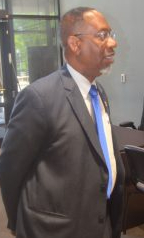
Richard S. Monson
The Farm Credit System is turning 100. In fact, we’re beginning a year-long celebration that will culminate July 17, 2016, exactly 100 years after President Woodrow W. Wilson signed the law authorizing Farm Credit to be chartered as an agricultural-focused lending institution. Not many businesses have a lifespan of 100 years. Perhaps more remarkable than our longevity is the fact that, over the course of a century, Farm Credit has largely operated under the radar in the world of privately owned financial institutions.
We’re close to entering our second century of business and the average person still doesn’t understand what we do or how we do it.
People hear “Farm Credit” and they wonder if we provide insurance or have something to do with government. Many times, we’re referred to as a credit union. If that’s been our story through our 99th year, I want to do my part to ensure that Farm Credit begins its second century by telling “the rest of the story.”
The Farm Credit System dates back to the early 1900s, when farmers had difficulty obtaining financing. The U.S. Congress saw a need for steady, reliable, competitively priced credit to preserve what they thought was an important part of the economic sector: rural America. Congress created a unique charter within the financial services industry with that mission in mind. Since then, Farm Credit has been a consistent and able partner for agriculture, even as other financial institutions have entered and exited the market with the ebb and flow of economic cycles.
To clear up misperceptions, Farm Credit is best defined by what we don’t do. Unlike traditional banks, we do not have deposits or a vast array of products that generate fees. The charter for a traditional bank is broad, while ours is much narrower and sector specific. We are authorized to make loans and provide financial services that serve farmers and rural America and that is our unique niche. We like it. With a staff—most of whom reside right here in the counties we serve — that is highly experienced in lending and in agriculture, we spend our days serving our neighbors. It doesn’t get better than that.
We are not a part of the U.S. Government and are not taxpayer supported; we are privately owned by the people who borrow from us. Our cooperative structure means profits are distributed to our borrowers — that is, the farmers, landowners and agribusinesses who own us.
Some people wonder why credit needs to be designed specifically to serve farming communities. It has a lot to do with providing stability in an industry that faces unique challenges.
Agriculture is an increasingly capital-intensive business. The cost of land, equipment, feed, seed and fertilizer have grown astronomically over the last 20 years. The cost of that capital is a critical factor in the farming business model. Furthermore, by its very nature agriculture is unpredictable — any number of world events can spell calamity for a season’s crop production. Farming is vital to this nation, and yet has so many uncontrollable variables. And that’s where Farm Credit comes into the picture. Our business model ensures there’s a continual source of financing available in good times and when times get rough, to keep rural America strong and prosperous.
There’s also reliability. When the U.S. is going through a significant economic down turn, banks have to look at their asset allocation and make some tough decisions. Agriculture doesn’t always fit into their portfolios, and they may decide to exit the sector, knowing they can come back another day. But that’s not what Farm Credit is about. By design, our market footprint is very narrow—we serve agriculture and rural America; we do it continuously and conscientiously.
The way we see it, even when we are not the chosen lender, we have still accomplished our mission. Because if we weren’t here doing what we do, the best price and the best product wouldn’t make it to the marketplace.
Fortunately, for farmers and rural Georgians, we don’t have to worry about that scenario, as Farm Credit heads towards its 100th year mark stronger than ever. We have a healthy amount of capital; we are a streamlined and efficient organization. We are also responding to the needs of the next generation — entrepreneurial farmers who will be the backbone of tomorrow’s rural communities — while continuing to serve established farmers. After all, agriculture touches every life every day. And as the financial engine that keeps American agriculture running, Farm Credit will be there to help our rural communities keep pace.
So, for the next century, I’m hoping for an even stronger rural America. And maybe, along with it, a Farm Credit System that is better understood.
Richard S. Monson is the CEO of Southwest Georgia Farm Credit, headquartered in Bainbridge.
Related Articles

Albany Herald – June 23, 2026
Phoebe electrophysiologist reaches Advanced… Albany police officials offer update… James Rubino installed in new role at…

Classifieds – June 23, 2026
ALBANY HERALD CLASSIFIEDS JUNE 23 2026
Albany police investigate suspicious Sunday death
A 21-year-old Turner Job Corps student who was found unresponsive on Sunday evening was later pronounced dead at Phoebe Putney Memorial Hospital. The death is under investigation.
