
Secretary of state enlists GBI to help combat illegal voting
From staff reports
ATLANTA — Georgia Secretary of State Brad Raffensperger is coordinating a government effort to combat illegal voting in Georgia, coordinating with the governor’s office, the Georgia Bureau of Investigation, and local elections departments on the initiative. The office of the Secretary of State has already launched more than 250 investigations into credible elections concerns this year and has begun a signature audit in Cobb County.
“I am committed to marshalling all resources available to ensure qualified Georgians and — only Georgians — cast ballots in Georgia,” Raffensperger said. “We have enlisted the Georgia Bureau of Investigation, coordinated with the governor’s office, and focused our office’s POST-certified investigative staff on upholding the integrity and legitimacy of ballots cast in Georgia. Georgia’s voters should be assured that we are taking every measure to protect our elections from fraud.”
The secretary of state’s office is coordinating across several levels of the Georgia government to stop and root out illegal voting in Georgia.
The secretary of state’s office already has dedicated its team of POST-certified investigators to look into the more than 250 election cases related to elections in 2020, around 130 of which are related specifically to the November elections. The office’s 23 investigators have all been tasked with completing these investigations.
To help manage the caseload, Secretary Raffensperger asked Gov. Brian Kemp to allow the Georgia Bureau of Investigation to assist. The GBI will assist in investigating specific cases identified by the office of the secretary of state. The GBI will task agents to conduct interviews and investigative acts regarding allegations of fraud as reported to the SOS’s office. A core team of eight agents from the Georgia Bureau of Investigations will be on hand to help clear the more than 250 cases still on file.
To further increase confidence in the outcome of the election, Raffensperger has announced an audit of signature match in Cobb County, following credible allegations that it was not conducted properly ahead of the June primaries. The GBI has dedicated 30 agents, three intel analysts, one case agent, two supervisors and one command staff to assist with the Cobb County signature audit as well.
The audit will consist of analyzing a statistically significant sample of absentee ballot envelope signatures and comparing those signatures to the signatures that Cobb County has on file.
Additionally, the secretary of state’s office has partnered with the University of Georgia to conduct a signature match review, a comprehensive look at signature match policies and procedures across Georgia’s 159 counties. The statewide signature match review will include a randomized signature match study of election materials handled at the county level in the Nov. 3 presidential contest.
In addition to repeatedly warning out-of-state voters of the penalties involved if they illegally register to vote or cast a vote in Georgia, the secretary of state’s office sent warning letters to 8,000 individuals who had requested an absentee ballots for the Jan 5 senate runoffs but had also filed a National Change of Address notice indicating they did not live in the state. The letters reminded these individuals that casting a ballot while a legal resident of another state is a felony that could be punished by jail time or hefty fines.
Raffensperger has already reviewed two important studies of Georgia’s elections infrastructure to increase confidence in the outcome of the election. In November, an audit of Georgia’s voting machines using forensic techniques “found no evidence of the machines being tampered with.” A ballot harvesting analysis conducted by the MITRE Corporation found “no suspicious indicators of ballot harvesting” in Georgia’s November election.
Georgia’s paper ballot system, selected in 2019, allowed Georgia to conduct a full hand re-tally of the presidential election several weeks ago, which reaffirmed the outcome as initially reported. Thousands of workers across the state recounted every ballot, one by one, reading and tallying the selections made by voters on their printed paper or hand-marked absentee ballots.
Related Articles

Bringing (positive) changes to The Herald’s Squawkbox
The Herald, as part of The Georgia Trust for Local News, is altering the way the Squawkbox is presented.
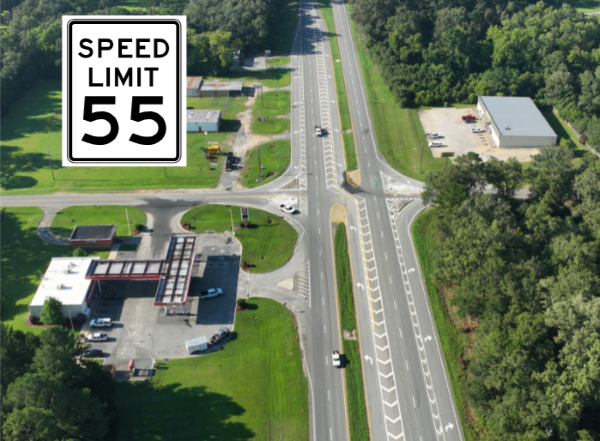
U.S. 19 speed limit reduced for traffic approaching Nelms Road intersection
The speed limit for U.S. 19 traffic approaching the Nelms Road intersection has been reduced from 65 mph to 55 mph.
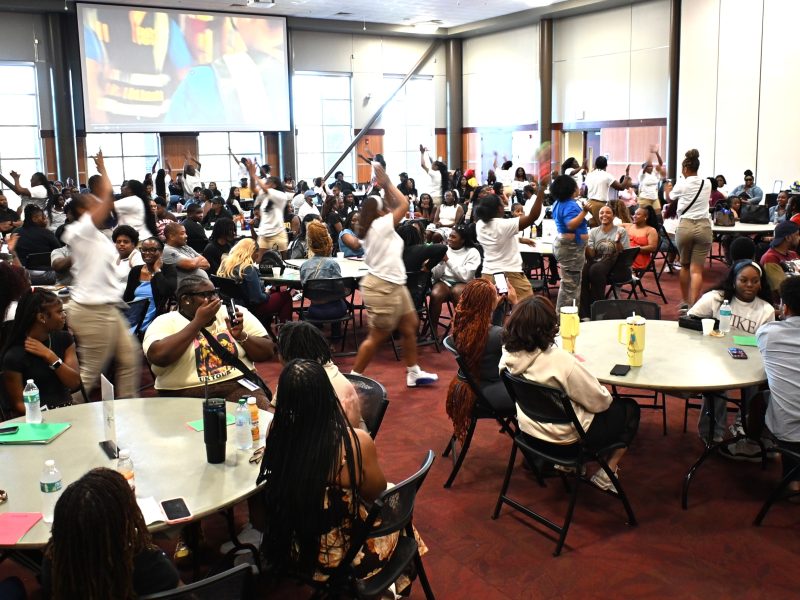
PHOTOS: Albany State New Student Orientation
Photos by Reginald Christian, Albany State University
