
South Georgia soil nurtures more than peanuts
Staff Photo: Alan Mauldin
By Alan Mauldin
[email protected]
LEESBURG — Georgia is best known for producing cotton and pecans, and growing the legume associated with a former president. But in the future, its agricultural palette could expand to include oranges, grapefruit and lemons.
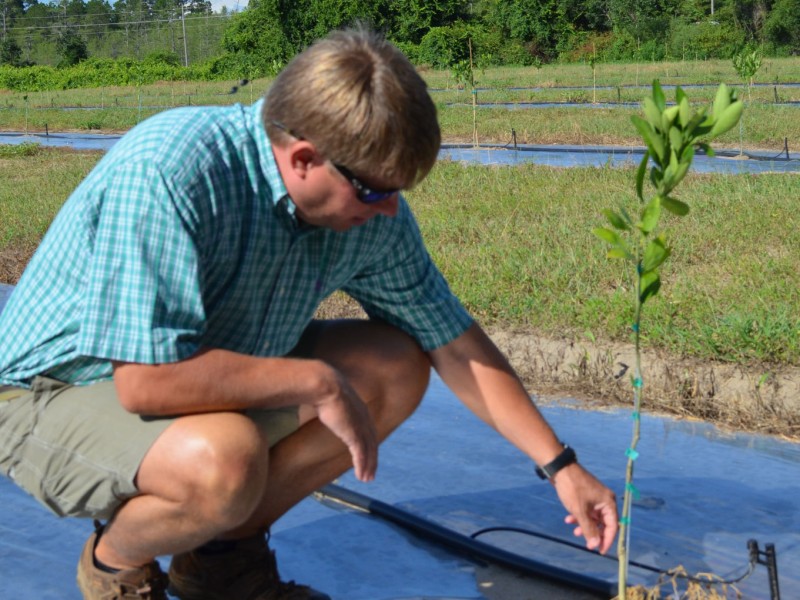
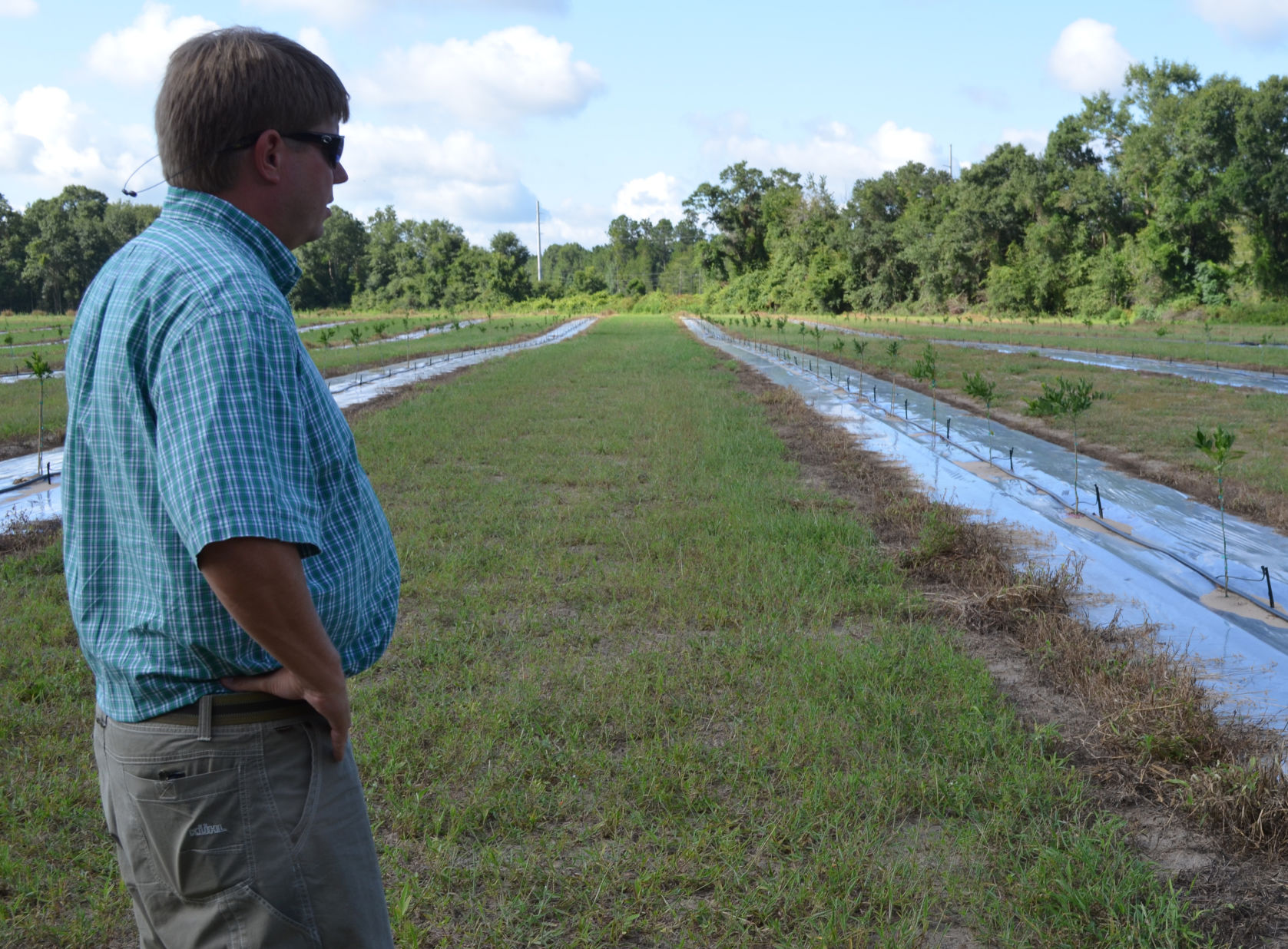
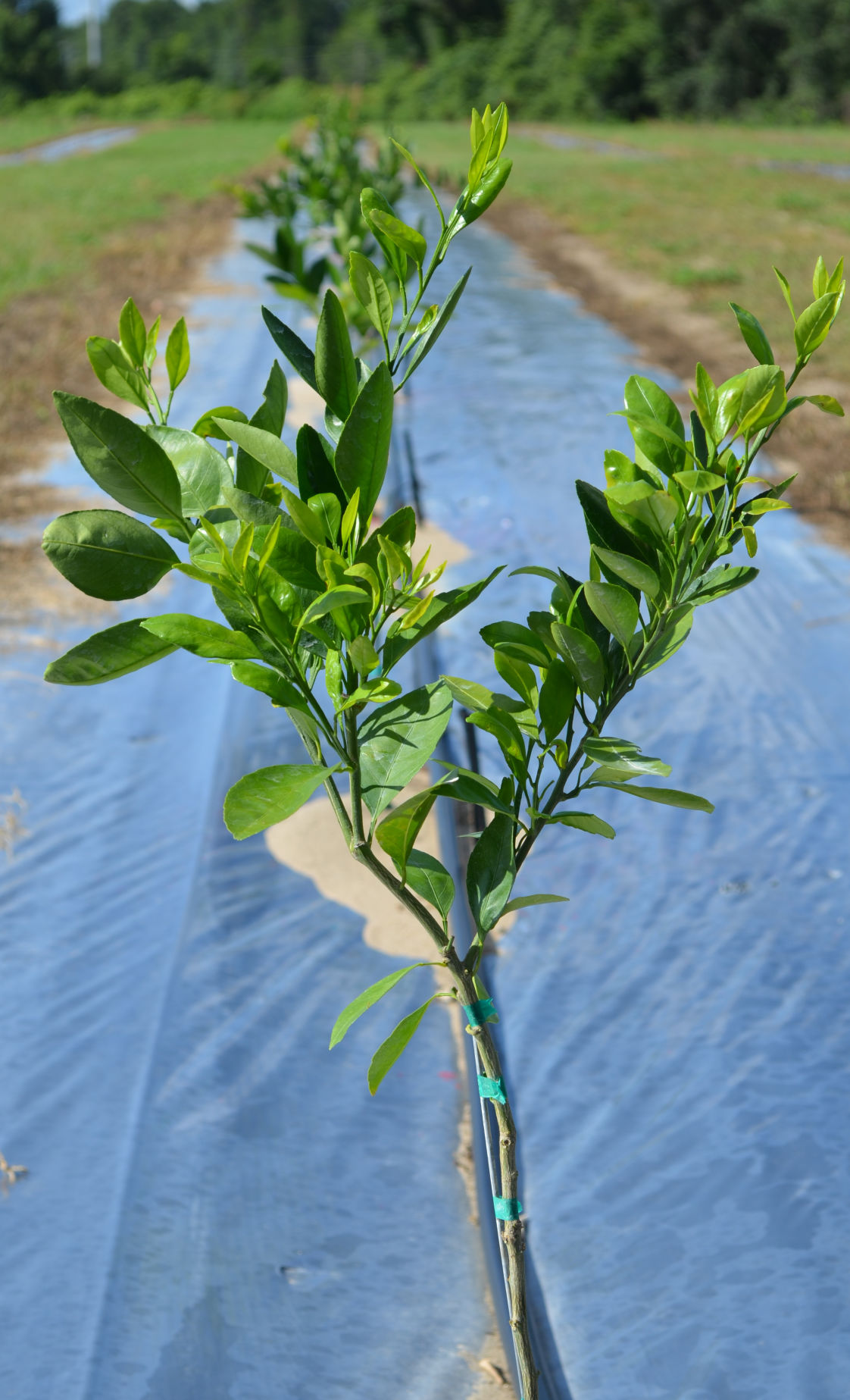
In Lee County, Justin Jones and partner Joe West have planted 70 acres of Satsuma oranges in what they hope will flower into a new line of business.
“This was something we were looking at trying to diversify a little bit,” said Jones, who grew up on a farm where his father was manager and has been running his own operation of row crops and pecans since 2004. “Another farmer had mentioned something to me. It was a new crop to Georgia. We thought it would be cool to possibly be on the front end of a new industry.”
Florida has been devastated in recent years by a greening disease that has cut production by about 70 percent, and California’s droughts have caused some farmers to turn to other crops.
“Some of my decision was made because of what has happened in Florida with the declining acres,” Jones said. “It wasn’t the only reason it got my attention.”
Most of the citrus in Georgia is grown in the southern part of the state and along the coast, so Jones is pushing the geographical barrier in his location. Georgia’s cold snaps are the biggest barrier to successfully growing citrus fruits in the state, and to overcome that challenge growers are taking precautions.
First they start with a cold-tolerant root stock on which are grafted the various varieties of fruit. So far those have been mostly Satsumas, which are among the hardiest in terms of withstanding cooler temperatures.
Most Georgia growers also integrate a water spray system that will help protect the trees on nights temperatures reach the freezing point.
“(University of Georgia) has developed a lemon, a grapefruit and a tangerine” for cold-tolerance, Jones said. “We’re probably going to look at putting some of those in as trials.”
The trees planted in Lee County should start producing in three to four years.
“They’ll get up to producing full speed in seven to nine years,” he said.
Lindy Savelle, who grows Satsumas in Mitchell and Thomas counties, was surprised that her trees, planted in 2016, are producing this year instead of 2020 as planned. Actually, about 104 pounds of fruit were plucked from each tree early to protect the young limbs, she said.
Citrus acreage has been close to doubling each year in the state, said Savelle, who is president of the three-year-old Georgia Citrus Association and also Georgia Grown Citrus nursery.
An initial meeting to discuss citrus growing in 2016 drew 27, now they draw nearly 200.
“The potential for Georgia is very good because we have a lot of farmers who know how to grow things,” Savelle said. “The potential for diversity is huge. We’ve kind of lost the family farm in agriculture. Citrus is something — if you have five acres of citrus, a family can manage that. A five-acre grower is a commercial grower because of the potential for production.”
Averaging 116 trees an acre, with 400 pounds per tree, it adds up quickly, she said. Production estimates for north Florida, south Alabama and south Georgia total 66 million pounds by 2023.
“We’ve got the potential in Georgia,” she said. “We’ve got really good soil in Georgia and we’ve got the weather — if we can just survive the freezing weather.”
Cold weather actually can be a good thing, Savelle said, as a mandarin is sweeter the closer it comes to freezing without actually freezing.
Jones said he hopes that he gets to be in on this growth potential. Right now much of it is an experiment.
Expanding into other citrus varieties, if this initial phase is a success, offers more opportunity for diversification.
“We’re trying to get a feel for how much fruit to plan for, how to transport it,” Jones said. “I feel good about it. I’ll feel better when I finally sell some fruit to somebody. It’s been a learning experience for sure.”
Author

Related Articles

‘Flywheel’ comes home as Kendrick brothers bring Brazilian remake to Albany
Twenty-three years after a $20,000 movie made with church volunteers launched their filmmaking careers, Alex and Stephen Kendrick returned Thursday to the Albany theater where “Flywheel” first reached an audience — this time with a Brazilian cast telling the story.
Heated exchanges, lengthy delays precede Lee school board’s 17.96-mill vote
The Lee County Board of Education adopted a 17.96-mill operating tax rate Thursday after a crowded public hearing and a lengthy wait for a vote that left frustrated residents at the meeting until close to 9:30 p.m.

Turnout steady during first week of early voting in Dougherty County
Early voting started statewide on Tuesday, giving voters three weeks to cast ballots ahead of the Nov. 3 election.
