
State medical cannabis regulations shrouded in secrecy
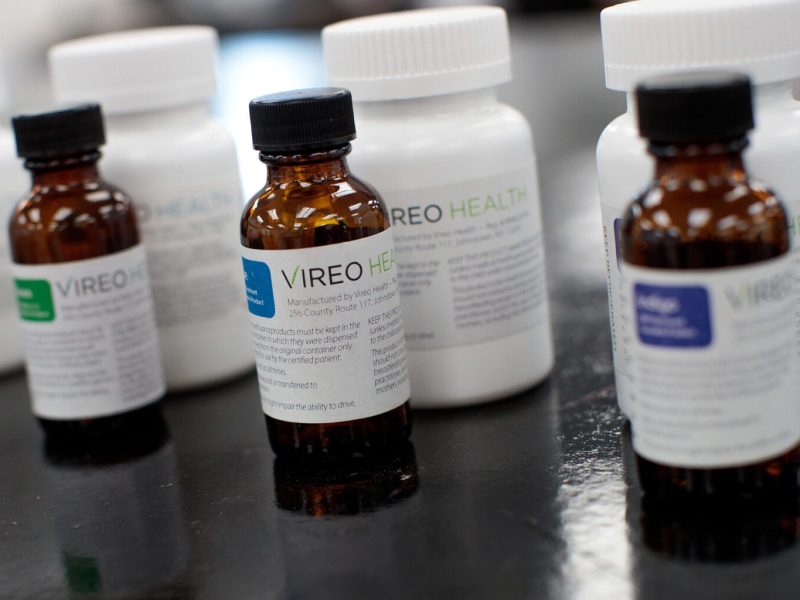
The state’s Open Records Act is so far proving no match for the Hope Act, which shields the actions of the Georgia Access to Medical Cannabis Commission. Legislators trying to pry open the process also have been rebuffed.
Photo via Georgia RecorderBy Ray Glier
Georgia Recorder
ATLANTA — For months, rival companies that want to produce low-THC cannabis oil for medical purposes in Georgia have not been able to pry open the black box of the state’s 2019 Hope Act to see how six firms — out of 69 bidders — were awarded licenses to dispense the marijuana extract to patients across the state.
The state’s Open Records Act is so far proving no match for the Hope Act either. Legislators trying to pry open the process have also been rebuffed.
Georgia state Rep. Alan Powell, a Hartwell Republican, has scalded the Hope Act as inefficient and poorly written. This month Powell introduced HB 196, which he says will make the workings of the Georgia Access to Medical Cannabis Commission more subject to oversight, more efficient, and subject to the state’s Open Records Act provisions, but still protect trade secrets of companies bidding for the lucrative licenses.
“I think it will do all those things,” Powell said. “The Administrative Procedures Act is a set of rules that are standard for state government oversight and for openness. And if they (commission) are part of that, then they have to adhere to those rules. That’s a state law. They can’t be behind closed doors. They have to be open to the public.”
The closed-door state regulation of medical cannabis raises questions. Did high-profile lobbyists come before the commission on behalf of one of the bidding companies? Was there a conflict of interest among those winning the business and politically-appointed commissioners? Was the scoring of the 69 companies influenced by a backroom deal?
Powell says he wants to shed a light, but after reviewing the lawmaker’s bill, Joy Ramsingh, an attorney representing the Georgia First Amendment Foundation, said even if HB 196 is made law, the cannabis commission can still shield its workings from the media and public.
“The problem is that the language that he’s leaving in also protects the commission from the Open Records Act,” Ramsingh said in an email. “For the commission to be subject to the Open Records Act at all, the language in 16-12-220 has to be modified. Right now, any document produced by the commission is secret per that section, and his new bill doesn’t change that.”
After 21 losing bidders filed protests, an administrative law judge used a partial exemption to the Open Records Act granted by the Hope Act to rule that all commission documents be sealed.
Ramsingh, on behalf of the Georgia First Amendment Foundation, filed a motion to unseal cannabis commission records in Fulton County Superior Court so the public could have access to the scoring process of applicants. That motion is pending.
“There’s kind of been a misunderstanding from the whole get-go about what we want and what the people want versus what the companies want to keep secret,” Ramsingh said. “Nobody wants their trade secrets. Nobody cares. Nobody’s trying to compete with them, that’s not what we do.
“What we’re trying to do is just get information about the government’s handling of this, as opposed to what the companies have to hide. We’re not a threat.”
The biggest threat to legalizing low-THC oil now, Powell says, may be the performance of the commission itself. Thursday night, the commission had to rescind rules it passed Jan. 25 that governed testing, inspections, and distribution of the controlled substance.
The Hope Act does protect trade secrets of companies that applied for a license. But the statute goes too far, insists its critics, by declaring the commission does not have to provide a public record of how it scored, or judged, those 69 companies so the public can see if they were fit to produce the medicine.
How the six companies won those hotly contested and lucrative licenses is a mystery to the public and it infuriates Powell.
“It’s a complete (mess),” Powell thundered. “They won’t even divulge information to a sitting legislative committee. And it’s the biggest (mess) I’ve seen in my life. I warned the Legislature last year this (production of the medicine) was going to be held up by litigation, and it has been.”
It is not just Powell and other legislators who are confounded by The Hope Act. Ramsingh, a constitutional law expert, said he sees a statute that has no regard for the public’s right to know. The Hope Act obliterates transparency into a state agency’s decision-making process, she said.
The Hope Act says that anything the Commission produces can be shielded and exempted from Georgia’s Open Records Act.
The lack of transparency is one reason, three years after the Hope Act was passed and seven years after registered patients in the state were allowed to use low-THC, marijuana-based oil, there is no product on the market in Georgia. Production of the cannabis oil has been delayed because 21 companies protested the decision to award six licenses. Several filed lawsuits that are still outstanding in courts.
The lawsuits allege favoritism and backroom deals in the scoring of companies awarded licenses.
“There is a flaw in how the commission operated,” Powell said, “and when you don’t have openness, they can do what they darn well please and I think that’s what happened.”
Two companies were issued Class 1 production licenses to operate production facilities with up to 100,000 square feet of indoor growing space: Botanical Sciences LLC and Trulieve GA Inc. Four other licenses were awarded for Class 2 production.
As far as the cannabis commission is concerned, as of Sept. 16, all 21 post-award protests of its decisions were heard and decided by the designated hearing officer at the Georgia Office of Administrative Hearings.
In a press release, the Commission said, “The newly licensed companies have 12 months from today to become fully operational. The production licensees will be able to grow, manufacture, and produce medical cannabis in the form of low-THC oil and products, which can have no more than 5% tetrahydrocannabinol (THC).”
Author

Related Articles
Residents rally behind Lee schools as accountability questions persist
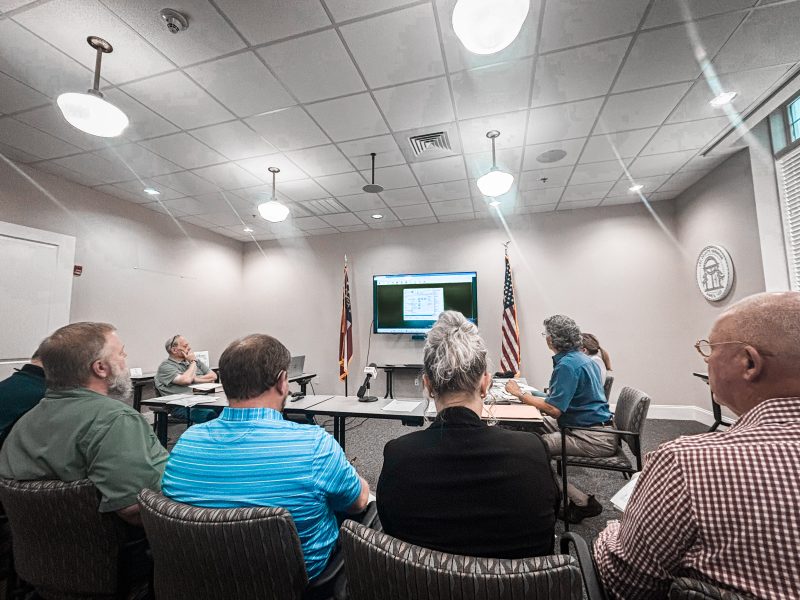
That argument surfaced repeatedly during a recent meeting of the Lee County Board of Tax Assessors, where officials, citizens and school system representatives discussed the coding error that contributed to incorrect rollback calculations and higher-than-expected tax collections.

‘Support Yourself’: Dawson DDA’s funding crisis exposes structural failures
According to documents obtained through an open records request, the DDA was erroneously billed on at least two occasions in 2025 — once for $2,715.18 and another time for $1,778.80. Both charges were later reversed back to the account without a formal public explanation. Interim City Manager Roxie Powell said she was not serving in the role when the billing problems occurred and was unaware of any documented meter-reading errors during that time.
Georgia officials seek rural input for 2028-2031 State Plan on Aging
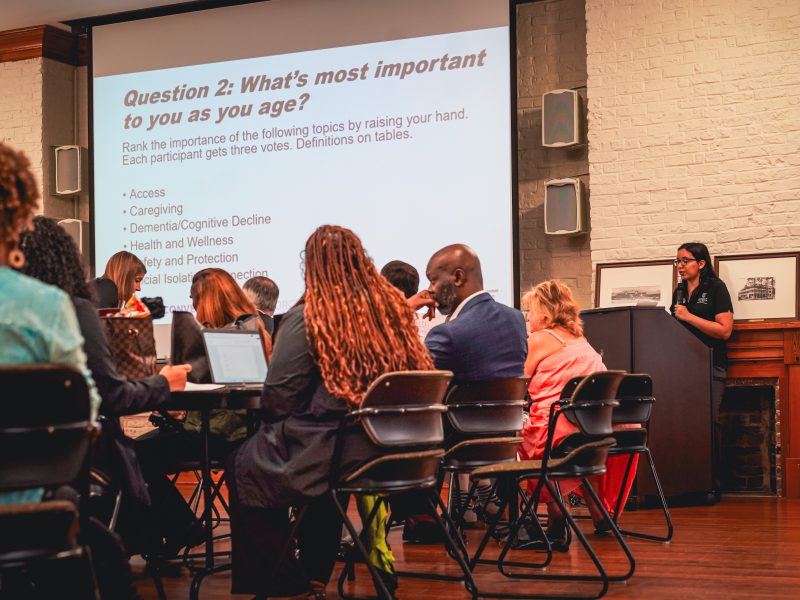
Held at the Albany Welcome Center, the meeting brought together caregivers, service providers, community leaders and older residents from southwest Georgia to identify the challenges most affecting aging adults in rural areas and discuss how those concerns should influence future state priorities and funding decisions.

