
State Reps. Winfred Dukes, Gerald Greene drawn into same district in new legislative maps

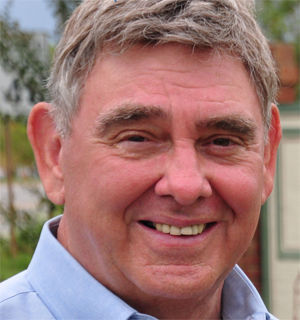
File Photo: Alan Mauldin
By Alan Mauldin
[email protected]
ALBANY — As the current second-longest-serving Georgia House member, redistricting is nothing new to state Rep. Gerald Greene.
Elected as a Democrat in 1983, the representative from Cuthbert switched to the Republican Party after winning re-election in 2010.
Having been challenged in most election cycles since entering politics, Greene also has seen his district combined with that of another officeholder over the years after the decennial U.S. Census count and redrawing of political districts.
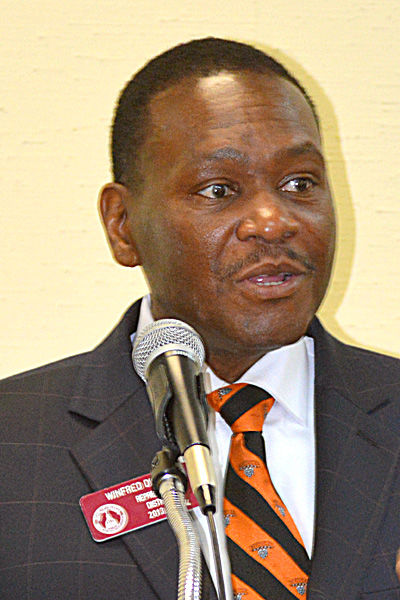
Albany Democratic Rep. Winfred Dukes also has a lengthy period in office. First elected to District 154 in 1996, he has rarely had an opponent, either in a primary or general election.
In 2010, Dukes handily defeated Republican challenger Karen Kemp with more than 64 percent of the vote.
Due to population loss in rural Georgia and the addition of a million new residents, largely in urban areas, since the 2010 U.S. Census, the political landscape has shifted in southwest Georgia through the redistricting process.
For Dougherty County, the urban hub of the region, the changes will mean Greene’s district moving to the west and incorporating more of the county. District 152 state Rep. Bill Yearta, a Sylvester Republican, will lose the portion of his district in Sumter County, and the new district will incorporate part of Dougherty County
Republican Rep. Mike Cheokas of Americus also will gain a portion of Dougherty County in the new District 151.
Democratic Rep. CaMia Hopson, who represents District 153, will be the only remaining House member whose district is encompassed wholly within Dougherty County.
The population of Dougherty County decreased by 8,775 from 2010 to 2020, according to the census count.
With the reshuffling, Dukes and Greene will find themselves both within the borders of the new House District 154, which will be the largest in terms of area in the state as it includes low-population counties including Baker and Clay.
The Republican-controlled state legislature recently approved the new House and Senate maps and this week gave final approval to the final U.S. House maps, completing the redistricting process.
“You never like to do these things,” Greene said of redrawing lines that place two legislators in the same district. “This (redistricting) is population-driven, and you never know what’s going to happen.
“I really hate that we’re running against one another, but it’s based on population.”
After the 2020 Census, Greene and former state Rep. Bob Hanner of Parrott were placed in the same district through redistricting. Like Greene, Hanner, who died in 2019, switched his party affiliation to Republican after the 2010 election.
“It’s a difficult thing to run against your friend,” Greene said. “Bob decided not to run because his health wasn’t good. I was put in with another representative years and years ago. This isn’t my first rodeo.”
Cheokas’ district under the new legislative maps will include Stewart, Terrell and Webster counties, which were in Greene’s current District 151 and also part of Dougherty County. District 154, as drawn, will pick up Baker and Calhoun counties.
District 154 will now consist of all or parts of Baker, Calhoun, Clay, Dougherty, Early, Miller, Quitman, Randolph and Seminole counties.
“It’s nine counties still, but it’s a bigger land area,” Greene said.
The Herald left multiple messages for Dukes seeking comment on Monday and Tuesday but did not receive a response.
Like Greene, Yearta said he intends to run again in 2022 in the newly drawn district that sees him losing part of his former territory. Yearta had just received the new maps and was not sure of the exact impact the population changes would have.
“I lost what I had in Sumter County and I moved into Dougherty County,” he said. “I’m just going to have to look at it, look at the numbers. I’m still privileged to serve the people in Lee and Worth (counties) and now Dougherty County.”
Yearta, who was mayor of Sylvester before his run for the legislature, said he thinks the redistricting process was a fair one, with House and Senate redistricting committees holding a series of hearings and logging in more than 900 online public comments.
“I think it went reasonably well,” he said. “We had a lot of input from the public. We, of course, had to comply with population changes. We had to comply with the Voting Rights Act of 1965, which we did.”
Author

Related Articles

‘Flywheel’ comes home as Kendrick brothers bring Brazilian remake to Albany
Twenty-three years after a $20,000 movie made with church volunteers launched their filmmaking careers, Alex and Stephen Kendrick returned Thursday to the Albany theater where “Flywheel” first reached an audience — this time with a Brazilian cast telling the story.
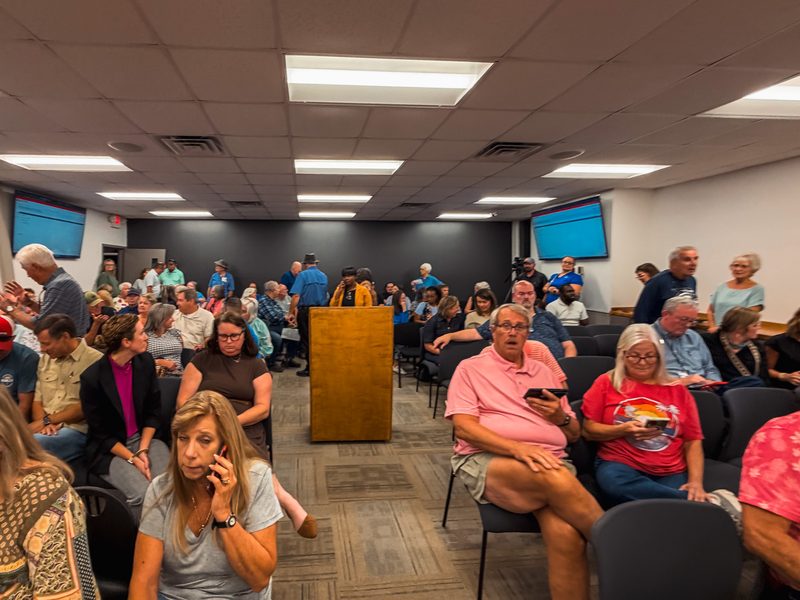
Heated exchanges, lengthy delays precede Lee school board’s 17.96-mill vote
The Lee County Board of Education adopted a 17.96-mill operating tax rate Thursday after a crowded public hearing and a lengthy wait for a vote that left frustrated residents at the meeting until close to 9:30 p.m.
Turnout steady during first week of early voting in Dougherty County
Early voting started statewide on Tuesday, giving voters three weeks to cast ballots ahead of the Nov. 3 election.
