
State Supreme Court orders lower court to reconsider vaccination objections

The state Senate has passed legislation that would prohibit government agencies from requiring proof of COVID-19 vaccination to access government facilities or services.
Georgia Recorder, FileBy Capitol Beat News Service
ATLANTA — A juvenile court must re-evaluate the sincerity of parents’ objections to their children’s vaccinations, the state Supreme Court said Tuesday.
At issue is whether children in temporary state custody can be immunized with routine childhood vaccines over their parents’ religious objections — and how to decide if those objections are sincere or not.
The three young children in this case (now ages 2,4 and 6) were removed from their parents’ care in 2021 due to the father’s alleged violence. The removal was temporary, with a plan in place to eventually reunify the family after the parents met certain conditions.
When the parents learned of the state foster care agency’s plans to have their children immunized, they asked a Forsyth County Juvenile Court judge to stop the state from going forward. They said they had religious and philosophical objections to immunization.
The state argued the children needed the immunizations to facilitate their foster care placement, education and health care.
The juvenile court judge denied the parents’ request, finding their religious objections insincere. The parents failed to regularly attend church, lacked association with a “particular religion,” and held secular objections to vaccination, the judge said.
The parents appealed — leading to the case before the Supreme Court. The court unanimously held the juvenile court applied the wrong standards for evaluating the sincerity of the parents’ objections to immunization.
The case will now be returned to the juvenile court for another look using the new guidance.
When the juvenile court looks at the parents’ sincerity, it should use a “light judicial touch,” wrote Supreme Court Presiding Justice Nels S.D. Peterson.
Peterson provided some factors the lower court could consider when deciding whether the parents’ religious objections were sincere.
These included length of religious belief, amount of knowledge, reliance on religious texts and teachings, and “whether [the parents] have wavered in their actions related to vaccination.”
The state Department of Human Services, which oversees foster care, changed its policy on parents’ objections to vaccination while this case was pending.
DHS Commissioner Candice Broce sent a June 1 memo to employees directing them not to seek immunizations for any child in temporary custody if the child’s parents hold a sincere religious objection.
Lawyers for DHS asked the Supreme Court to dismiss the case, saying the new policy made the case moot. The Supreme Court Tuesday rejected that argument.
“[The] new policy is not legislative in nature; it is an agency memorandum,” wrote Peterson.
There is no guarantee the agency could not change its policy again in the future, the court said.
Author

Related Articles
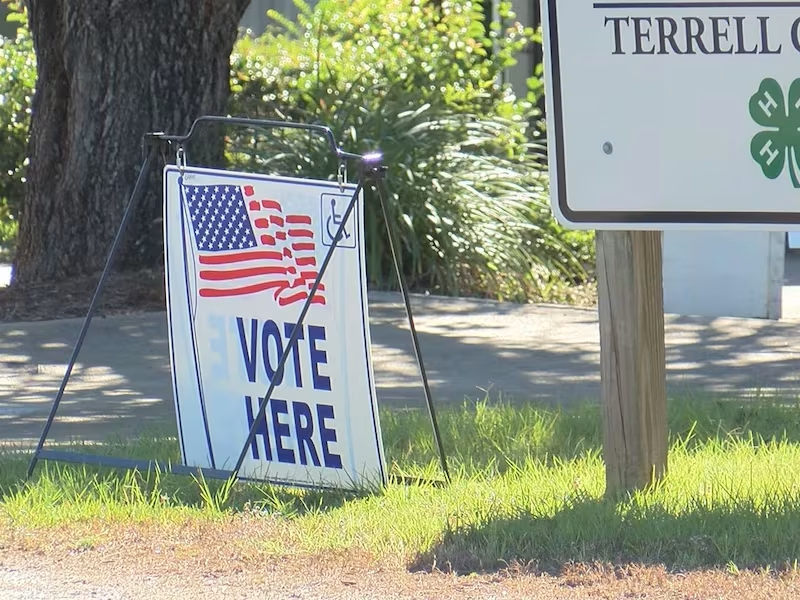
Who decides elections in Terrell County? Data show older voters dominate turnout as turnout declines
According to the Georgia Secretary of State, 1,731 of Terrell County’s 6,048 active registered voters cast ballots in the May primary, a turnout rate of 28.6%. Four weeks later, only 922 voters participated in the June 16 primary runoff, reducing turnout to 15.2%.

Christie’s Feed & Seed enters new chapter under new ownership
A longtime Dawson business has entered a new era as Riley and Jessie Davis officially assumed ownership of Christie’s Feed & Seed, with the Terrell County Chamber of Commerce marking the transition during a ribbon-cutting ceremony.
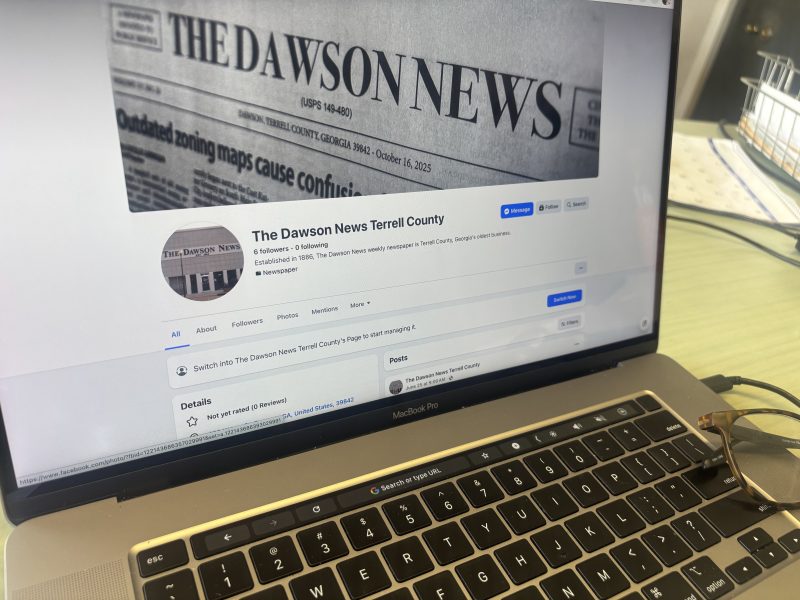
Dawson News grows online with Albany Herald website, Facebook page
Residents can now find Dawson News coverage alongside regional reporting on the Albany Herald’s website while also following breaking news, community events and feature stories through the Dawson News Facebook page.
