
ANNALIESE ASHLEY: Albany has always managed to deal with ‘plagues’
By Annaliese Ashley
One of my first memories of my hometown was in 1994, when my parents and their Sunday School classmates worked to recover valuables from other churchgoers’ flooded homes. I came, though for the life of me am unsure why we thought a 4-year-old needed to help wade through flooded carpet to pick up family photos. (Let’s be real, I probably insisted I was capable and wanted to help.) The beautiful snowstorm of ‘93 that everyone talks about up here in Knoxville, where I reside now, only brings back the rotting stench of flooded homes and perpetually damp shoes. It happened again in ‘98.
When I bring people home as an adult, we always drive through the Avenues to look at the live oaks, and I always take them downtown to show them the homes that have two water lines: one midway up the windows. “That’s the ‘94 line,” and one a foot or so lower. “That’s the ‘98 line. Can you imagine? Wading through your home twice?”
Three years and a couple of months ago, my hometown was hit with a set of devastating storms. They took basically the same path a week apart. Tornadoes, straight-line winds, hand of God, hand of the devil … it doesn’t matter what you call it, the aftereffects are still around. The Avenues, once a place for a drive and amazement at old Southern beauty, are suddenly wide open and no longer shaded by the stalwart live oaks we loved.
A year and a half after that, my landlocked hometown was hit by a CAT 2 hurricane — Michael, for those of you who weren’t watching. The blue tarps covering the roofs in our town from 2017 were handily removed — again — and any progress the town had made in tornado recovery was erased overnight.
This year is no different. By my count, we’re on plague number 5, or 6 if you count generational poverty as plague number 1. We made it into national news again, this time for being the epicenter of the COVID-19 outbreak in Georgia, for holding the title of “1st death from COVID-19 in the state,” and for being No. 4 in the world for most COVID-19 cases per capita. We even have attracted the attention of the New York Times, and I hear we’re on the front page of Yahoo News right now.
We’ve held other accolades in the past, from most murderous city in America per capita (1988), to poorest county in Georgia (date unknown), to that place MLK Jr. got arrested twice during the civil rights movement.
On the bright side, if we’re anything like Egypt, we’re halfway through. We’ve had the river of (metaphorical) blood, we’ve had the (drought) pestilence of our crop, we’ve had the storms … maybe this one is the boils? It’s tough to be north, in Knoxville, watching my town get beaten down, again. I was there to lend a hand for most of these disasters, but this one, I dare not. I’m glad my family is wise, calm and safe at home making reusable N95 mask covers for the Phoebe folks. I’m glad for technology like video apps that allow us to show the art projects, food projects, silly projects, and worries that we have.
This feels like old hat now. The helpers roll up their sleeves, the paranoid stretch their typing fingers, the bored suddenly become crafty. Neighbors suddenly know each others’ names, and meals are shared across socio-economic lines. In times of disaster, Southerners know what to do. We know how to bend over our chainsaws, our sewing machines, our stoves. We know how to suddenly become blind to race, financial status and creed. We know what it means to wake with backs or fingers sore from lending a hand and digging each other out from under trees, water, disease and despair. We know how to miraculously pull together and pull each other up by our bootstraps. We know how to become more unified — again — as a city, a state, a country.
Indeed, this neighborly way of helping one another survive is older than America herself. I know, I’ve been reading a lot of Westerns in my recent home-focused time.
In Knoxville, we haven’t been hit as hard as Albany, yet. I’m sure it’s coming. We’ve been good at social distancing and supporting our local food and beer establishments by ordering takeout and crowlers. We’ve donated to nonprofit nature centers, zoos and service industry worker relief funds. We’re starting the neighborly ways of helping each other out by delivering food, sharing toilet paper, doing social media dance-offs, and performing mental health check-ins. A disaster is coming, and we know how to act for it, how to link elbows (metaphorically, this time) and face the future as one. We know the value of, and desperately seek out, human contact, humor and hope. We find the joy in teddy bear hunts, or neighborhood musical jam sessions, or teacher-led parades.
This is what we’re bred for down here: the hard times. When I was in Albany during the 2017 winter storms, the hymn “Lift every voice and sing” was perpetually in my head as a prayer that my town and her people would choose to take that attitude. The only other time I’d witnessed such unity in my life was at the annual MLK Breakfast at one of the biggest churches in my town.
Singing that hymn loudly with hundreds of folks gave me hope that the lines we saw where made-up and could be ignored if we chose, like we chose that morning every year.
The thing about that hymn is, it’s not just a battle cry to which you march through disaster, it’s a praise of the battle through which you have already come. It’s a reminder of how you got through the disaster to the other side. But, most importantly, it’s a plea to God for remembrance, evident in its last verse:
God of our weary years, God of our silent tears, Thou who has brought us thus far on the way, Thou who has by Thy might Led us into the light Keep us forever in the path, we pray. Lest our feet stray from the places, our God, where we met Thee, Lest our hearts drunk with the wine of the world, we forget Thee Shadowed beneath Thy hand May we forever stand True to our God, True to our native land.
Right now, every place experiencing this revival of caring for one another has a choice to make for its future: to continue this helper culture, or lapse back in between those made-up lines. It is my fervent prayer and plea that we, as Georgians, as Tennesseeans, as Americans, will keep forever on this path. That we will, indeed, lift every voice and sing, ‘till earth and heaven ring, ring with the harmonies of liberty.
Related Articles
The U.S. president who lived in Plains public housing
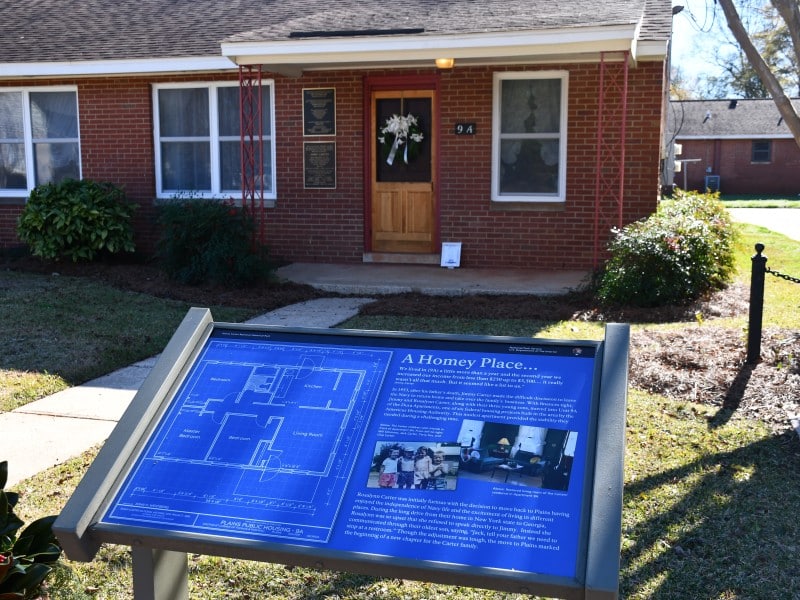
In 1986, Unit 9A was dedicated as a place of historical significance, with the permission of Jimmy Carter. For years, a plaque marked the apartment, located on Paschal Street in Plains. However, in 2019, the Americus Housing Authority and Plains Historic Preservation Trust began working to turn the site into a museum.
Friends and neighbors of Jimmy Carter reflect on the passing of the President from Plains: ‘It leaves us with a big job to carry on their legacy’
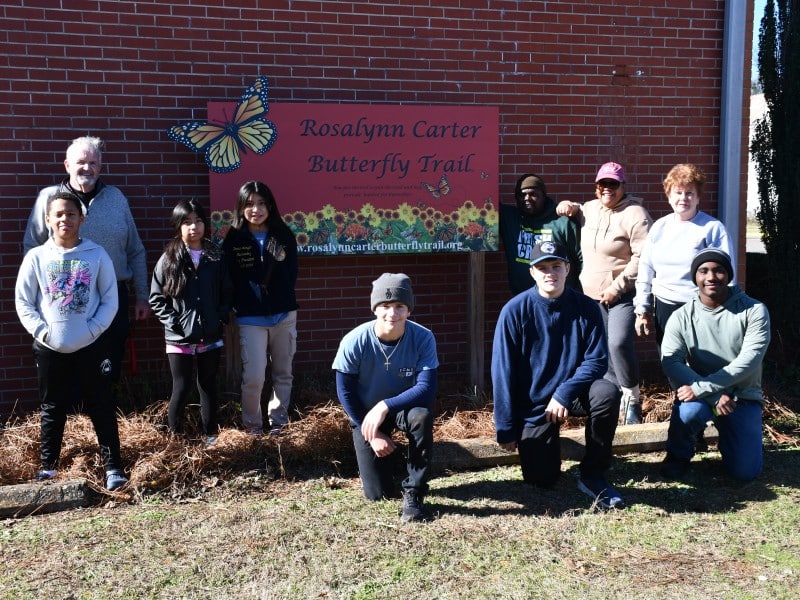
Jimmy Carter, who died on Dec. 29 was the only president from Georgia. Friends and neighbors say it was his Plains upbringing that developed his attitude for service.
Child care study committee releases recommendations
Tax credits are the weapon of choice for Georgia lawmakers looking for ways to make child care more accessible and affordable.
