
Sunbelt Ag Expo dedicates building to rural health
The Philadelphia College of Medicine celebrated the opening of a building dedicated to rural health during this year’s Sunbelt Ag Expo.
MOULTRIE – A line that swelled and tapered off Wednesday at irregular intervals past a row of tables staffed by cheerful medical students in white coats and members of a church organization offered health screenings and a speaker discussed drug recovery on a stage, individuals from close to home and other states got a glimpse at what a Moultrie medical school’s rural health initiative looks like.
The Philadelphia College of Medicine celebrated the opening of a building dedicated to rural health during this year’s Sunbelt Ag Expo, with about a dozen other organizations and health care providers setting up shop inside the structure. Screenings included blood pressure, blood sugar and even a stress test to gauge an individual’s level of anxiety. Among the tables, the Colquitt County Health Department touted programs that include child, adult and women’s health services.
The Expo donated the building to the medical school, which began operations in Moultrie in 2019, giving the various health providers that included the Phoebe Putney Health System, for use during the three days the annual farm show is open.
PCOM launched its rural mental health initiative last year and with the new building has enhanced the outreach to southwest Georgia’s population.
It’s no secret that farming can be a stressful occupation as farmers deal with adverse weather, volatile commodity prices and debt. Added to that in rural areas are isolation and the stigma of seeking help for mental health issues.
In a study on farm-operator suicides, the U.S. Centers for Disease Control and Prevention noted that a rise in farmer suicide rates was of serious concern, given the increasing input costs, market volatility and production losses caused by climate change and natural disasters.
According to the CDC, studies have shown that the suicide rate among operators of farms may be double that of the the general population, with the highest incidence in the United States found among older, white males.
The study that examined U.S. farmer suicides from 2003 to 2017 said that in rural communities suicide deaths have “devastating emotional consequences on families and rural communities,” and can result in the loss of financial and emotional resources. This could possibly lead to mental health conditions and future suicide behavior among survivors.
Part of the goal of the effort is getting individuals at risk in contact with those who can provide needed resources, said Joseph Sliker, the assistant director for Adventist Community Services and Disaster Response/South Georgia, which has provided health screenings at the Expo for about 25 years.
“If we run into somebody that has needs, we can be that bridge to them getting the help that they need,” he said. “The college (PCOM) has been wonderful to us. I can’t thank them enough for their invitation to be a part of this.”
The church group was providing a written stress assessment to individuals interested during the Expo this year.
Church members believe in a holistic response and recommend an eight-part program for individuals suffering from stress or who just want to live a healthier lifestyle. The “NEW START” recommendations include nutrition, exercise, water, sunlight, rest and trusting in a divine power.
Currently, the biggest issue that the church staff is observing is that people in the region are finding it difficult to secure food, particularly healthy food, and for the elderly.
“One of the biggest things that we see, particularly in rural areas, is food-insecurity,” Sliker said. “That’s a real problem.
Food-insecurity became an issue during the COVID-19 pandemic and is still an ongoing problem for many, he said. Rising food costs, combined with increases for rent and electricity, are among the factors leading to stress for many people.
“A lot of things can be addressed very easily with diet and lifestyle changes,” Sliker said. “It can definitely change the quality of life.”
For some who pass through the screenings, particularly those who have not seen a doctor in some time, and find out that they may have an issue, the providers can steer them to help, Luis Biazotto, director of the Georgia Cumberland Conference Seventh Day Adventists, said. In a few instances over the years, staff has sent individuals directly to the hospital based on alarming test results at the Expo.
“It’s kind of a wake-up call,” he said.
First-year PCOM students working two-hour shifts in the PCOM South Georgia Rural Health Initiative Building said that their experience was a positive one.
With a busy schedule of studies, the Expo offered them a chance to get out and meet people, as well as see cows and other animals on display.
“The idea is that we can bring this to people who can’t get to the doctor,” Olivia Peoples, a student from St. Augustine, Fla., who grew up on an alpaca farm in Maryland, said. “I like being able to see the people around here. As a student, I’m holed up studying, so I don’t get out and see people.”
Peoples said she understands that some people in rural areas have difficulties in receiving medical care.
“In the long-term, I’d like to be rural … ER, maybe, I haven’t decided,” she said of her future medical specialty.
At the next table student Sofia Garcia, a Jacksonville, Fla., native, also said she was enjoying the experience.
“I love it,” she said. “I love the community. I think everyone here is warm and welcoming. It makes me excited to pursue a medical career. I’ve seen a lot of kind people.”
Garcia said she would consider working in a rural location but also would be comfortable working in a metropolitan area.
“I’m open to helping people,” she said. “I’m used to a big city. If it’s a small town, it’s OK as long as I can help other people.”
Among the speakers appearing on a small stage area in the building on Wednesday was J. Dan Bailey, who spoke about drug addiction recovery in a rural community.
Isolation is a big reason that individuals with a drug issue can spiral into a substance issue, said Bailey, the program manager for Wecovery, a peer support center recovery community under the umbrella of Georgia Pines Community Service Board in Thomasville, which provides mental health and developmental disability services to the underinsured and uninsured in six southwest Georgia counties.
Undiagnosed post-traumatic stress disorder (PTSD) is a factor for most of the people dealing with a drug problem, Bailey said during an interview with The Herald following his presentation. Many also have other untreated underlying mental health conditions such as depression, he added.
“I think that most people that are struggle with substance abuse that seek recovery are self-medicating mental health symptoms,” Bailey said. “I think people overlook the mental health side. I say people need to recover in both.”
There is also a stigma and reluctance to talk about substance abuse issues, Bailey said, and his mission is to get people to “stop whispering” about the issue.
“I think that folks are uncomfortable having conversations about substance abuse, (but) recovery is possible and we should be loud about it,” he said. “There’s so much shame. That’s my goal, to shatter the stigma around it.”
Among those who stopped in for a checkup this week was Butch Green of Sweetwater, Tenn., who has been attending the Expo for years. He got a clean bill of health from the screening.
Green comes from a line of farmers, but at the moment is just “therapy farming.”
“I guess this is about my 25th year,” he said. “I’m just loafing. I just always enjoyed farming.”
Author
Related Articles

Who decides elections in Terrell County? Data show older voters dominate turnout as turnout declines
According to the Georgia Secretary of State, 1,731 of Terrell County’s 6,048 active registered voters cast ballots in the May primary, a turnout rate of 28.6%. Four weeks later, only 922 voters participated in the June 16 primary runoff, reducing turnout to 15.2%.
Christie’s Feed & Seed enters new chapter under new ownership
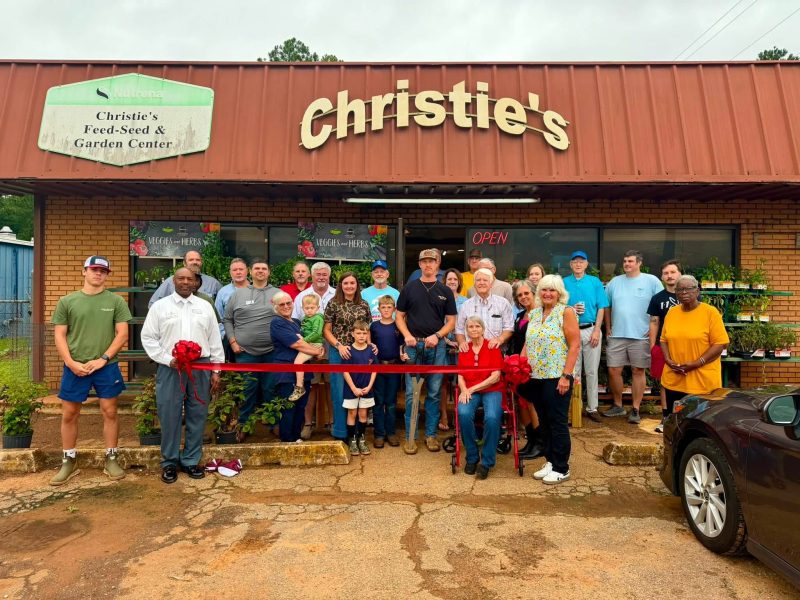
A longtime Dawson business has entered a new era as Riley and Jessie Davis officially assumed ownership of Christie’s Feed & Seed, with the Terrell County Chamber of Commerce marking the transition during a ribbon-cutting ceremony.
Dawson News grows online with Albany Herald website, Facebook page
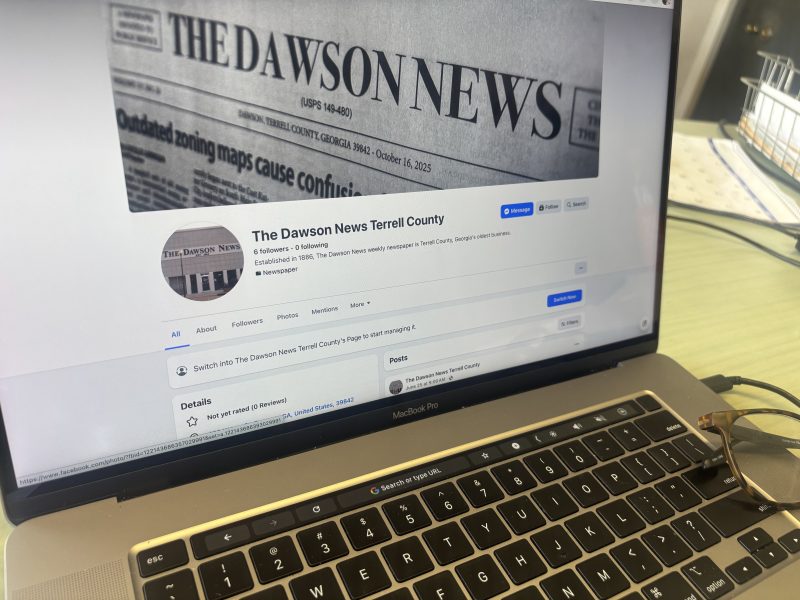
Residents can now find Dawson News coverage alongside regional reporting on the Albany Herald’s website while also following breaking news, community events and feature stories through the Dawson News Facebook page.
