
Survey shows most drivers distracted by phones
Jim West
ALBANY — A leading insurance company has released its sixth annual Distracted Driving Survey and, like every year since 2009, it’s our beloved cellphones that steal the lion’s share of attention from American motorists.
It’s a finding that is substantiated by Albany law enforcement officers.
In a formal survey of drivers themselves, State Farm discovered when and under what conditions the phones were used to conduct remote conversations, send or receive text messages and check emails. With 80 percent of State Farm’s “all drivers” survey group now owning Smartphones, the temptation to multitask is great and can lead to dangerous, even fatal distractions.
For example, 17 percent of respondents reported that driving in school zones has no impact whatsoever on their cellphone use, while driving on an open highway increases that use by 30 percent.
“It’s interesting to see that many drivers report assessing driving conditions when they make choices regarding using their cell/smart phones,” said Justin Tomczak, a spokesman for State Farm. “However, we want to remind people that there are demands on their attention when driving, whether moving or not, regardless of road conditions, and please stay 100 percent focused on their drive.”
Patrolman Greg Gadt with the traffic enforcement unit of the Albany Police Department agrees with Tomczak.
“We see it a lot when we’re sitting on the side of the road,” Gadt said. “When we make contact and ask (drivers) why they ran a red light, they say they weren’t paying attention. I think that if they’d set the cellphone down, they’d do much better.”
Gadt said he and other officers see a lot of accidents he believes are caused by cellphone distractions — either from conversations, texting or emailing — or when the drivers drop their phones and try to find them while their vehicles are in motion.
At first glance, some State Farm data may seem to show good news. For example, around 90 percent of respondents said they were less likely to use their cellphones in rain, fog, snow, icy conditions or in construction zones. But that means around 10 percent of cellphone users don’t decrease their phone use at all — even in those more hazardous circumstances.
“The phones divide your attention,” Gadt said. “If you’re using it, you can’t concentrate on the vehicle in front of you or what’s going on with the speedometer, or in the roadway. You could drift out of the lane, hit the curb or take out a bike rider. The possibilities are endless as far as the dangers associated with that.”
According to Gadt, while driving and having a cellphone conversation is legal in Georgia for drivers 18 and over, texting is forbiden for all ages. In practicality, though, texting offenses are nearly impossible to discover and enforce. Gadt said that in his years as a traffic officer, he’s apprehended and charged only one texter. That’s unfortunate, Gadt said, because texting can be a deadly distraction for a driver.
“When a driver is texting it’s almost like he’s impaired,” Gadt said. “Like he’s drinking or doing drugs. You can’t concentrate on more than one thing at once.”
As far as cellphone conversations go, they can be made safer by investing in the equipment necessary to have them “hands free,” without the need to hold anything in your hand. Still, the safest way to have your conversations is to put your phone in a cup holder, your pocket or your purse, and wait until you’ve reached your destination, Gadt said.
So maybe you’re a safe, undistracted driver. But what can you do about all those drivers who are texting and having cellphone conversations? Gadt says our best hope for avoiding accidents with distracted drivers is to stay clear of them, and that means driving defensively.
“Try to increase the distance between you and the other drivers,” Gadt said. “Slow down and let that car around. Drive for your own defense and pay attention to what the others may be doing wrong. He may be distracted, but you don’t have to be.”
Related Articles
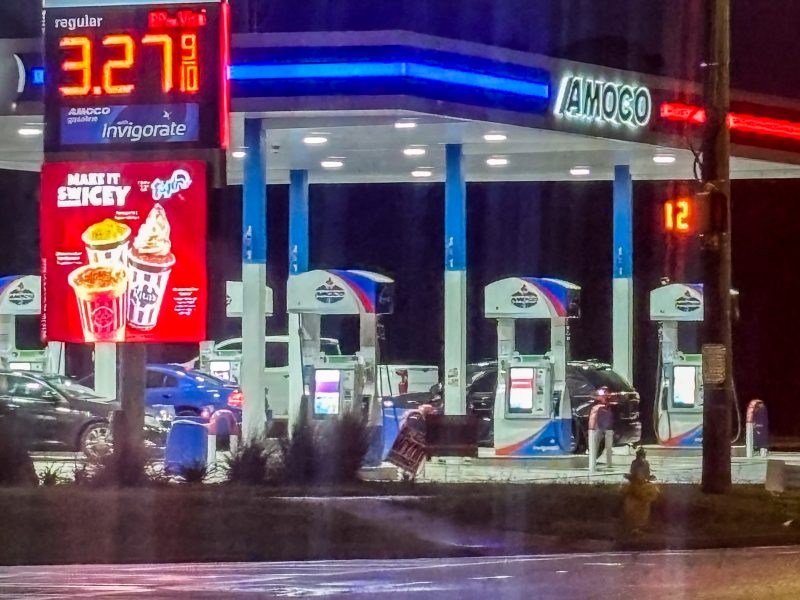
Albany gas prices among Georgia’s lowest as summer fuel costs decline
According to AAA, the average price for a gallon of regular gasoline in the Albany metro area was approximately $3.45 this week, making Albany the second-least expensive metro market in Georgia behind Dalton at $3.41 and slightly ahead of Brunswick at $3.48.

Classifieds – June 23, 2026
ALBANY HERALD CLASSIFIEDS JUNE 23 2026
Albany police investigate suspicious Sunday death
A 21-year-old Turner Job Corps student who was found unresponsive on Sunday evening was later pronounced dead at Phoebe Putney Memorial Hospital. The death is under investigation.
