
The march almost didn’t include any female speakers, either
It was only after pressure from Anna Arnold Hedgeman, the only woman on the national planning committee, that a “Tribute to Negro Women Fighters for Freedom” was added to the official program.
It took further convincing to have a woman lead it.
Daisy Bates spoke in the place of Myrlie Evers, the widow of slain civil rights leader Medgar Evers. Bates, president of the Arkansas NAACP who played a key role in integrating schools in Little Rock, told the crowd: “We will walk until we are free, until we can walk to any school and take our children to any school in the United States. And we will sit-in and we will kneel-in and we will lie-in if necessary until every Negro in America can vote. This we pledge to the women of America.”
Earlier, Josephine Baker, an internationally known American entertainer who had moved to France to find fame, addressed the crowd. Dressed in a military jacket draped with medals for her contribution to French resistance in World War II, she spoke in very personal terms about freedom:
“You know I have always taken the rocky path. I never took the easy one, but as I get older, and as I knew I had the power and the strength, I took that rocky path, and I tried to smooth it out a little. I wanted to make it easier for you. I want you to have a chance at what I had. But I do not want you to have to run away to get it.”
Women had been central to the civil rights movement — Diane Nash, Ella Baker, Dorothy Height and many others — but were only included in the program that day after one woman spoke up.
Related Articles
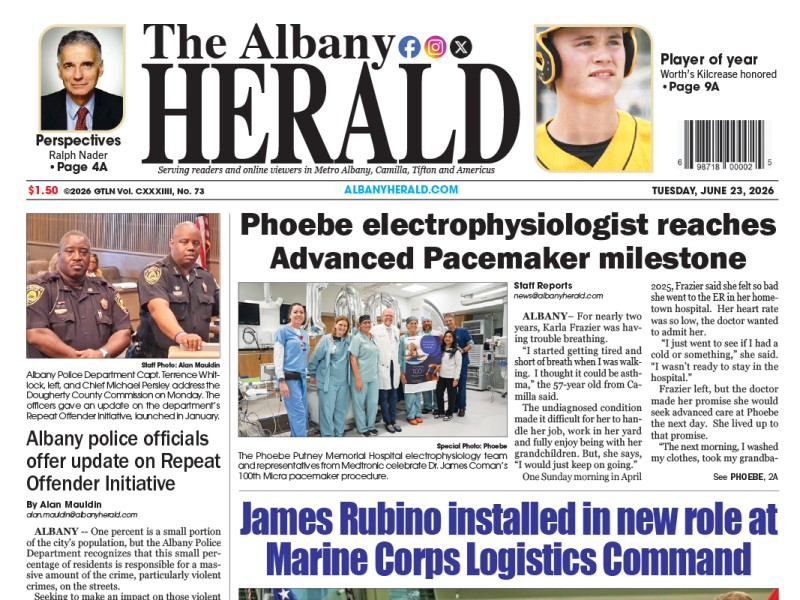
Albany Herald – June 23, 2026
Phoebe electrophysiologist reaches Advanced… Albany police officials offer update… James Rubino installed in new role at…

Classifieds – June 23, 2026
ALBANY HERALD CLASSIFIEDS JUNE 23 2026

Albany police investigate suspicious Sunday death
A 21-year-old Turner Job Corps student who was found unresponsive on Sunday evening was later pronounced dead at Phoebe Putney Memorial Hospital. The death is under investigation.
