
Thirteen- and 17-year cicada broods to number around 1 trillion
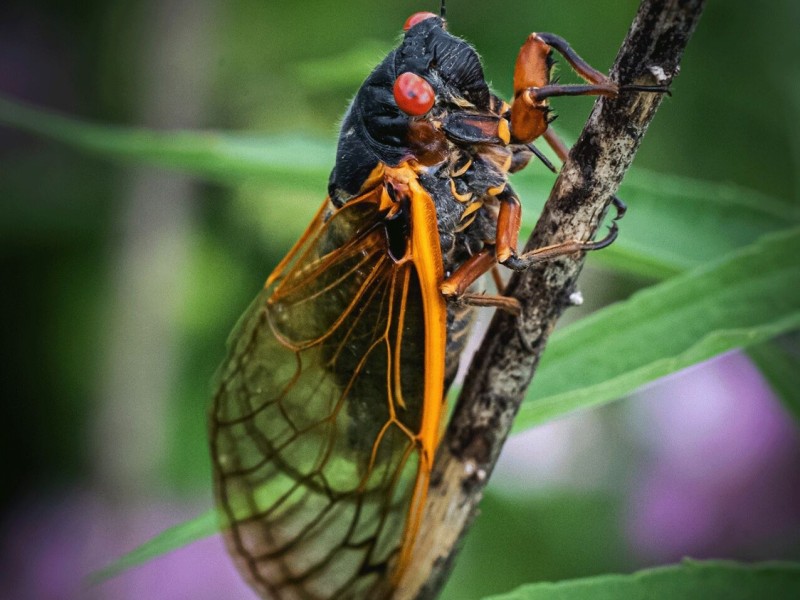
Special Photo: GCSU
Special Photo: GCSU
Special Photo: GCSU
From staff reports
[email protected]
MILLEDGEVILLE — They don’t sting, and they don’t bite. They don’t suck blood. They won’t make you itch.
And your garden is safe.
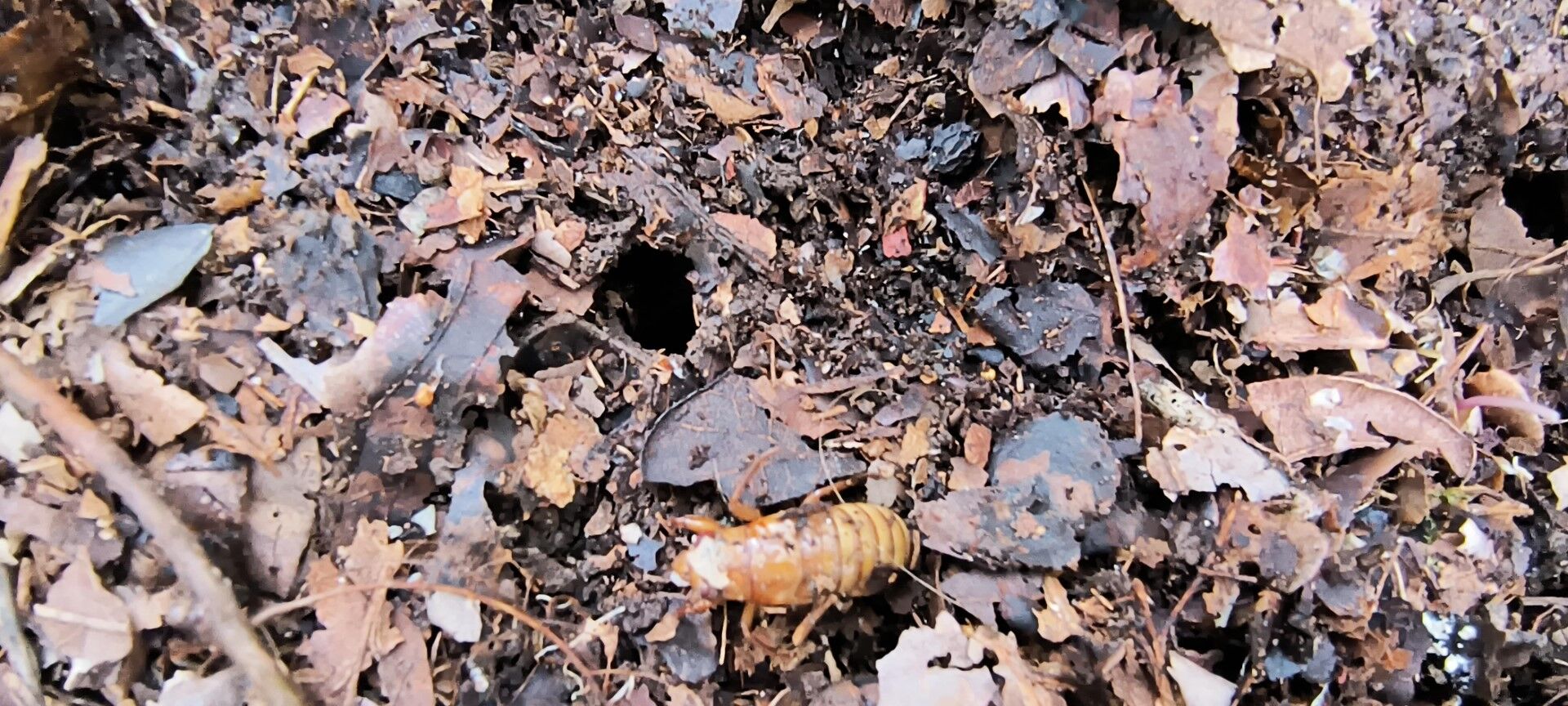
But miniature exoskeletons might be attached to your house. You might see flickers of red-and-black buzz by. Over the weekend, you might’ve heard a monotonous droning begin.
They are cicadas, part of the Great Southern Brood XIX that re-emerges every 13 years.
And, despite some maps showing their arrival only in north Georgia — the cicadas have emerged in central Georgia as well.
“I just found my first cicada molt,” Georgia College & State University expert Bruce Snyder, an associate professor of biological and environmental sciences, said. “Temperatures are almost at the critical point.”
Cicadas stay beneath the ground as wingless nymphs, but they aren’t hibernating. They feed off sap in tree roots and tunnel about. When the year is right, they start burrowing up, waiting inside a hole near the surface of the ground for just the right temperature, a process Snyder called “staging.” When soil 8 inches deep reaches 64 degrees, they come out.
That began in middle Georgia last weekend and will continue throughout this week and next. They’ll be around for about a month.
Snyder said he didn’t expect the cicadas until early May. The spring was wet and chilly. Pollen and blooms were a week late. Then, temperatures turned warm.
“They have been staging underground for weeks,” Snyder said. “Based on the weather, I expect to see them coming up now in larger numbers.”
The Great Southern Brood is thought to be the largest geographically of all periodical cicadas — seen in Maryland along the coast to Georgia and in parts of the Midwest. For the first time since Thomas Jefferson was the U.S. President in 1803, the arrival of the 13-year Southern Brood coincides with the appearance of the 17-year Northern Illinois Brood XIII.
This happens only every 221 years.
“It’s a pretty rare opportunity,” Snyder said. “To have one happen where you’re living is a good opportunity to learn. It’s something people shouldn’t miss.”
A few “stragglers” come early, Snyder said, but most crawl out around the same time. They shed their exoskeletons and noisily look for mates. They don’t eat much. They just group together in trees in a loud chorus for one big reproductive party.
They’re clumsy flyers, Snyder said. So a couple are bound to smack into you. Or your windshield. You may crunch them underfoot. And your ears may ring from continuous buzzing.
Don’t confuse them with cicadas that show up every year in mid-summer. Those are brownish green and bigger, about 2 to 3 inches long. And they appear in fewer numbers.
Periodical cicadas are only about 1½ inches long. They come out less frequently, in the spring, but in the tens of millions. Between the Southern and Northern broods this year, a trillion are expected.
But they’re only here a short time. They’ll mate, lay eggs and disappear.
For another 13 years.

Author

Related Articles

Albany City Commission takes action on proposed downtown hotel, two theater renovation projects
“We’re taking the original building back to, hopefully, it’s glory days. One of the cool things about the project is we are going to restore the balcony. It’s going to have a balcony, so it’s going to be super cool.”

PHOTOS: Albany State – CISA Executive Exchange
Click the arrow to scroll through the photos.

Months of unresolved records requests leave Dawson taxpayer questions unanswered
The City of Dawson will move ahead with its fiscal year 2027 budget before completing external audits that remain unfinished, city officials told The Dawson News on July 31 — more than three months after the newspaper began requesting the financial records behind the city’s decisions.
