
BARRY LEVINE: Songs for the seasons
OLD ROCKER: Certain songs were meant for certain seasons
By Barry Levine
The Old Rocker
“I was working in the lab, late one night, When my eyes beheld an eerie sight”
— “Monster Mash” by Bobby “Boris” Pickett
There are certain songs that are synonymous with specific times of the year.
Bing Crosby’s “White Christmas” will always be heard during the Christmas season.

Robert Burns wrote “Auld Lang Syne” in 1788, and it had been heard around New Year’s for decades. It can also be heard at funerals and graduations.
One tune guaranteed to be heard during the Halloween season is “Monster Mash,” a No. 1 hit for Bobby “Boris” Pickett in 1962 that has been a perennial seasonal favorite for the past half-century.
Pickett was an aspiring actor who sang with a band called the Cordials at night while going to auditions during the day.
One night, while performing with his band, Pickett did a monologue, an imitation of renowned horror movie actor Boris Karloff, while performing The Diamonds’ “Little Darlin’.”
The audience loved it, and band members encouraged Pickett to do more Karloff imitations.
Pickett and Lenny Capizzi, a Cordials band member, composed “Monster Mash” and recorded it on Gary Paxton’s Garpax label.
The song was partially inspired by Paxton’s earlier No. 1 novelty hit “Alley Oop” as well as by the mashed potato dance craze.
A variation of the mashed potato was danced to “Monster Mash” in which the footwork was the same but Frankenstein-style monster gestures were made with the arms and hands.
A mad scientist narrates the song whose monster, late one evening, rises from a slab to perform a new dance. The dance becomes “the hit of the land” when the scientist throws a party for other monsters.
The producers devised appropriate sound effects for the recording. The sound of Frankenstein’s coffin opening was imitated by a rusty nail being pulled out of a board. The sound of a cauldron bubbling was actually water being bubbled through a straw. The chains rattling were simply chains being dropped on a tile floor.
Pickett also impersonated horror film actor Bela Lugosi as Dracula with the lyric “Whatever happened to my Transylvania Twist?”
Pickett, who died in 2007 at age 69, had several other Top 40 hits with his group the Crypt-Kickers.
“Monsters’ Holiday” climbed to No. 30 in 1963. “Monster Mash” was re-released in 1973 and it reached No 10.
Three other songs that usually surface around Halloween are “I Put a Spell on You,” “Witch Doctor” and ”Ghostbusters.”
Written and performed by Screamin’ Jay Hawkins in 1956, the “Spell” gained fame because of Hawkins’ performance. At the suggestion of New York DJ Allan Freed, Hawkins would rise from a coffin onstage wearing a long cape.
Rolling Stone magazine ranked the song 313th on its list of the 500 greatest rock songs of all-time.
“Witch Doctor” was No. 1 for two weeks in the spring of 1958 and was recorded by David Seville.
The song tells the story of a man in love with a woman who does not return his affections. Longing for her companionship, the man goes to see a witch doctor for advice. The wise witch doctor replies, “Oo ee oo ah ah ting tang walla walla bing bang.” At the middle of the song, the man tells the woman he loves about his asking the witch doctor for advice.
Seville’s unique voice on the record was done by doubling the speed of the recording.
Ray Parker Jr. wrote and recorded “Ghostbusters” in 1984 as the theme to the movie of the same name starring Bill Murray, Dan Aykroyd, Harold Ramis and Ernie Hudson.
The song reached No. 1 in August 1984, remaining there for three weeks.
It was nominated for an Academy Award for Best Original Song, but lost to Stevie Wonder’s “I Just Called to Say I Love You.”
This week in rock history: Roy Orbison was awarded his ninth Gold record for “Oh! Pretty Woman” on Oct 30, 1964. It sold more than 7 million copies. Ed Sullivan saw 50,000 fans cheer The Beatles at London’s Heathrow Airport on Oct. 31, 1964, and later booked them for three appearances on his TV variety show early in 1964. An R&B group called The Famous Flames, led by singer James Brown, cut its first demo of “Please, Please, Please” at a radio station in Macon on Nov. 1, 1954. It led to their signing with King Records, where they re-recorded the song in February 1956 and watched it climb to No. 6 on the R&B chart.
The Beach Boys’ “Be True To Your School” was released on Nov. 2, 1963. The record, which includes the University of Wisconsin fight song, peaked at No. 6. Sun Records released “Great Balls of Fire” by Jerry Lee Lewis. It was his biggest hit, reaching No. 2 and selling more than 5 million copies. Smokey Robinson & The Miracles’ “I Second That Emotion” was released on Nov. 4, 1967. The tune reached No. 4. “The Nat ‘King’ Cole Show” debuted on NBC-TV on Nov. 5, 1956, becoming the first musical variety show hosted by an African-American. Cole ended the show in December, 1957.
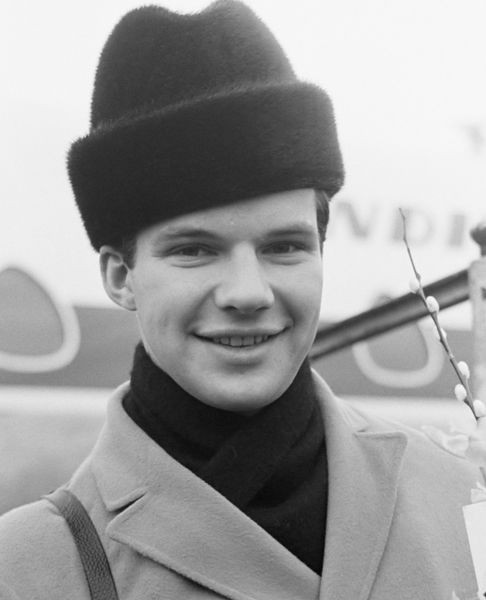
FINAL NOTE – Teen idol Bobby Vee, the boyish 1960s singer whose career was born when he took a Midwestern stage as a 15-year-old to replace rock ‘n’ roll stars Buddy Holly, Ritchie Valens and J.P. “The Big Bopper” Richardson after they were killed in a 1959 plane crash, has died from Alzheimer’s disease. He was 73.
He was diagnosed with Alzheimer’s in 2011 and performed his final show later that year.
Vee had 13 Top 40 hits. His success waned when the British Invasion struck. He had his biggest hits in 1961 when “Take Good Care of My Baby” climbed to No. 1. Vee followed with “Run to Him,” which peaked at No. 2.
His other Top 10 hits were “Devil or Angel” and “Rubber Ball” in 1860, “The Night Has a Thousand Eyes” in 1962 and “Come Back When You Grow Up” in 1967.
Barry Levine is an entertainment writer for The Albany Herald. He can be reached at [email protected].
Related Articles

CARLTON FLETCHER: Looking for truthful answers to some hard questions
And we wonder how so many people in Germany could devote themselves to an evil despot like Adolf Hitler.
CARLTON FLETCHER: The highs and lows of an unexceptional life
I admitted to myself not long after I graduated high school that I wasn’t going to play professional baseball.
CARLTON FLETCHER: Leadership vacuum persists … from Washington to Atlanta to Albany and beyond
When we elect individuals based solely on party affiliation, church membership, skin color, empty campaign promises that are impossible to keep, or because some other highly placed politician told us to, we’re bringing the decline of government at all levels on ourselves.
