
CARLTON FLETCHER: On the unbreakable bond between fathers and sons
By Carlton Fletcher
[email protected]
Where have you been, my blue-eyed son? Where have you been, my darling young one?
— Bob Dylan
There is a bond — I daresay an unbreakable bond — between fathers and sons. That link is there in the flow of their common lifeblood, encoded on their shared DNA.
In a society that has longed shunned the show of emotional attachment among the male of its species — and, yes, I’m aware that time has moved us inexorably beyond such chauvinistic generalities, but the truth is such sentiment remains, especially in the South, with which I’m all too familiar — it’s indeed rare (but getting less so) to see a father-son relationship in which a family’s males are in no way embarrassed to show the open love that for some reason has been solely reserved and encouraged of women and their offspring.
“You gonna make that boy a sissy if you get all lovey-dovey with him after he’s up walking around and housebroken,” someone once told me, someone, admittedly, whose advice meant way less than that proverbial hill of beans. Still, I’ve heard others say the same thing, a little less rednecky, but still the same thing: “A man’s got to teach his son to be tough. You don’t do that by openly showing affection.”
I never bought into that hooey.
My Christmas Eve-baby of a son turns 43 today. Steven Carlton Fletcher (it was his mother’s idea to stick him with part of my name, no ego tripping here) is, if you’ll allow me a bit of sentimentality, one of my heroes. And it’s not just because, despite less than stellar guidance on the part of his father, he became the man I always wished I could be. And it’s not just because he’s the best father I’ve ever been around, giving Sam, Lily and Amelia the kind of guidance and, yes, love, that every kid could hope for.
And it’s not that he’s remained a man of strong faith, even after having his faith severely tested.
No, it’s because I’ve seen the kind of men many of my son’s peers became. I’ve seen them, partly as a way to get back at fathers who showed them little in the way of love and attention, make the same mistakes that their fathers made. Hell-bent on proving the fathers that many grew to loathe wrong, they instead became just like them.
I’m no one’s psychologist. I’m not able — nor am I worthy — to psychoanalyze or pass judgment on others. But I think one of our society’s saddest rituals is its attempt to convince its male population that machismo and false bravado are much more important than being decent, loving people. That one becomes a man by adhering to stereotypes that should have been thrown out with the trash many generations ago.
There are in life, natural challenges to the bond that binds fathers and sons. There is the natural jealousy each feels for the other as they battle to attract the attention of the person most important in each’s life, the mother of one, the spouse of the other. And there is that inevitable “changing of the guard moment” — call it the rise of the “Great Santini” in every family — in which the son surpasses the man who taught him all of life’s lessons — on purpose or by good or bad example — and the father is left to accept the evolutionary fact that his offspring can now best him in many chosen endeavors.
Why then would we add a tenuous level to this stretching of the father-son bond by ostracizing fathers who openly love their sons, even when they are walking around and housebroken?
No, I’m proud of my son, proud of the man he’s become. And while this is a ship that has long since sailed, Steven Fletcher is the man I would like to become when I grow up.
Related Articles
Chamber celebrates new businesses, invites community to Coffee and Connections event
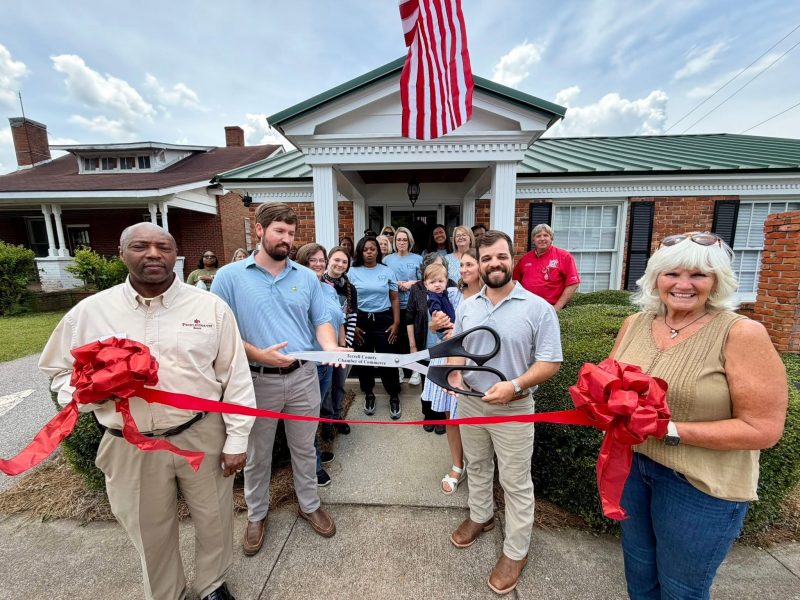
The Terrell County Chamber of Commerce is continuing its efforts to strengthen local business relationships through community celebrations and networking opportunities, recently recognizing two new businesses with ribbon-cutting ceremonies and announcing its next “Coffee & Connections” event in Sasser.
Regional catering business finds new home at Warrior Creek Mercantile
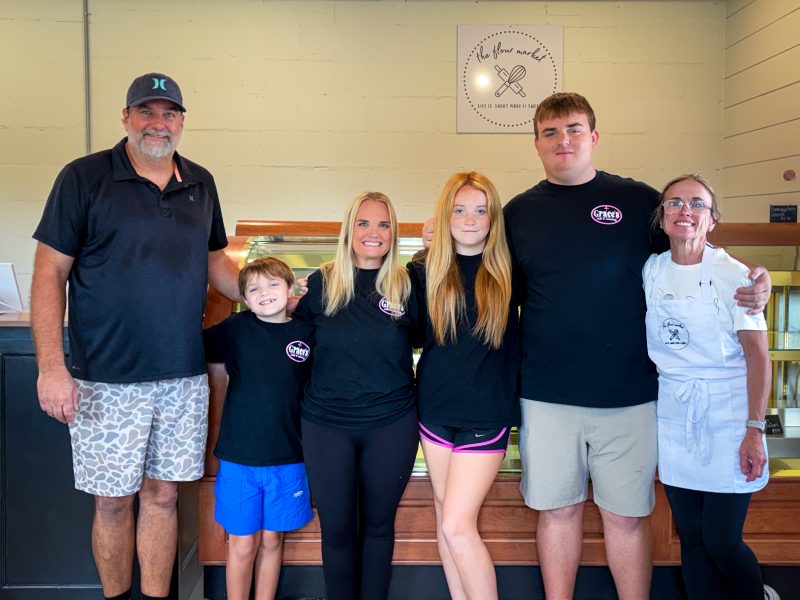
For months, Marchbanks said she had been asking God for an opportunity to serve others. “I just kept praying, ‘God, use me as a servant,'” she recalled. “I didn’t care what it was. I just wanted to be used to help people.”
Houston, Ford advance in contentious Lee County school board race
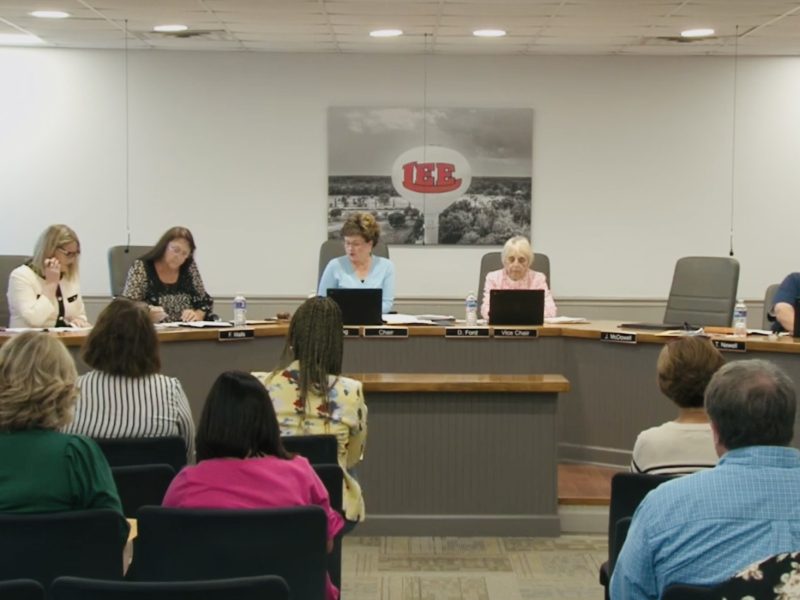
According to unofficial election results, challenger George Parrish Houston led the three-candidate field with 534 votes, or 42%, followed by incumbent Donna Ford with 478 votes, or 37.6%. Candidate Lavendra Shootes received 261 votes, or 20.5%.
