
Clinging to the myth of slow, colorblind government in distressed communities
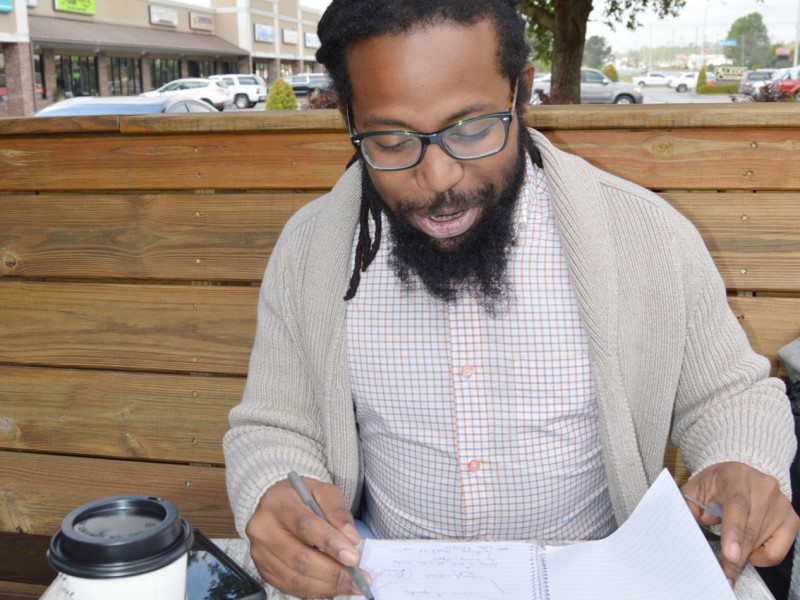
File Photo: Carlton Fletcher
By James B. Pratt Jr.
Dr. Martin Luther King Jr. is not only one of my favorite activists, he is one of my favorite social scientists and theorists. So often, the depth of King is ignored in the interest of kumbaya messages that flatten his legacy into his “I Have a Dream Speech.”
Despite this, King was vocal on issues that related to race and class, particularly in the South. In an essay entitled “The Pace of Change” that King penned in 1964 following the march on Washington, he directly responded to critiques by white Americans and even some black Americans who were fearful and reluctant to change the status quo. This is not the only time King addressed this issue. In his famous, but rarely read, “Letter from a Birmingham Jail” and his final book “Where do We Go from Here: Chaos or Community,” King speaks directly to white people naming “white moderates” as one group that holds up progress (he even has a chapter in the book called “White Backlash”). In his letter, he says plainly:
“I have almost reached the regrettable conclusion that the Negro’s great stumbling block in the stride toward freedom is not the White Citizen’s Council-er or the Ku Klux Klanner, but the white moderate who is more devoted to “order” than to justice; who prefers a negative peace which is the absence of tension to a positive peace which is the presence of justice; who constantly says ‘I agree with you in the goal you seek, but I can’t agree with your methods of direct action;’ who paternalistically feels he can set the timetable for another man’s freedom; who lives by the myth of time and who constantly advises the Negro to wait until a ‘more convenient season.’”
Then and today, government leaders often parrot the familiar talking point that, “government moves slowly” and that we should not talk about race or that “I don’t see race.” And yet, time and again, communities have seen government leaders take necessary steps to face issues of poverty, racism, classism and other changes with great effect. At the same time, even recently in our community, government leaders have condemned protesters who simply have requested discussions that will educate our often conveniently colorblind leaders and to gain funding to support initiatives from community gardens to changes in public safety like hiring specialists that, like our chief mentions, better deal with community needs rather than a one-size-fits-all community policing model.
Many people would be surprised to know that a great deal of the time police spend is not on solving and preventing crime, and much of their time could be freed if we develop positions that better attend to the real issues. Having done ride-alongs and having worked with LEOs and others in the criminal justice field, I have seen the many inefficiencies of our general model of public safety for years. We have an opportunity to be transformative and yet, often when I meet and discuss this with local leaders, they say that “government moves slow, and we should wait.”
Despite this, in Albany I have worked directly to address issues related to crime and violence that plague our community. Here is the reality: We know, based on crime data, that a significant portion of our violent crime in Albany is due to domestic violence and interpersonal disputes, many of them connected with local gangs. As a criminologist, I am tasked and have made it my work to help uncover the root causes of these issues and provide evidence-based solutions. To better develop solutions, we must first develop a greater understanding of 1) what our needs are and the barriers to them and 2) how we perceive each other and the deservedness of our individual needs — basically we have to stop framing the less fortunate as those that are just unwilling to pull themselves up and realize these conditions were not created in a vacuum of history.
When it comes to gangs, many of the top researchers who have both studied gangs through personal experiences and empirical research have illustrated that a part of the reason individuals join gangs in part is that they have been ostracized by their communities. This implies that communities should find ways to bridge the gap between its youth at the margins — specifically poor and minority youths who are perceived as older, more violent, and who get harsher punishments even when they commit the same acts — and others with resources and insight.
To build these bridges, youths need resources and support, including activities for fun end educational development. We must consider ways to help support parents who, given the rate of poverty, single parenthood, and historical disinvestment in this community, are overworked and often lack the time to provide what their children need. Parents must find better ways of talking with their children and disciplining them, especially given the huge body of research that provides both innovative ways to ensure children are disciplined that do not rely on cursing out children, beating them into submission, or other punishments that actually do more harm than good.
These types of changes are tough because we often cling to what seems like it works, even when we get new information on what does not.
As long as I have been living, for 30.5 years, elders in our community called for more discipline and respect. One previous commissioner, my dear fraternity Brother (Tommie) Postell, even developed a saggy pants ordinance. It is clear this ordinance was developed out of frustration for larger issues that have gone undealt-with for years. This ordinance, as stated by current Commissioner (B.J.) Fletcher reflecting her respect for Postell, would specifically help young black men learn how to show respect.
While on the surface, this sounds like a good idea, because we all desire a well-dressed and respectful community, laws like these further create a gap between groups all because of a fashion choice while also being likely unconstitutional given its racial animus. Regardless of your position on sagging pants, which I must say is different from indecent exposure where there is skin showing, according to the statistics from the inception of the law until 2019, 10 years, 95% of individuals cited were black with 88% being black males. Even accounting for the population size of Albany and its racial composition, the rates of enforcement are disproportionate.
Now, because of space and time, I can only say so much about what we must overcome as a city. I have attempted to add a little bit to the conversation and, most of all, highlight that one of our greatest barriers is ourselves including our commitment to the glacial pace of change. We also must be willing to have critical conversations around race, class, and more that help us to address deep-rooted norms and mindsets that can be directly linked to the legacy of slavery and Jim Crow.
Often, I have presented to our local commission and have been met with either silence or condemnation, and yet, if we actually have the conversation around the issues addressed here and that I have worked on and studies for over a decade then maybe we can leave the myths in the books where they belong.
Related Articles

Squawkbox – July 4, 2026
Regarding the changes to the Squawkbox… Lee County officials encountered a screw-up with… Bo and Preacher Lorenzo and his disciples should reflect on why…

CARLTON FLETCHER: Lousy customer service leaves a fowl taste
Before I get into this, let me say from the get-go that I understand that we all have bad days, that the aggravations of life can put a damper on everything that gets in our way on a given day.

Squawkbox – June 27, 2026
Albany’s “leadership” is involved in criminal activity and will be… Franklin Graham and the other pastors of “super churches”…
