
CREEDE HINSHAW: Thinking and praying about thoughts and prayers
OPINION: Those who decry use of the term ‘thoughts and prayers’ miss the mark
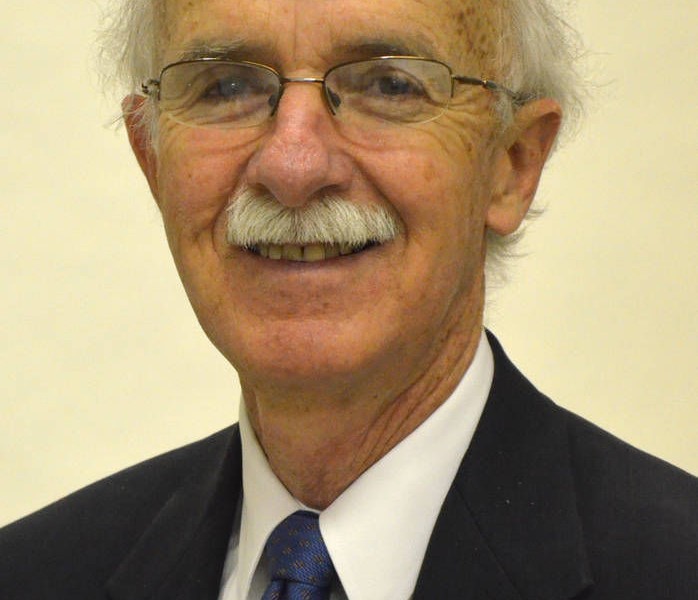
By Creede Hinshaw
In this highly politicized and polarized nation, even the phrase “thoughts and prayers” has become controversial.
Families grieving because of heinous mass murders, joined by many Americans who want tighter gun safety laws and lawmakers who are stymied over fruitless efforts at legal changes are tired of and angry at leaders who offer “thoughts and prayers” while stonewalling all efforts even to debate gun laws. These frustrated people have accused those on the other side, often heavily funded by the NRA, of being hypocrites for what they consider to be hollow hypocrisy.
As much as I share the viewpoint of the aggrieved and as much as I yearn for action on a legislative front, I believe those who are decrying the use of “thoughts and prayers” miss the mark.
Let me state the obvious: the phrase “thoughts and prayers” is a cliché. Every president (regardless of political party) uses it. Believers in prayer groups use it. Pastors may use the phrase multiple times every week. There is nothing wrong with speaking in clichés, even if the clichés are about faith. This particular phrase may convey something quite powerful or it may be little more than a verbal get-well card.
Some who use this phrase may focus more on the thoughts half, while others focus more on the prayers part. Actually, the two activities go together very well. I want thoughtfully prayerful legislators and I want powerfully, thoughtful prayers. Sometimes thoughts influence prayers and sometimes vice versa.
As far as the praying part of the equation, there are hundreds of different ways to pray, dozens of different understandings of how much God needs to hear, countless theologies of how prayer works and no telling how many different desired outcomes being sought by those who are doing the praying.
What is the most wrong in this protest is the implication that prayer is contrasted with action. Nothing could be further from the truth. The contemplative Catholic Thomas Merton was a man of deep prayer who — through his writing and witness — influenced thousands of persons. I could name many others — some quite ordinary people – whose life of “thoughts and prayers” has made an enormous difference in family, school, neighborhood and city.
Prayer is action. It may not be the desired action for some, but praying is — or can be — active and vital. Prayers can and do change circumstances for the better. How this works would take many columns and involve much speculation, but it is a gross oversimplification to suggest that praying is the opposite of taking action.
A start towards civility in our nation might be to take others at their word when they say that they are thinking and praying. Thoughts and prayers often change the person who is thinking and praying. To extend such sentiments to others may seem quite minor, but when God is mystically, mysteriously involved, miraculous change can happen.
Email columnist Creede Hinshaw, a retired Methodist minister, at [email protected].
Related Articles

CARLTON FLETCHER: Looking for truthful answers to some hard questions
And we wonder how so many people in Germany could devote themselves to an evil despot like Adolf Hitler.
CARLTON FLETCHER: The highs and lows of an unexceptional life
I admitted to myself not long after I graduated high school that I wasn’t going to play professional baseball.
CARLTON FLETCHER: Leadership vacuum persists … from Washington to Atlanta to Albany and beyond
When we elect individuals based solely on party affiliation, church membership, skin color, empty campaign promises that are impossible to keep, or because some other highly placed politician told us to, we’re bringing the decline of government at all levels on ourselves.
