
CREEDE HINSHAW: When leadership changes, in government and in church
OPINION: Churches experience transitions just as the U.S. government does
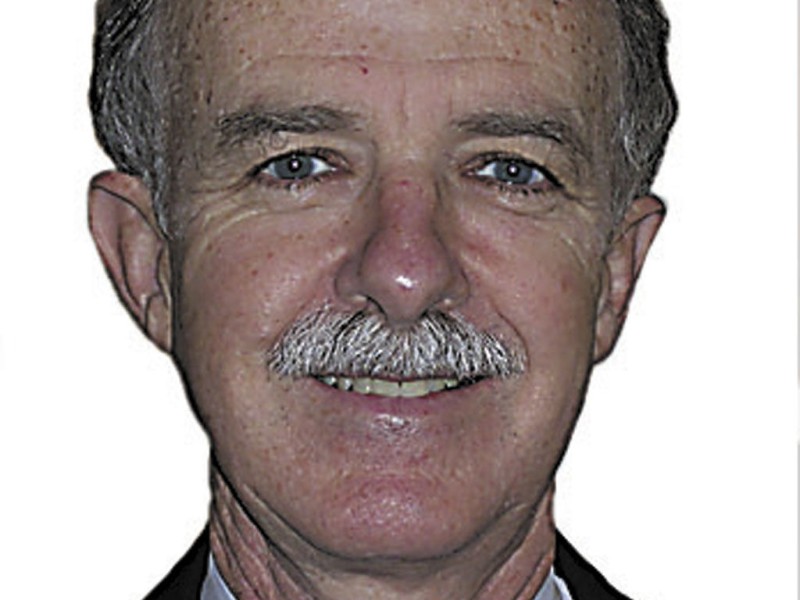
By Creede Hinshaw
As the nation watches a transition in the White House, I am reminded that the same kind of transitions take place frequently in the local church, though on a far smaller scale.
And, similar to the political arena, sometimes these transitions are highly successful and sometimes not so much.
Having been involved in half a dozen transitions of pastoral leadership, I discovered that this transfer of power, allegiances and trust is somewhat akin to relay runners trying to pass the baton as efficiently as possible while in full stride, in the case of the church maintaining congregational ministry all along the way.
This process is as much art as science. Sometimes there is a measured, orderly transfer; other times, the change is abrupt and awkward.
Sometimes outgoing and incoming pastors (like presidents) have very different outlooks on the world, on the use of power, on the nature and meaning of the church and of an understanding of the Bible. Under the best of circumstances these transitions are healthy, both for the congregation and the pastors involved. At other times, a poor handoff sets back the ministry of the church, discourages the former pastor and the incoming pastor, and weakens or demoralizes the congregation.
A few weeks ago, I read about a church transition in the Catholic church. Pope Francis appointed a new archbishop to lead the Archdiocese of Newark, one of the 10 largest archdioceses, or regions, in the United States. Although labels can often be deceptive, the Wall Street Journal (Nov. 8) identified newly appointed Joseph W. Tobin as “one of the more progressive voices” in the U.S. Catholic Church and his predecessor, the retiring Archbishop John J. Myers, as “an outspoken conservative.” The New York Times (Nov. 13), described these two men more simply as “moderate” and “conservative.”
This transition is worthy of mention because it illustrates the challenges facing any congregation, or larger church unit, whenever there is a change of leadership. Archbishop Tobin had previously declared – in opposition to then-Gov. Mike Pence – that the Catholic Church would resettle Syrian refugees in Indiana. The archbishop he is replacing advocated denying the sacrament of Holy Communion to those who favored abortion rights.
This is not to suggest that the Newark transition will be rough. Clergy are professionals in the sense that they want the best for the church, even if they may have different understandings about social action or scriptural emphases. Tobin and Myers will have a smooth handoff and the church will be subtly reshaped by Pope Francis’ appointment.
From what has been reported so far on the political front in Washington, D.C., the outgoing Obama administration and the incoming Trump administration are handling the transition of power in a very professional way. The American people expect no less.
Such is true in the church, too. Personalities can get in the way and theology can make transitions difficult. But the people who sit in the pew (who also have a great deal of influence in the success or failure of every transition) expect these transfers of loyalty and leadership to be conducted with the utmost humility, respect and reverence to God.
Email columnist Creede Hinshaw, a retired Methodist minister, at [email protected].
Related Articles

WILL THAULT: Can Ranch dressing cool our differences?
A German tourist driving through Georgia marveled at our landscape, discovering Waffle House and Buc-ee’s for the first time
CARLTON FLETCHER: Looking for a modern-day Rosa Parks
The year was 1955, and while the civil rights movement was slowly building momentum in the United States, laws such as the one enacted in Montgomery were common.

Squawkbox – July 4, 2026
Regarding the changes to the Squawkbox… Lee County officials encountered a screw-up with… Bo and Preacher Lorenzo and his disciples should reflect on why…
